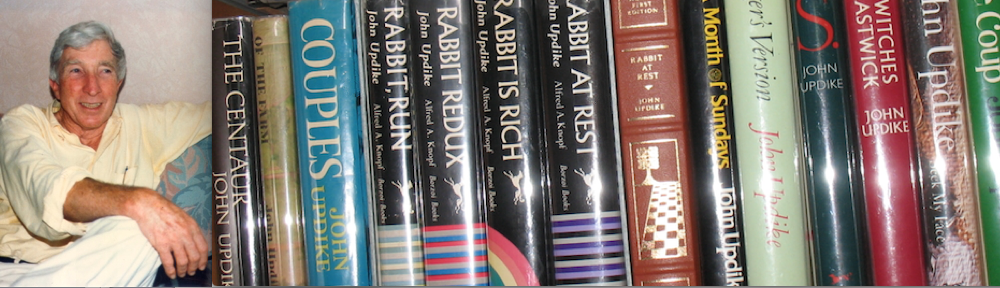
Writer Clyde Haberman posted on social media yesterday that the death at age 92 of André Soltner, “the great chef who presided over Lutece in New York,” reminded him of a lunch he had there with John Updike.
“In 1996 I interviewed John Updike there, a restaurant he chose because it was near his publisher, Knopf. ‘There was sort of a symbiosis between the Knopf editorial board and Lutece,’ Updike said. Then he added, ‘I’ve never felt comfortable in here. I feel gourmet food is sort of wasted on me.'”
In “At Lunch With/John Updike; On Reading, Writing and Rabbit,” which appeared in The New York Times on March 6, 1996, Haberman wrote, “A sandwich and a glass of cranberry juice will do for lunch when [Updike] is at home, on 11 isolated acres in Beverly Farms, Mass., about 25 miles north of Boston. At this point, Mr. Updike said, he has to watch his waistline almost as much as his language.
“‘There’s no disguising the fact that a writer’s life is a sedentary one and prone to incessant snacking if you work at home,’ he said. ‘The little break of going down to get another oatmeal cookie is almost irresistible. So I try to make up for the cookies by not eating much at lunch.’
“Even when he was a boy in Shillington, Pa., outside the working-class town of Reading, literature and food converged. ‘I was a great peanut-butter lover from childhood on,’ he recalled. ‘The way I used to read was, we had an old sofa in the house, and I’m make a sandwich consisting of peanut butter and raisins. You’d eat one of those while you read John Dickson Carr or some other mystery writer, or James Thurber of Robert Benchley. In that way, many a happy afternoon went by.'”
Despite Updike’s talk of watching his caloric intake, Haberman wrote, “Let it be noted that he held up fine under the gustatory strain of Lutece, polishing off a serving of grouper after a cup of pumpkin soup and a puff pastry of sweetbreads and spinach. He did draw the line at dessert.”
In his 1-19-25 social media post, Haberman remarked, “That lunch with Updike . . . was one of those times when I enjoyed myself thoroughly and marveled that I actually got paid for such moments. I felt the same after interviewing Umberto Eco in Bologna a few years earlier.”
 Displays will include founding documents, rare manuscripts, photos, cover and cartoon art, and artifacts on loan from other institutions–all intended to take visitors “behind the scenes of the making of one of the United States’s most important magazines,” according to City Life Org.
 Ditum reminded readers of the impetus behind Updike’s writing of the novel: “Jack Kerouac’s On the Road came out in 1957, and without reading it, I resented its apparent injunction to cut loose; Rabbit, Run was meant to be a realistic demonstration of what happens when a young American man goes on the road—the people left behind get hurt. There was no painless dropping out of the Fifties’ fraying but still tight social weave.”
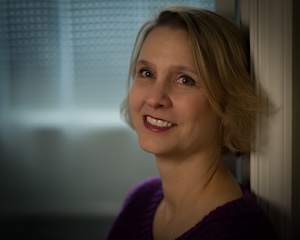 Leslie Pietrzyk, whose first collection of short stories, The Angel on My Chest, won the Drue Heinz Literature Prize, was selected over 193 applicants to be the 2025 John Updike Tucson Casitas Fellow. The fellowship consists of a $1000 prize from The John Updike Society and a two-week residency at the casitas formerly owned by John and Martha Updike, where the two-time Pulitzer Prize winner spent time golfing and writing in his later years. The casitas, located in the Santa Catalina Foothills, are owned by Jan and Jim Emery, and the annual residency is made possible by their generosity. (Photo: Wikipedia)
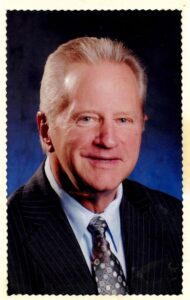 With heavy hearts we report that the senior docent of The John Updike Childhood Home, David W. Ruoff, died Jan. 1 at age 83 of congestive heart failure while in hospice care in Ephrata. Dave became a member of The John Updike Society in 2012 after he began renting the single-story annex to The John Updike Childhood Home, back when it was still a deconstruction zone.
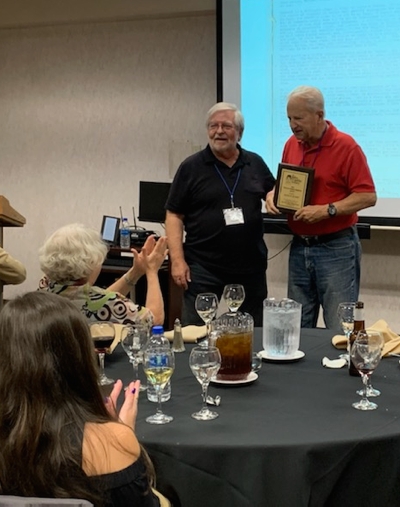 The society loved him back. On October 2, 2021, the board honored him as the sixth recipient of The John Updike Society Distinguished Service Award, praising his “extraordinary docent work and other services to The John Updike Childhood Home.” Dave was funny, generous, thoughtful, and a little bit larger than life. He’ll be greatly missed.
 course, played an important role for a lot writers—no need to list them all here.) John Ashbery enjoyed a nice cup of tea and classical music when he wrote, which was usually in the late afternoon. Charles Simic enjoyed writing when his wife was cooking. Eudora Welty could write anywhere—even in the car— and at any time, except at night when she was socializing. Flannery O’Connor could only write two hours a day and her drink was Coca Cola mixed with coffee. Simone de Beauvoir wrote from 10AM-1PM and from 5-9PM. Louise Glück found writing on a schedule “an annihilating experience.” A. R. Ammons wrote only when inspiration hit—he compared trying to write to trying to force yourself to go the bathroom when you have no urge. Anne Sexton took up writing after therapy sessions. Jack Kerouac had various rituals at different times—one was writing by candlelight, and another was doing “touch downs” which involved standing on his head and touching his toes to the ground. Ernest Hemingway and Virginia Woolf wrote standing up. Wallace Stevens composed poems while walking to work. Gabriel García Márquez listened to the news before writing. Amy Gerstler sometimes listens to recordings of rain while writing. I tried that once, and the rain put me into a deep and dreamless sleep.”
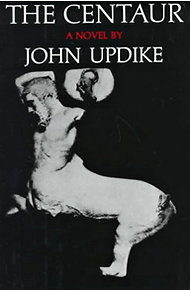 Greatest Books of All Time on Teachers,” and it’s no surprise that John Updike’s 1963 novel, The Centaur, ranks high on the list. His tribute to his father (and teacher), Wesley Updike, did win the National Book Award, after all.