In an April 4, 2025 post for The Wall Street Journal, Craig Brown (Q: A Voyage Around the Queen) revealed his choice for the five best books to tackle the subject of fame. Topping the list was David Kinney’s The Dylanologists, part-confession and part-reporting on Bob Dylan superfans and their antics, “a sharp and often hilarious book about the madness of fame and fandom.”
 Coming in at #2 was Donald Sassoon’s Becoming Mona Lisa, which traces the path to superstardom of Leonardo da Vinci’s most famous subject/painting—a study that Brown said “suggests that, contrary to popular and scholarly belief, posterity is a peculiarly fickle thing.”
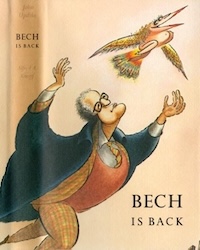
Number 3 on the list is John Updike’s The Complete Henry Bech: “John Updike’s recurring character Henry Bech is the author of ‘one good book and three others, the good one having come first.’ Bech’s reputation increases as his output declines, and he spends his time giving speeches, accepting awards, signing books and appearing on television. ‘The appetite for serious writing is almost entirely dead, alas, but the appetite for talking, walking authors rages in the land,’ Updike once said, in an ‘interview’ with who else but Bech, his lazy, Jewish alter-ego. Collected here in The Complete Henry Bech, Updike’s satirical vignettes on the absurd distractions offered by literary fame grow more accurate with each passing year.”
Rounding out the list were Alethea Hayter’s A Sultry Month, a work of historical fiction from the Charles Dickens and P.T. Barnum era, and Pat Hackett’s The Andy Warhol Diaries, an edited collection of 1000+ entries that makes it “shamefully hard to stop” reading.
 It’s not exactly a doorstop, but at 186 pages, the Vol. 11 No. 1 (Winter 2024) issue of The John Updike Review is the largest to date. From the striking cover—a full-color photo of Updike with his father in a candid moment—to end pages that feature opportunities for writers and scholars, this issue has a lot to offer.
 “The third installment of John Updike’s ‘Rabbit’ series finds Harry ‘Rabbit’ Angstrom finally comfortable—or at least financially secure—amid the tumultuous backdrop of 1979’s oil crisis and stagflation. ‘How can you respect the world when you see it’s being run by a bunch of kids turned old?’ the narrator observes, capturing the novel’s eerie contemporary resonance: interest rates and real-estate climbing skyward—and staying there—and a gnawing certainty that the next generation won’t have it quite so good. Updike’s prose transforms the mundane rhythms of middle-class life into something approaching poetry as he excavates middle-class anxiety and success. Rabbit’s car dealership is printing money thanks to the Japanese vehicles he sells, even as his own prejudices and racial anxieties bubble beneath the surface. His son Nelson is adrift, the world seems to be coming apart at the seams and Rabbit’s own biases reflect the tensions of a changing America. The novel won Updike both the Pulitzer Prize and the National Book Award for its devastating precision in capturing what it means to ‘make it’ while watching the ladder get pulled up behind you.”
 Thomas wrote, “On a dreary Wednesday in September, 1960, John Updike, ‘falling in love, away from marriage,’ took a taxi to see his paramour. But, he later wrote, she didn’t answer his knock, and so he went to a ballgame at Fenway Park for his last chance to see the Red Sox outfielder Ted Williams, who was about to retire. For a few dollars, he got a seat behind third base.
 In an
In an 
 The Philip Roth and John Updike societies announced that registration is now open to participate in a joint conference to be held in New York City, Oct. 19-22, 2025.