Three Updike books that influenced other writers

Five Books, a site that asks writers to share five books that influenced them in some way, recently published the choices by Sam Tanenhaus, Ian McEwan, and William Boyd.

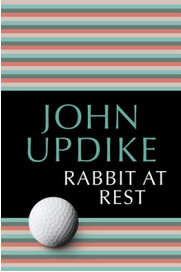
Tanenhaus named Rabbit Redux as one of his five influential books, while McEwan and Boyd cited Rabbit at Rest and Couples, respectively.

Tanenhaus cited Rabbit Redux as a great example of literature describing what he called “the peak period of conservatism as an intellectual force in American life” from 1967-73. “It’s the second of his Rabbit tetralogy, and generally the least admired today. The books themselves constitute a great classic in American literature, maybe the greatest of our period,” Tanenhaus said. “The genius of Updike is that he throws himself and his characters into the middle of the controversies of the day. So Rabbit himself smokes pot and has sex with an 18-year-old runaway who comes from a wealthy family in Connecticut. He lets a black militant live in his house. He’s drawn to all the forces that he is appalled by. And that’s the genius of fiction—instead of lecturing us about all of this, Updike tries to bring it to life from many perspectives, and makes it feel very concrete.”

McEwan selected Rabbit at Rest as one of his five books. “Updike has been a very important writer for me, the one I’ve admired most, read most, and returned to most often,” said McEwan, who will deliver keynote remarks at the Fifth Biennial John Updike Society Conference hosted by the Faculty of Philology, University of Belgrade, June 1-5 2018. “I think some of the descriptions of sex in Updike are extraordinary. I could never follow him down his route because his gift is one I’ve never hoped to emulate, which is the visual. In a sense he almost debunks or destroys the think he’s describing, because of his clinical eye, but it does take my breath away. In this realm he’s a master of the hyper-real.”

Boyd said that Updike was an inspiration because of his work ethic and productivity. “So when I’m writing a novel, I write seven days a week until it’s finished,” he said. But he doesn’t agree with McEwan that Updike was the greatest novelist writing in English at the time of his death in 2009. “I think Updike was a brilliant novelist and stylist and also a brilliant critic. But I gave up. I couldn’t keep up with Updike. I think that the short stories are his great legacy. I think the novels are all rather uneven and not fully achieved, with the possible exception of Couples. But Couples is another one of those books that I read at a very young age and it blew me away. Again, I must have been 19 or so when I read it, and for me it was like a window being opened onto the adult world, a world I was about to enter. I suddenly thought that this man understands human nature and the human condition in a way that I had never encountered before.

“That said, a lot of people regard Couples as his least successful novel because it seems overly preoccupied with sexual shenanigans in New England. I’ve gone back and re-read Couples and it holds up, for me, in ways that Catch-22 doesn’t. It’s a brilliantly well-written and observed book. But it’s relevance to me—and this is why I put it on the list—is because at the time I read it, veils were stripped from my eyes. I saw the world differently as a result of reading the book. It’s a great experience when that happens to you.”

See the full list and read the full interviews (links provided)
Janice Angstrom one of lit’s worst moms?

For those who are tired of reading Mother’s Day tribute after tribute, here’s a list of bad moms compiled by Tina Jordan and Susan Ellingwood for The New York Times and published, ironically, on May 12, 2018–Mother’s Day:

“8 of the Worst Moms in Literature; Think your mother was harsh? These books will convince you that she deserves a Mother of the Year Award.”

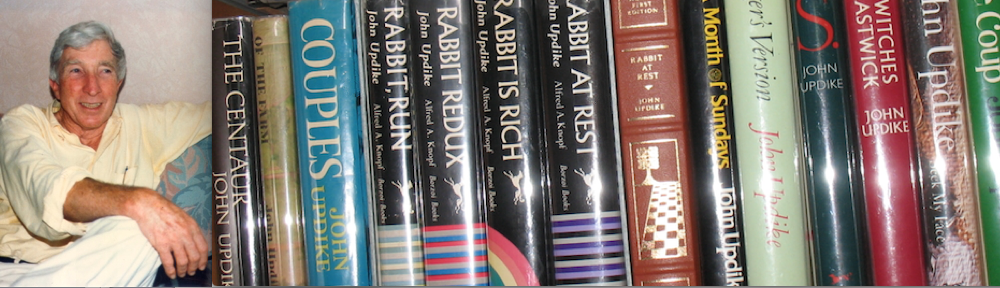
Updike’s Janice Angstrom (Rabbit, Run) makes the list.

“‘Rabbit’ Angstrom’s wife, Janice—often found ‘highball in hand, glued to the television set’—drunkenly allows their infant daughter to drown in the tub.'” There’s a link, too, if you’re a paid subscriber, to the Times‘ Nov. 6, 1960 review of Rabbit, Run by David Boroff, who calls it a “moving and often brilliant novel.”

Rabbit, of course, has to share the blame . . . so I guess that means he could turn up on a bad dad list come Father’s Day.

Best Pennsylvania author? Need you ask?

Pop Sugar released a list of “50 Authors From 50 States — Here’s What to Read From Each of Them,” and to no one’s surprise John Updike was the author from Pennsylvania that they recommended to readers, and Rabbit, Run was the book they specifically named.

“John Updike was born in Reading, PA,” they write (West Reading, actually), “and raised in the nearby town of Shillington. Updike’s childhood in Berks County, PA, later served as the influence for his Rabbit Angstrom tetralogy, including Rabbit, Run.”

Updike the benchmark for magical prose?

A story from The Guardian, “Book clinic: which current authors produce the most magical prose,” uses Updike as the lead-in and apparent benchmark for prose that sparkles. As the subtitle suggests, “The supernatural, witchcraft or sex can be spellbinding, while others conjure gold from the everyday human struggle.”

Writer Amanda Craig begins with a question from a Beijing reader: “John Updike described himself as the sorcerer’s apprentice. Who today delivers the most magic in their prose?”

She responds, “Magic may be evoked in many ways and Updike did it both in the sense of mixing the mundane with the supernatural (The Witches of Eastwick) and in conjuring contemporary fiction whose realism is threaded through with hypnotic lyricism (the Rabbit novels, Couples, etc).”

She recommends Philip Pullman’s His Dark Materials, AS Byatt’s Possession and short stories, and then, comparatively, two others:

“If it is Updike’s realist magic you are after, then Meg Wolitzer is, like him, a lyrical chronicler of love and marriage – but unlike Updike, brilliant at female characters as well as male ones. Her descriptions in The Interestings and The Female Persuasion of loneliness, love, growing maturity and reading itself evoke quotidian joys and sorrows with humour, generosity and hope.

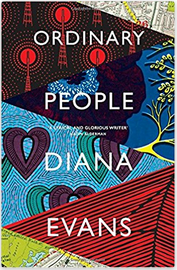
“Diana Evans is another superb domestic realist. Her new novel, Ordinary People, contains some of the best descriptions of happy and unhappy sex I’ve read since Ian McEwan’s Atonement. She writes about black south Londoners struggling with young families, ambition, adultery and disappointment with the wry insights Updike gave to his white east coasters.”

Sunday Times culture writers pick favorite short stories

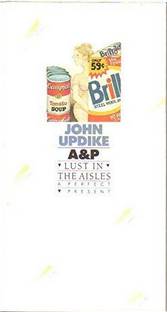
John Updike made the list of favorite short stories picked by the culture writers of The Sunday Times. In “The 100 best stories, from Charles Dickins to Cat Person: As The Sunday Times EFG Short Story Award winner is announced, Culture writers pick their favourite tales,” Updike’s “A&P” (1961) was included:

“Updike wrote 186 short stories, and almost all of them could be included here. Written in the voice of a checkout boy at an A&P supermarket, this tells what happens when ‘in walks these three girls in nothing but bathing suits.’ It has Updike’s trademark sensual detail, sexual tension and mastery of work-life technicalities, and sees a minor moment become a major life incident.”

“A&P” first appeared in The New Yorker on July 22, 1961, and was reprinted in Pigeon Feathers, later appearing as a limited edition published by Redpath Press (1986). It remains Updike’s most frequently anthologized short story, along with “Separating” and “Friends from Philadelphia.”

Continue reading

Chip Kidd talks about Rabbit, Run and nine other favorites

One Grand Books asked celebs to name the 10 books they’d take with them to a desert island, and legendary designer Chip Kidd, who spoke at the 3rd Biennial John Updike Society Conference at Alvernia University in Reading, Pa., unsurprisingly listed Updike’s Rabbit, Run as one of his titles. His comments are incredibly insightful, starting with Updike:

Rabbit, Run, by John Updike
Whenever anyone asks me where I’m from, I ask them if they’re familiar with Updike’s Rabbit books. If they are, then they know exactly what it was like where I grew up. Updike’s father was my father’s high-school math teacher in tiny Shillington, Pennsylvania, a suburb of Reading. That the author returned to this completely unremarkable place for inspiration throughout his lifelong career is a source of endless fascination for me. I used to joke that it was like a great painter being inspired by the color beige.

But how about his take on Salinger?

Nine Stories, by J.D. Salinger
I know this is more than a little obvious, but it’s also the only book of his that I enjoy rereading. There, I said it. In both “A Perfect Day for Bananafish” and “For Esmé With Love and Squalor” are two very different and devastating depictions of PTSD, a full seven decades before it was a thing.

Or Nabokov?

Lolita, by Vladimir Nabokov
As a brilliantly merciless portrait of mid-20th-century middle America alone, this book is a masterpiece. But we all know it is much more than that. I tend to see it as an intriguingly fiendish parody of Moby-Dick.

Read the full article on Vulture.

Updike’s Witches named best book set in Rhode Island

When you see an article titled “The Best Books Based in Every State” at Travel + Leisure magazine, you expect John Updike to turn up as the choice for Pennsylvania. After all, two of the “Rabbit” novels won the Pulitzer Prize for Fiction. But this new article from Lydia Mansel names Jerry Spinell’s Maniac Magee as the best book from the Keystone State: “Jeffrey Lionel ‘Maniac’ Magee is now an orphan and looking for a home in a town in Pennsylvania, a town based on the author’s childhood home in Norristown. He’s also a local legend, thanks to his athleticism and courage.”

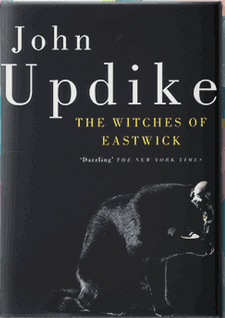
Updike still turns up on the list, though, as author of the best book set in Rhode Island:  The Witches of Eastwick. “In a quaint coastal town in Rhode Island there are three witches—Alexandra, Jane, and Sukie—who developed powers after losing their husbands to death or divorce. Soon, Darryl Van Horne moves in, and all kinds of chaos ensue. Seduction, humor, and revenge reign in John Updike’s magical little town of Eastwick.”

Golf quotes? Look to Rabbit Angstrom

Signature: Making well-read sense of the world, recently published a piece by Tom Blunt on “10 Great Golf Quotes, the Perfect Sport for an Uneasy Nation.” 

Not surprisingly, Updike made the list . . . though it could be considered a surprise that the quote comes not from Updike’s Golf Dreams, but from his alter ego, Harry “Rabbit” Angstrom.

Great as the author says these quotes are, they still “strive—and mostly fail—to capture the angst pleasure of a sport that golf pro Gary Player once described as ‘a puzzle without an answer.'”

Here’s the Updike entry:

John Updike, Rabbit at Rest, 1990
“TV families and your own are hard to tell apart, except yours isn’t interrupted every six minutes by commercials and theirs don’t get bogged down into nothingness, a state where nothing happens, no skit, no zany visitors, no outburst on the laugh track, nothing at all but boredom and a lost feeling, especially when you get up in the morning and the moon is still shining and men are making noisy bets on the first tee.”

The funniest cited is from George W. Bush, who was talking to reporters on August 2002:

“I call upon all nations to do everything they can to stop these terrorist killers. Thank you. Now watch this drive.”

But H.G. Wells isn’t far behind:  “The uglier a man’s legs are, the better he plays golf. It’s almost a law.”


Updike makes British comic’s pick-six

The Express today ran a story about British Comedy Award winner Katy Brand (Katy Brand’s Big Ass Show), who shared her six favorite books. Topping the list:  Rabbit Is Rich, by John Updike.

“My favorite of the Rabbit books because it’s the most fun,” she says. “For some reason I find stories about ordinary American life romantic. In this he has taken over a car dealership and is making good money. I like the sense of living alongside a character through a series of books and it’s perfectly written.”

Philip Roth’s Portnoy’s Complaint also made her list, as did Zadie Smith’s White Teeth, Jill Cooper’s Polo, Margaret Atwood’s Alias Grace, and Sue Townsend’s The Secret Diary of Adrian Mole Aged 13 3/4.

Here’s the whole article:  “Katy Brand: My six best books – Polo, Alias Grace and more” 


John Williams’ Witches of Eastwick Score underrated?

Sean Wilson, writing for Den of Geek!, recently considered “The 15 greatest John Williams scores you’ve forgotten about,” and ranked Williams’ score of the 1970 screen adaptation of Jane Eyre as the composer’s most underrated score . . . with his 1987 score to the film version of John Updike’s The Witches of Eastwick coming in a close second.

“Another aspect of Williams’ musical personality that’s easy to underrate is his wicked sense of humor,” Wilson writes. “His folk-inspired, flighty and darkly comic score for George Miller’s outrageous John Updike adaptation so perfectly captures the whimsical menace of Jack Nicholson’s Satan that it’s hard to imagine the movie without it. It’s Danny Elfman before the latter even became famous.”