New Serbian edition of Rabbit, Run to be published in June 2018

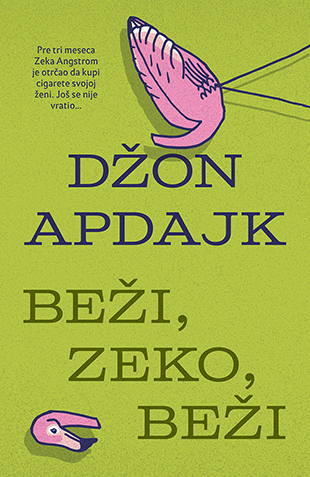
Laguna, the largest publishing house in Serbia, announced the release of a second edition of John Updike’s Rabbit, Run in June 2018—39 years after the first edition of the novel was published in Serbian.

The first edition was published after Updike visited Serbia in 1978; the second is timed to take advantage of new interest in John Updike in Serbia as a result of the Faculty of Philology, University of Belgrade, hosting the Fifth Biennial John Updike Society Conference, featuring Ian McEwan as the opening keynote speaker.

The translation is by Nevena Stefanović–Čičanović, the same as for the one published in 1979, with an afterword by Prof. Biljana Dojčinović, who is directing the Updike conference.

Dojčinović said that there is a very good chance the new edition of Rabbit, Run will be in bookstore windows when conference attendees are exploring Belgrade.

“John Updike,” for those who don’t read Serbian, is “Džon Apdajk.” Here’s a link to the announcement.


Updike interview book re-released in paperback

Lehigh University Press will re-release John Updike’s Pennsylvania Interviews, edited by James Plath, in paperback on March 15, 2018. That’s good news for individuals who didn’t want to put out $105.00 for the hardcover version that was published in 2016. The paperback price at Amazon.com is $49.99.

As James Schiff, editor of The John Updike Review, writes in a descriptive blurb, “Once again, Jim Plath delivers a deeply engaging and important collection of Updike interviews. Stitching together 44 profiles and interviews conducted by a range of figures–-Terry Gross, local journalists from the Reading Eagle, a high school student–-Plath, who adds his own introductory and concluding observations, proves a knowledgeable and emotionally invested guide. John Updike’s Pennsylvania Interviews will appeal not only to general readers, academics, and students, but to those interested in listening to a writer who could string together sentences as beautifully as any figure from American literature. In taking its author back to the state he left in 1950, John Updike’s Pennsylvania Interviews is a homecoming story that casts a spell and radiates with Updike’s life-long affection for Pennsylvania. Plath has been a major player in Updike studies, and his latest effort should be required reading for those wishing to know more about the wunderkind from Shillington.”

The cover photo of Updike at the Plowville farmhouse is by David Updike.

Amazon link

Understanding John Updike book now available for pre-order

Members who attended the 4th Biennial John Updike Society Conference at the University of South Carolina know that the university is home to the Don and Ellen Greiner Collection of John Updike and the Jack De Bellis Collection of John Updike (1976-2008), as well as the Matthew J. Bruccoli Collection. Bruccoli, the preeminent F. Scott Fitzgerald scholar who died in 2008, also founded the “Understanding Literature” series of introductory critical works that is now being edited by Linda Wagner-Martin. And this April, the series gets a new volume on John Updike: Understanding John Updike, by Frederic Svoboda.

From the University of South Carolina Press:
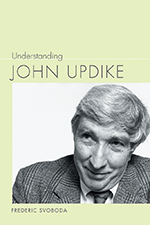
“The winner of every major American literary prize, John Updike (1932–2009) was one of the most popular and prolific novelists of his time and a major cultural figure who traced the high point and fall of midcentury American self-confidence and energy. A superb stylist with sixty books to his credit, he brilliantly rendered the physical surfaces of the nation’s life even as he revealed the intense longings beneath those surfaces. In Understanding John Updike, Frederic Svoboda elucidates the author’s deep insights into the second half of the twentieth century as seen through the lives of ordinary men and women. He offers extended, close readings of Updike’s most significant works of fiction, templates through which his entire oeuvre may be understood.

“A small-town Pennsylvanian whose prodigious talent took him to Harvard, a staff position at the New Yorker, and ultimately a life in suburban Massachusetts, where the pace of his literary output never slowed, Updike was very much in the American cultural tradition. His series of Rabbit Angstrom novels strongly echo Sinclair Lewis’s earlier explorations of middle America, while The Witches of Eastwick and related novels are variations on Nathaniel Hawthorne’s nineteenth-century classic The Scarlet Letter. His number one best seller Couples examines what Time magazine called “the adulterous society” in the last year of the Kennedy administration, following the nation’s fall from idealism into self-centeredness. Understanding John Updike will give both new readers and those already familiar with the author a firm grasp of his literary achievement. This outline of Updike’s professional career highlights his importance in the life of the nation—not only as a novelist but also as a gifted essayist, reviewer, cultural critic, and poet.

“Frederic Svoboda is a professor and former chair of the English Department and director of the Graduate Program in American Culture at the University of Michigan–Flint. He served two terms as a director and treasurer of the Ernest Hemingway Foundation and is the author or editor of several books. His most recent publication, co-edited with Suzanne del Gizzo, is Hemingway’s The Garden of Eden: Twenty-five Years of Criticism.”

Contents: Ch. 1 – Understanding John Updike; Ch. 2 – The Rabbit Angstrom Tetralogy: Updike’s Masterpiece and Template for Understanding His Works; Ch. 3 – The Maples Stories, Olinger Stories, and Other Short Fiction; Ch. 4 – Couples (1968); Ch. 5 – The Shadow of Nathaniel Hawthorne and New England Puritanism: The Eastwick and Scarlet Letter novels; Ch. 6 – Guide to Major Works: The Henry Bech Novellas; Ch. 7- A Brief Summing Up. A bibliography and index are also included.

Specs: 152 pages, 6×9″ trim size, hardcover SRP $39.99, ebook $21.99. According to Amazon.com, Understanding John Updike is scheduled for April 1, 2018 release. No fooling.

 

New book of European Perspectives on John Updike now available for pre-order

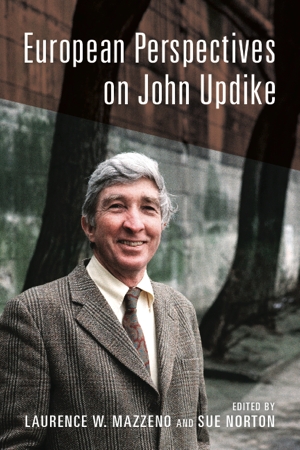
European Perspectives on John Updike, a collection of essays edited by Laurence W. Mazzeno and Sue Norton featuring scholars living and working in Europe, is scheduled for publication in June 2018. From the Camden House/Boydell and Brewer Spring 2018 catalog:

“From the publication in 1958 of his first book, the American writer John Updike attracted an international readership. His books have been translated into twenty-three languages. He had a strong following in the United Kingdom and it was also common to find Updike’s work reviewed in publications in Germany, France, Italy, and other countries. Although Updike died in 2009, interest in his writing remains strong among European scholars. They are active in The John Updike Society and on The John Updike Review (which began publishing in 2011). During the past four decades, several Europeans have influenced the study of Updike worldwide. No recent volume, however, collects diverse European views on his oeuvre. The current book fills that void, presenting essays that perceive Updike’s renditions of America through the eyes of scholar-readers from both Western and Eastern Europe.”
The book is part of the European Perspectives on North American Authors series published by Camden House.  It includes essays from such scholars as Judie Newman, Sylvie Mathé, Biljana Dojčinović, Teresa Botelho, Eva-Sabine Zehelein, Brian Duffy, Karin Ikas, Andrew Tate, Aristi Trendel, Ulla Kriebernegg, Kasia Boddy, and Norton.
The book specifications, according to Camden House:  309pp., 9×6″ trim size, hardcover. Suggested retail price is $99.00 U.S. Libraries, scholars, and Updike lovers can now pre-order the title from the publisher or through Amazon.com.

New De Bellis book is now available

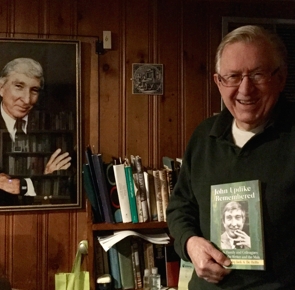
If you haven’t already pre-ordered a copy, you can go to Amazon right now and get a copy of John Updike Remembered: Friends, Family and Colleagues Reflect on the Writer and the Man, edited by Jack A. De Bellis.

The Amazon “Look inside” link gives a full rundown on the contents. The book features 19 interviews with Updike’s classmates (from kindergarten through high school), four essays on Updike’s time at Harvard and his early years as a writer, two essays on Updike in Ipswich, 25 personal reminiscences from “writers, fans, friends,” three reminiscences from Updike’s children, and a reprinted transcript of the Updike Family Panel from The John Updike Society’s first conference at Alvernia University in Reading, Pa.

De Bellis (pictured) is best known in Updike studies for writing The John Updike Encyclopedia and for compiling, with Michael Broomfield, the definitive Updike bibliography.

John Updike: a literal man of letters

Writers write. And the great ones were often great at correspondence. Like Ernest Hemingway, John Updike wrote for popular publications of his day, and like Hemingway he was a proliferate letter-writer. How MUCH of a letter-writer is now coming to light, as people have begun to respond to scholar James Schiff‘s call for Updike letters.

As Schiff told The Guardian, “While it is hardly surprising that he carried on a correspondence with editors, translators, publicists, critics, journalists and fellow writers, what is remarkable is how often and generously he responded to letters from readers, fans and complete strangers.”

Schiff said Updike even responded to “a stranger who asked him to write a note of encouragement to his nine-year-old son who suffered from psoriasis,” a condition Updike shared and wrote about in his essay “At War with My Skin.” Schiff speculates that Updike’s experience as a teenager requesting samples of work from his favorite cartoonists might help to explain his own “pay it forward” attitude toward correspondence.

“Though some of his letters and postcards are perfunctory and mundane, the large majority reveal his attempt to say something witty, funny, or clever,” The Guardian article notes.

Schiff is still gathering letters for a volume of collected letters to be published in 2021. If you have any, send a scan or photocopy to updikeletters@gmail.com.

Random House to release digitalized Updike audio books

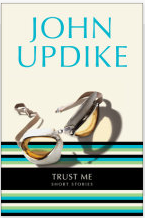
On Tuesday, October 24, Penguin Random House Audio Publishing will release downloadable three-hour audio books of John Updike’s short story collection Trust Me and his writings on golf, Golf Dreams—both volumes digitalized versions of analog cassette packages first issued by Random House Audiobooks in 1987 and 1996, respectively.

Both Trust Me and Golf Dreams are abridged, adapted, and narrated by John Updike.

Trust Me track list

  1. Trust Me
  2. Deaths of Distant Friends
  3. Pygmalion
  4. The Lovely Troubled Daughters
  5. Still of Some Use
  6. Poker Night
  7. The City
  8. Getting into the Set
  9. Learn a Trade

Golf Dreams track list

  1. Preface
  2. Golf Dreams
  3. Tips on a Trip
  4. The Pro (short story)
  5. Swing Thoughts
  6. Intercession (short story)
  7. Golf as a Game of the People
  8. Golfers (poem)
  9. Upon Winning One’s Flight in the Senior Four-Ball (poem)
  10. The Trouble with a Caddie
  11. The Big Bad Boom
  12. The Camaraderie of Golf (I)
  13. The Camaraderie of Golf (II)
  14. The Bliss of Golf
  15. Moral Exercise
  16. Television Golf
  17. Is Life Too Short for Golf?
  18. December Golf

Here is the link.

Other audiobooks currently available from Penguin Random House Audio Publishing are The Afterlife and Other Stories and Selected Stories—both of them also abridged, adapted, and narrated by John Updike.


Booker judge rails against star book blurbs

The Guardian‘s Claire Armitstead posted an article that asks the question, “Do celebrity book blurbs ‘blackmail’ readers?”

“This year’s flurry of fur and feathers was provoked by a tirade from Colin Thubron (pictured) on celebrity endorsements,” Armitstead writes. “Some blurbs, said the veteran travel writer, ‘almost blackmail’ readers into feeling that ‘you’re either intellectually or morally incompetent if you don’t love this book or you’ve failed if you haven’t understood it.’ Some people, he felt, ‘seem to earn their living . . . saying: ‘This is the most profound book of our generation.'”

It’s true. There are plenty of “quote whores” out there, and not just in the field of literature. How many times have film fans seen a blurb from someone like Pete Hammond over-praising a movie that’s mediocre at best? And as Armitstead points out, the practice of celebrity or star blurbing is hardly a new phenomenon. And when a star is born, there are plenty of knocks on the door for favor payback.

Armitstead cites novelist Nathan Filer as Exhibit A. Filer said that one critic didn’t even bother to read his debut novel, The Shock of the Fall, preferring instead to quote a blurb writer who was a better-known novelist. Joe Dunthorne called it “engaging, funny and inventive.” But as Filer pointed out, “I’ve known Joe Dunthorne for many years. I think he owed me a favor.” And six months after he won the Costa book of the year, he received 42 unsolicited proofs of soon-to-be-published novels asking HIM for a blurb.

Such is literary life.

“Filer’s post produced some hilarious comments about the pratfalls of indiscriminate blurbing. ‘Probably the nadir,’ wrote Chris Power, ‘is John Updike’s for ZZ Packer’s Drinking Coffee Elsewhere: ‘ZZ Packer tells it like it izz.'”

Of course, anyone who’s read a number of Updike’s blurbs knows that he tended to blurb only those books he liked, and when he went for a pun it meant the occasion (or book) called for it.


Sportswriting anthology includes Updike

It’s been out for quite a while, but it’s just come to our attention that John Updike is included in the sportswriting anthology Ted Williams: Reflections on a Splendid Life (Northeastern, 2003), edited by Lawrence Baldassaro and with a foreword by Dom DiMaggio.

As the Amazon description notes:

“It features thirty-five articles by celebrated sportswriters and best-selling authors, including Al Hirschberg (“Handsome Bad Boy of the Boston Red Sox”), Red Smith (“Ted Williams Spits”), Bud Collins (” ‘Saint’ Goes Marching In”), Peter Gammons (“Williams an Unquestioned Hit with Him”), Ed Linn (“The Kid’s Last Game”), John Updike (“Hub Fans Bid Kid Adieu”), Donald Hall (“The Necessary Shape of the Old-Timers’ Game”), John Underwood (“Going Fishing with the Kid”), Stephen Jay Gould (“Achieving the Impossible Dream: Ted Williams and.406”), and David Halberstam (“The Perfectionist at the Plate”). Taken together, the pieces offer a vivid mosaic of a true American great who is admired and respected as much by today’s ballplayers and fans as those of his own generation.”

From the Publishers Weekly review:

“A well-selected collection of articles about baseball great Ted Williams, this volume works on many levels. A slice of 20th-century American literature, it chronicles the evolution of sports journalism from Red Smith to Pete Gammons while showcasing selections from literary giants like John Updike and Donald Hall. Arranged chronologically, the collection works as a biographical collage and stunning account of the cyclical nature of American hero worship. Not surprisingly, several less flattering pieces on the cantankerous Williams are included, but instead of detracting from Williams’s legend they help present a comprehensive picture of a man so captivating that more than half this volume’s works were written after his 1960 retirement. Collectively, these articles tell readers almost as much about the featured writers as they do about the slugger himself. This is partly attributable to Williams’s image as the reluctant hero, but also to the fact that Williams courted both favor and disdain with his single-minded determination to make himself the world’s greatest hitter, fisherman, combat pilot and philanthropist, all pursuits as solitary as putting pen to paper. So many of the writers insert themselves into their stories as a means of explaining Williams’s complex personality that the underlying similarity between the slugger and the writers becomes a theme of the collection, exemplifying Williams’s irresistible lure for reporters, novelists, poets and even mathematicians. Thanks to this unprecedented connection between athlete and authors, this compilation stands as a fitting literary epitaph for a man who may never get one set in stone. Illus. not seen by PW.”

Updike scholarship still going strong

Authors’ literary fortunes seem to rise and fall over time, but critical interest in John Updike has remained fairly steady over the years. Two books were published in the ’60s and six in the ’70s, when his reputation was still growing. The spike in interest came in the ’80s, when 16 critical books were published. The ’90s saw 11 more books on Updike published, and the 2000s another 10. So far this decade 10 books have been published on Updike, with two more forthcoming later in the year.

Updike Society members and Updike lovers are encouraged to ask their public and university libraries to purchase copies of the most recently published books on John Updike:

Batchelor, Bob. John Updike: A Critical Biography. Westport, Conn.: Praeger, 2013.

Begley, Adam. Updike. New York: HarperCollins, 2014.

Crowe, David. Cosmic Defiance: Updike’s Kierkegaard and the Maples Stories. Mercer, Ga.: Mercer University Press, 2014.

De Bellis, Jack. John Updike’s Early Years. Bethlehem, Pa.: Lehigh University Press, 2013.

Farmer, Michial. Imagination and Idealism in John Updike’s Fiction. Melton, England: Camden House, 2017.

Mazzeno, Laurence W. Becoming John Updike: Critical Reception, 1958-2010. Rochester, N.Y.: Camden House, 2013.

McTavish, John. Myth and Gospel in the Fiction of John Updike. Eugene, Ore.: Cascade Books, 2016.

Naydan, Liliana M. Rhetorics of Religion in American Fiction: Faith, Fundamentalism, and Fanaticism in the Age of Terror. Lewisburg, Pa.: Bucknell Univ. Press, 2016.

Plath, James. John Updike’s Pennsylvania Interviews. Bethlehem, Pa.: Lehigh University Press, 2016.

Rodgers, Jr., Bernard F., ed. Critical Insights: John Updike. Pasadena, Calif.: Salem Press, 2011.