Are cigarettes and golf transcendent for writers?

A book review of Gregor Hens’s Nicotine written for The Atlantic begins,

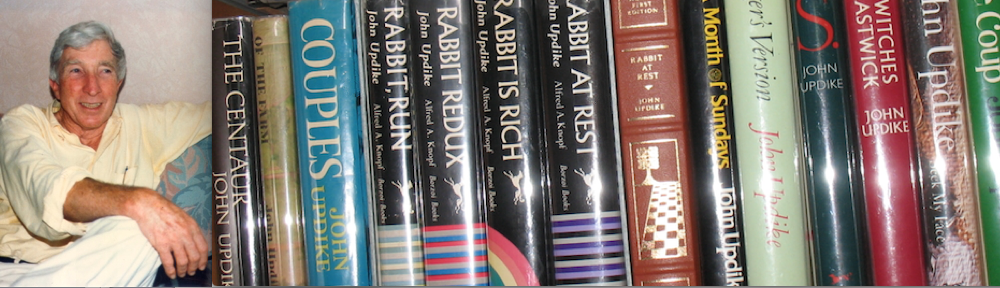
“Writers have long found rich fodder for their work in their leisure pursuits. John Updike, writing about golf in The New York Times in 1973, described the pastime as ‘a non-chemical hallucinogen’ that ‘breaks the human body into components so strangely elongated and so tenuously linked, yet with anxious little bunches of hyper-consciousness and undue effort bulging here and there, along with rotating blind patches and a sort of cartilaginous euphoria.’ Sketching out a particularly lucid paragraph about the act of preparing for a stroke, he confessed, ‘got me so excited I had to rush out into the yard and hit a few shots, even though it was pitch dark, and only the daffodils showed.’

“Updike’s experience of transcendence while playing golf—his sense of tapping in to a kind of acute concentration that alters perception—is echoed vividly in the German writer Gregor Hens’s new memoir of sorts, Nicotine,” reviewer Sophie Gilbert writes.

Nicotine, she says, “enters a kind of sub-genre of literary memoirs focused around a single practice or obsession, in which the object or activity enables the writer to achieve sharper focus, heightened consciousness, and creative fire. Like Haruki Murakami’s What I Talk About When I Talk About Running and Updike’s writing on golf, it illuminates the writerly quest for the elusive state the Hungarian psychologist Mihály Csíkszentmihályi named, simply, ‘flow.’ Smoking, Hens seems to believe, transformed him into a writer by expanding his sense of what was real and what was perceivable. It physically and irreparably altered the pathways in his brain. And it punctuated and constructed the order of his professional life.”

Read the full review.

John Updike letters sought

schiff-130x150The John Updike Letters Project

For those who may have missed the announcement, The John H. Updike Literary Trust has named John Updike Society vice president James Schiff as editor of a volume of John Updike’s letters.

Schiff, who edits The John Updike Review, expects to complete the project in 2020 and has begun collecting letters from institutional libraries, in addition to requesting them from private owners and recipients.

If you have letters, notes, or postcards from John Updike—a single one, or many—Schiff would appreciate receiving photocopies or digital scans. All materials and inquiries will be handled with care and discretion.

Contact:  James Schiff, 2 Forest Hill Dr., Cincinnati, OH  45208; (513) 284-6012; james.schiff@uc.edu.


Trump, Russia, Rabbit and golden showers?

49473197-cachedDonald Trump is in the news again (still), this time with media outlets reporting on new allegations regarding the president-elect, his ties to Russia, and a bizarre twist some in the Twittersphere are calling “#watersportsgate.” In a story titled “Americans Deserve to Know the Specific Allegations on Trump and Russia; Trump’s sex life is his own affair. But his ties to foreign autocrats—whether Russian, Chinese, or Emirati—should have been fully aired long before now,” written for The Nation by D.D. Guttenplan, the author writes about a newly revealed dossier that “accuses Trump and his campaign of knowingly conspiring with Putin’s government to influence the U.S. election in his favor, in return for an explicit promise ‘to sideline Russian intervention in the Ukraine as a campaign issue.'” The dossier also contained information of a more personal nature, that had some wondering whether it was appropriate for public dissemination.

“But once the dossier was in circulation, among not only reporters on the intelligence and campaign beats but also politicians, intelligence officials, and law-enforcement agents—with President Obama and President-elect Trump both given official briefings on its contents—then yes, the people do have a right to know not just in summary terms but in detail what has been alleged. Even when those details include sexual conduct that many Americans (and the British daytime-television audience) might find shocking—unless, that is, they were fans of John Updike’s Rabbit Is Rich, which introduced “golden showers” into the (pardon the expression) mainstream way back in 1981.

“Diverting as the details are—and given what Trump has not just admitted but boasted of doing in the past, such practices, even if true and captured for posterity by the FSB, are hardly likely to disqualify him—the central questions remain fundamentally political. Because Trump’s resemblance to a broken clock—right about the need to restore American manufacturing, and to seek common ground with Russia on issues ranging from Iran to nuclear proliferation to combating ISIS; wrong on just about everything else—isn’t just a problem for the left. Bernie Sanders seems to have figured out a way to challenge Trump without playing into the narrative of elitist derision; the rest of us are still struggling.”

Anyone struggling to grasp the meaning of the expression “golden showers” might turn to an article written for The Daily Beast on “Wet and Wild: The History of ‘Golden Showers’; ‘Germaphobe’ Donald Trump denied being turned on by ‘golden showers.’ But the sexual practice has an endless stream of other fans.” In it, Lizzie Crocker writes,

“At the end of John Updike’s Rabbit Is Rich, the novel’s prejudiced, patriotic, angsty, lust-crazed protagonist urinates on his wife’s friend—who, in turn, urinates on him—during a vacation to Puerto Rico.

“The golden shower is an unorthodox sexual activity even for Harry ‘Rabbit’ Angstrom, whose very nickname evokes an impulsive, frenetic creature with an undiscerning sexual appetite.

“President-elect Trump has insisted he’s never read the book, but given his contempt for the truth and the now-infamous, unverified report that he enjoys being peed on, one wonders if our soon-to-be POTUS’s particular sexual proclivity was inspired by Updike’s fictional American everyman?”


Fifth Updike Conference Call for Papers issued

screen-shot-2017-01-09-at-12-49-50-pmSouth Carolina may still be a fresh memory, but it’s time for Updike scholars and aficionados to look ahead to June 2018, when the Fifth Biennial John Updike Society Conference will be held in Belgrade, Serbia. Please note that one day has been added to the schedule, and the conference will now take place June 1-5 2018.

Conference director Biljana Dojčinović has issued a first-call-for-papers to be presented at the conference, which will be co-sponsored and hosted by the Faculty of Philology at the University of Belgrade.

To give people plenty of time to plan for the trip, Biljana will respond to proposals within two weeks of receipt, with rolling acceptances. As with previous conferences, moderators are also sought.

ALL topics will be considered, but especially appropriate for this conference are paper proposals for the following:

  • Updike in Translation
  • Updike and Traveling
  • Updike in the U.S.S.R.
  • Updike in (Post)Socialist Countries
  • Updike and Religion(s) and Idealogies (socialism, pacifism, etc.)
  • Updike and Gender Politics
  • Updike and Ethnic Politics
  • Coming of Age in Updike’s Fiction
  • Aging in Updike’s Fiction
  • Narrative Techniques in Updike’s Fiction
  • Narration in Updike’s Poetry
  • Intertextuality in Updike’s Fiction
  • Updike in Comparative Perspectives

and also papers dealing with Updike works celebrating a milestone anniversary in 2018:

  • Couples (50th)
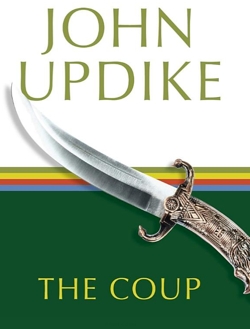
  • The Coup (40th)
  • S. (30th)
  • Collected Poems and Love Factories (25th)
  • Bech at Bay (20th)
  • The Widows of Eastwick (10th)

Interested scholars should consult the complete call for papers for additional information and contact Biljana with any questions: jus5thconference@gmail.com.


Beyoncé, James Cone, and Updike’s Skeeter

screen-shot-2017-01-09-at-12-25-01-pmIn a scholarly essay posted January 9, 2017 on The Other Journal website, Lauren D. Sawyer considers Updike’s controversial character Skeeter from Rabbit Redux in a larger context:  “No Savior at All:  Updike’s Black Jesus and the White Church.”

There is much to digest here—too much to excerpt, except for the author’s concluding paragraph:

“In Black Theology and Black Power, [“father of black liberation theology” James] Cone writes that ‘the time has come for white Americans to be silent and listen to black people.’ It is clear that white Americans, and in particular the white church, have not listened well. We have insisted that our culture be the norm, making it difficult to embrace the blackness of Beyoncé, let alone broader representations of blackness in America. We have insisted that our Christ be white and have used him to justify racism from slavery to the mass incarceration of black men. Maybe what we need is a black Jesus to come and disrupt our perspective, to show us the extent of our sin. Updike’s black Jesus does not quite get us there. He may reveal to us, the white church, our sin, but he does not offer liberation to black lives. Skeeter as Christ functions only to help the white church begin to address its privilege and racism by forcing us to see our racism for what it is. To black lives, Skeeter is pure antichrist—he is a misrepresentation of what it means to be black and is thus no savior at all. It is the black Jesus imagined by Cone who fully functions as Christ to both black and white lives: liberating black persons from oppression and liberating white persons from their role as oppressor.”

Read the full essay.

Writer offers Brief Survey of the Great American Novel(s)

You’ve heard the debate. Probably participated, as well. Is there a Great American Novel?

literary-map-of-us-america-reads-anthologyEmily Temple, writing for Lit Hub, takes readers back to 1868 when John William DeForest “coined the now inescapable term ‘the great American novel’ in the title of an essay in The Nation—a term he defined as representing “the picture of the ordinary emotions and manners of American existence.” DeForest thought that the Great American Novel hadn’t been written yet, but since his early speculation there’s been no shortage of “contenders.”

Temple assembles a list of the usual suspects plus a few unique ones, among them (of course) John Updike’s Rabbit, Run (or rather, the collective Rabbit tetralogy). She blurbs each entry with a learned quote. For Updike it’s one from Troy Patterson written for Slate in 2009: “To consider the 1,700-odd pages of his Harry Angstrom saga—the bounding tetralogy of Rabbit books and their limping postscript—is to find yourself considering a work with an excellent claim as the Great American Novel, but you’d be forgiven for preferring to spend time with four or five Very Good ones.”

Other contenders on Temple’s non-exhaustive list are:

The Great Gatsby, F. Scott Fitzgerald
Moby-Dick, Herman Melville
To Kill a Mockingbird, Harper Lee
The Adventures of Huckleberry Finn, Mark Twain
Mason & Dixon, Thomas Pynchon
American Psycho, Bret Easton Ellis
The Grapes of Wrath, John Steinbeck
Underworld, Don DeLillo
Lolita, Vladimir Nabokov
U.S.A., John Dos Passos
Invisible Man, Ralph Ellison
Blood Meridian, Cormac McCarthy
Light in August, William Faulkner
Absalom, Absalom!, William Faulkner
Infinite Jest, David Foster Wallace
The Adventures of Augie March, Saul Bellow
Gentlemen Prefer Blondes, Anita Loos
Beloved, Toni Morrison
The Amazing Adventures of Kavalier and Clay, Michael Chabon
Freedom, Jonathan Franzen
The Brief Wondrous Life of Oscar Wao, Junot Díaz
These Dreams of You, Steve Erickson
The Flame Throwers, Rachel Kushner

Sportsblogger reviews Rabbit, Run

Rabbit-RunRESIZED-280x393Rabbit, Run has been reviewed hundreds of times, but this one—posted on Sportsblog January 5, 2017—is a little different:  “Book Review: Rabbit, Run, by John Updike; Running in Israel.”

Or, rather, not running. As the author writes, “In Rabbit, Run, the protagonist’s method for dealing with feeling trapped is to run away. In my case, not being able to run has been among the chief factors contributing to my feeling trapped.

“It was a rough December for Jerusalem—cold, wet and dark. . . . Early in the month I missed almost a full week of work with what might have been pneumonia or bronchitis—probably weather-induced. . . . The whole rest of the month the respiratory issues lingered, making it difficult to sleep and to function in general,” the author writes.

“Very little running was going on all this time. Winter had like a battering ram broken through my defensive fortifications, work held me prisoner in my chamber, and there they gave me Rabbit, Run to read, to gnaw away at my spirit from within.

“John Updike’s 1960 novel is that powerful. It spreads through the reader like a tea bag in hot water. Consciously, I didn’t like the first half; yet the story had seeped into the seedbed of my subconscious, where it settled, established itself, germinated, grew. I felt it there during the day, felt Harry Angstrom’s character moving, doing things, haunting like a ghost. I read on without enjoyment, annoyed, frustrated, but also strangely captivated, drawn in against my will.”

The author found Rabbit, Run depressing enough to Google “cheerful novel” in order to have “something encouraging to look forward to after Rabbit. Alas, what I ended up reading was The Optimist’s Daughter by Eudora Welty, an infuriatingly bad book that somehow won a Pulitzer in 1973.”

The author concludes, “Rabbit, Run gets four stars. If it weren’t for that quagmire of a first half, it would be a must-reread.”

New Yorker’s The ’60s: The Story of a Decade features Updike

511soikvlkl-_sx329_bo1204203200_The New Yorker has released a third volume in a decade-by-decade anthology series collecting pieces published in the famed magazine that best reflect each decade.

John Updike pops up several times in The ’60s: The Story of a Decade, which was published in hardcover on October 25, 2016. The substantial volume, published by Random House, runs 720 pages, and as a starred Kirkus review gushed, “The contributor list is an embarrassment of riches . . . The hits continue. Bring on the ’70s.”

Included are pieces from Renata Adler, Roger Angell, Hannah Arendt, Michael J. Arlen, James Baldwin, Whitney Balliett, Donald Barthelme, Jacob Brackman, Truman Capote, Rachel Carson, John Cheever, Henry S.F. Cooper, Jr., James Dickey, Mavis Gallant, Brendan Gill, Penelope Gilliatt, Emily Hahn, Geoffrey T. Hellman, Nat Hentoff, Hendrik Hertzberg, Ted Hughes, Charlayne Hunter-Gault, Randall Jarrell, Pauline Kael, E.J. Kahn, Jr., Katharine T. Kinkead, Hans Koningsberger, Jane Kramer, Daniel Lang, Flora Lewis, A.J. Liebling, Andy Logan, D. Lowe, Dwight MacDonald, Donald Malcolm, Terrence Malick, Faith McNulty, John McPhee, Thomas Meehan, Ved Mehta, James Merrill, Jonathan Miller, Lewis Mumford, Howard Nemerov, F.S. Norman, Sylvia Plath, Robert Rice, Harold Rosenberg, Lillian Ross, Richard H. Rovere, Muriel Rukeyser, Xavier Rynne, Jonathan Schell, Winthrop Sergeant, Ann Sexton, Isaac Bashevis Singer, L.E. Sissman, Muriel Spark, George Steiner, James Stevenson, Donald Stewart, May Swenson, Calvin Trillin, George W.S. Trow, Kenneth Tynan, John Updike, Kevin Wallace, Joseph Wechsberg, E.B. White, Thomas Whiteside, and Ellen Willis.

Here’s the Amazon link.

screen-shot-2017-01-05-at-9-32-59-am

screen-shot-2017-01-05-at-9-33-06-am

screen-shot-2017-01-05-at-9-33-17-am

Is Updike’s Rabbit rare, or common?

In a January 5, 2017 post on The Guardian, writer Matt Lewis notes that “Rabbit, Run is about a rebel we all know; John Updike’s disappointed young man dreams of escaping a workaday existence in a way that’s still familiar nearly 60 years on.”

Updike famously intended Rabbit, Run as a “riposte to Jack Kerouac’s 1957 beatnik classic On the Road,” Lewis writes. “Rather than beating morality into his readers, Rabbit gives Updike a means to explore the urges that exist in everyone—however secretly.”

That’s the common part. But as Lewis observes, “Like James Joyce and DH Lawrence before him, Updike treats sex and sexuality with a frankness that was uncommon among his contemporaries. The descriptions of sex have retained their raw freshness. In an essay, David Foster Wallace named Updike one of three Great Male Narcissists in U.S. postwar fiction and said that friends had criticized Updike for being ‘just a penis with a thesaurus.’ But that feels grossly unfair when considering his early novels like this one.

“For all of the prose’s curlicues and self-conscious prettiness, there is undoubtedly meat on the bone. Through Rabbit, Updike confronts major topics in a minor way: unravelling the tapestry of the suburban American male psyche and reweaving it into beautiful images. On reading, we become like his protagonist: restless strivers yearning for something different and altogether bigger than ourselves.”

Blogger considers Updike, Rabbit and Tolstoy

screen-shot-2016-12-26-at-9-22-47-am‘Twas the night before Christmas, and blogger Richard Smith (Richard Smith’s non-medical blogs) spent the evening pondering the connection between John Updike and his alter ego, Harry “Rabbit” Angstrom—specifically, by reading, considering, and including quotes from the novella Rabbit Remembered, with a comparison to Tolstoy thrown in for good measure:

“One of the characters in Rabbit Remembered says of the detective novels she is always reading, ‘How do they make all this up? They must have a screw loose.’ John Updike I feel is mocking himself. I’m sure that he thinks he has a screw loose, and he’s glad about it. He wouldn’t have wanted to have all his screws tight; who does?

“I came to read Rabbit Remembered by mistake. I’ve been slowly—here and there, for a shot of humor, color, and inventiveness, like a glass of Cognac—been reading my way through Updike’s Licks of Love. When I started reading Rabbit Remembered I thought I was reading another short story, but it’s a full novel, or at least a novella. I read more than half of it in one go on the plane yesterday from Bengaluru to London. That’s the way I read. (I seem to have given up watching films on planes: they almost always disappoint. My novels, never—I’m too choosy.)

“Every sentence of Updike carries poetry and sharp observation—and often a joke as well. I’ve been reading Rabbit Remembered at the same time as reading Anna Karenina, and most sentences of Tolstoy contain insights—but they don’t have the fizz, the joy of words, the poetry of Updike (they probably have more poetry in Russian). The beauty of Tolstoy is in the vast range and the deep and timeless psychological understanding. In Anna Karenina marriage (“that bloody business”) is examined from every angle. Updike too exams relationships acutely, but in a lighter, funnier way. Perhaps some would find Updike overwritten, but his sentences sing and seem effortless, which, of course, they can’t be.”

The full post can be found here:  “Rabbit and Updike remembered.”

Those intrigued by Smith’s insights may want to also read his Dec. 25, 2016 post, “John Updike on the demented as a ‘dead weight’ on society,” also sparked by his reading of Rabbit Remembered.