Call for papers, panels for ALA in Boston

screen-shot-2016-12-22-at-10-53-11-amThe ALA has issued its annual Call for Papers, to be presented at the 28th Annual Conference of the American Literature Association on May 25-28, 2017, in Boston.

As in previous years, the conference will be held at the Westin Copley Place, 10 Huntington Ave., and as in previous years member organizations are encouraged to sponsor two sessions.

This year The John Updike Society would like to sponsor two sessions:

  1. A moderated 4-5 person panel inspired by a recent article, “Did Updike’s Rabbit Angstrom Anticipate or Parallel the Rise of Trump Voters?”
  2. An open session with moderator and three papers presented on Updike—preferably compared to other authors.

If you are interested in participating, please contact James Plath, jplath@iwu.edu.


PECO Foundation continues Updike house support

The John Updike Society has just received a $10,000 donation from The PECO Foundation of New York, N.Y. to “help support the John Updike Society’s project to preserve the Updike family house.”

The foundation’s support has been crucial in past years, and this year, as the society tries to bring the interior/exterior restoration to a close, their donation is much needed and much appreciated.

The PECO Foundation provides gifts, grants, or loans to other organizations and has supported The John Updike Society’s house project since 2012.


Updike turns up in NYT Year in Reading retrospective

screen-shot-2016-12-22-at-9-06-34-am“In this season of giving,” a Dec. 19, 2016 New York Times Book Review post began, “we asked some notably avid readers—who also happen to be poets, musicians, diplomats, filmmakers, novelists, actors and artists—to share the books that accompanied them through 2016.”

Not all the books in “The Year in Reading” were published in 2016, and Updike appeared on two lists:

—Carl Bernstein, of Woodward and Bernstein Watergate fame, includes John Updike: The Collected Stories on a list of “works most enjoyed or valued, in no particular order,” while

—Writer Maxine Hong Kingston lists books in the order in which she read them, including Updike’s In the Beauty of the Lilies.

What Updike books have you read in 2016, or do you plan to read in 2017?

Marry Me the subject of a University of Tehran thesis

screen-shot-2016-12-22-at-8-44-12-amMember Narges Zarei has completed her thesis on “Postmodern Manifestation of Romance in Updike’s Marry Me: A Romance: Dissociation from Conventional Romance,” in which she concludes that “not only does Updike relate his novel to the eight essential characteristics of a romance novel, but he also employs the other three minor features in Marry Me. He deconstructs some of these essential elements to depart his romance novel from conventional ones in order to make it a postmodern romance. Updike sticks to elements of conventional romance novels namely society defined, the meeting, the attraction, the declaration, point of ritual death, wedding, dance, or fete, scapegoat exiled, and the bad converted. Nevertheless, Updike dissociates from conventional romance novels in terms of the barrier, the recognition, and the betrothal.”

Here is her full thesis: zarei-marry-me. She would be pleased if people who read it might post comments.


Author thinks Updike foresaw the Trump era

updikeWriting for the American Conservative, Charles F. McElwee III asks, “Did John Updike Foresee the Trump Era?”

“Revisiting Updike’s Rabbit novels is a rendezvous with prescience, for no collection of postwar fiction could help us better understand how working-class populism—in the form of Donald Trump—prevailed on Election Day 2016,” he writes.

“Although Rabbit supported Humphrey in 1968, he later has a ‘Reagan Democrat’ conversion, voting for George H.W. Bush in the final novel. If anything, he’s the fictional embodiment of a political prototype, a cross-party coalition infuriated by the loss of what communities like Brewer once symbolized: economic prosperity and a shot at a stable middle-class American life. The Rabbit novels could serve as the fictional companion to any social-policy book by Charles Murray,” McElwee writes. “The realism of Updike’s characters and plot lines is a tribute to Updike’s understanding of this durable voting bloc, one that determined Hillary Clinton’s fate.”

Read the whole article.


Bookseller offers Updike association copies for sale


screen-shot-2016-12-14-at-10-38-34-pmCloud Hill Books
of New York City is selling a collection of inscribed and signed Updike first editions from the library of Theodore Vrettos and his wife, Vassile. Darren of Cloud Hill Books writes, “The Vrettos were residents of Peabody, Mass. In addition to being social acquaintances of John and Martha Updike, Vrettos was Updike’s regular golfing partner [until his death in 2004] and also a consultant for Greek characters and text in Updike’s stories and novels. After attending Tufts College and Harvard University, Vrettos taught creative writing at Salem State College and was director of the Writers’ Conference at Simmons College for 13 years. He was also the author of a number of fiction and non-fiction works, including Hammer on the Sea (1965), A Shadow of Magnitude: The Acquisition of the Elgin Marbles (1974), Origen: A Historical Novel (1978), Birds of Winter (1980), Lord Elgin’s Lady (1982), The Elgin Affair: The Abduction of Antiquity’s Greatest Treasures and the Passions It Aroused (1997), and Alexandria: City of the Western Mind (2001).

Here is the list of first editions for sale:  john-updike-first-editions-from-the-library-of-theodore-vrettos

The John Updike Society won’t be bidding because our funds are tied up with the house restoration, but if an Updike fan or Secret Santa would like to purchase one or two to donate for rotating display in The John Updike Childhood Home, items #15 and #49, with interesting content inscriptions, certainly would be nice additions to our museum-in-progress!


Updike letters to be published

The John H. Updike Literary Trust announced yesterday that James Schiff will edit a volume of John Updike’s letters, with a target completion date of 2020. A publisher has not yet been named.

schiff-130x150Anyone familiar with Updike studies knows that this is good news on several counts. The decision to release a collection of letters comes after years of the Literary Trust saying it would not permit them to be published. The reversal opens the door to not just a single published volume, but more, as happened in Hemingway studies when an initial Selected Letters edited by Princeton scholar Carlos Baker led to several thematic volumes of correspondence before the complete letters were (and are still being) published in a multi-volume set. Updike, like Hemingway, was a prolific letter-writer who was generous with his comments, producing hundreds of what are typically described in the autograph world as “content letters.” A volume of published letters always sparks new reader interest in an author and gives scholars additional material with which to work and find inspiration for new insights, essays, and books.

It’s also good news that James Schiff was chosen to edit the volume. As editor of The John Updike Review and cofounder and current vice-president of The John Updike SocietySchiff is well positioned to collect and edit the interviews. An associate professor of English at the University of Cincinnati, Schiff is also known in the Updike world for his three books: Updike’s Version: Rewriting the Scarlet Letter (1992), John Updike Revisited (1998), and Updike in Cincinnati: A Literary Performance (2007).

“Updike was a masterful and prolific letter writer, and so it pleases me greatly to be working on this project,” said Schiff, who has already begun collection letters from institutional libraries and requesting them from private owners and recipients. The letters span six decades of Updike’s life, from his teens in postwar rural Pennsylvania to his seventies, when he was revered as one of America’s most accomplished and honored men of letters.

“Collecting the staggering number of extant letters will take time,” Schiff said. “Yet it is already clear that these writings have literary and biographical significance. Updike is a major figure in American literature, and his letters reveal yet another aspect of his literary genius.”

Schiff said he would be grateful to hear from anyone in possession of Updike’s correspondence. He can be reached at james.schiff@uc.edu or updikeletters@gmail.com.

De Bellis featured in WDIY interview

jackdebellis-webJohn Updike Society cofounder and former director Jack De Bellis, whose John Updike Encyclopedia and John Updike’s Early Years have been indispensable for Updike scholars, was featured in an interview on WDIY, Lehigh Valley’s Community NPR Station, on Dec. 6, 2016.

Asking the questions was Lehigh Valley Discourse host John Pearce.

Here’s the audio link.

Updike wrote to oppose John Lennon deportation

screen-shot-2016-12-11-at-6-38-17-pmA City Pages article on music by Jay Boller titled “Hey Prude: How one penis-fearing Minnesotan tipped the FBI to John Lennon” tells of the reaction that started an FBI file that grew until it deportation became a threat for the former Beatle. Featuring himself and mate Yoko Ono naked on the album cover for Two Virgins (1968) was only the beginning. It was his anti-war voice that was the loudest and his involvement with experimental drug-use that gave the FBI its opening.

However, “Minnesota’s own Bob Dylan would join dozens of rational stars—including Jasper Johns, Joan Baez, and John Updike—in writing letters of support for Lennon to the INS, which began deportation efforts in 1972.

For the whole story, click here.

Review of The Violet Hour cites Updike

VioletHourKatie Roiphe included John Updike in her book The Violet Hour, so it’s no surprise that a review of that book would cite Updike, as Shirley Hershey Showalter did for The Christian Century. In “Death’s call and our response,” published October 2, 2016, she writes,

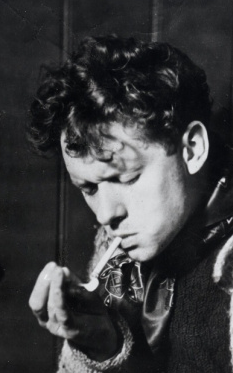
“Kalanithi uses a quotation from Montaigne as an epilogue: ‘If I were a writer of books, I would compile a register, with a comment, of the various deaths of men: he who should teach men to die would at the same time teach them to live.’ The quotation could apply to Katie Roiphe’s book also. The Violet Hour takes up Montaigne’s challenge but with less confidence in the outcome. Roiphe roiled cultural waters in the 1990s withThe Morning After: Sex, Fear, and Feminism. The Violet Hour defies genre, mixing memoir, journalism, biography, and literary criticism as it ponders the dying of six writers—Sigmund Freud, John Updike, Dylan Thomas, Maurice Sendak, James Salter, and Susan Sontag.”

Later, she writes, “Updike is the only practicing Christian in the group. His lifelong devotion to the Book of Common Prayer and the Episcopal Church present a puzzle to Roiphe. She’s not tripped up by the apparent contradiction of his adulteries; she has a special interest in his linking of adultery and immortality: ‘I have a soft spot for those who try to defeat death with sex.’ It’s irony, not sex, that makes it difficult for her to understand Updike’s religious life.

“She explains in an endnote that Updike’s biographer Adam Begley helped her see continuity where she could only see confusion. Updike’s final book of poems, Endpoints, includes these lines about clergymen: ‘comical purveyors / of what makes sense to just the terrified.’ Roiphe settles on this explanation: ‘Updike approached everything under the sun with irony, including his deeper passions, his beliefs, his sources of marvel and awe.'”

Here’s the full article.