New Yorker cartoonist blog features Updike’s Thurber

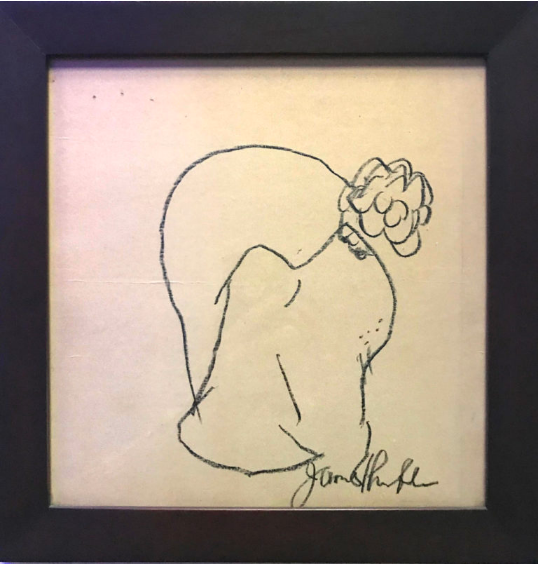
New Yorker cartoonist Michael Maslin posted an entry today on Ink Spill: New Yorker Cartoonists News and Events titled “Updike’s Thurber.” In it,  readers get a rare glimpse of the cartoon dog that Thurber drew especially for a young ‘tween fan named John Updike (courtesy of Miranda Updike).

“For those of us who treasure Thurber’s art, there is I would suggest, nothing  more wonderful than a Thurber drawn dog. In Updike’s Introduction to Lee Lorenz’s The World of William Steig, he tells us that in 1944, when he was 12 years old, he wrote Thurber a fan letterThurber responded with the drawing you see at the top of this post”.

In musing about the relationship between Updike and Thurber, Maslin shared his “favorite Updike description of Thurber’s art: ‘…oddly tender…a personal art that captured in ingenous scrawls a modern man’s bitter experience and nervous excess.'”

Updike book a perfect read for the Covid holidays?

As the pandemic rages on, many people are tending toward rage as well. Or at least a profound feeling of being “over it all.” Or disappointment that the usual holiday gatherings had to be abandoned. But the 746 Books blog reminds us that John Updike’s offbeat Christmas book might be just what the epidemiologist ordered.

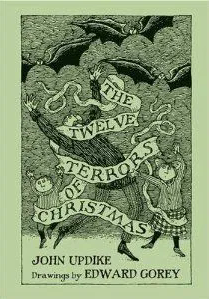
In “Alternative Christmas Reading!” 746 Books recommends Updike’s The Twelve Terrors of Christmas:

“John Updike’s wry observations paired with Edward Gorey’s off-kilter illustrations make for a decidedly different festive reading experience! From impractical miniature reindeer to alcoholic Santa’s Updike expores the more disappointing side of this most wonderful time of the year!”

When Updike waded into Nigerian politics

BBC News recently ran a story by Adaobi Tricia Nwaubani about Nigerian blogger Teslim Omipidan, whose passion for history and all things Nigerian has connected famed American writer John Updike to his country’s politics. Here is one of Omipidan’s stories:

In October 1961 a young American named Margery Michelmore caused a stir when, in the midst of Peace Corps training at the University of Ibadan in southwestern Nigeria, she decided to send a postcard to a friend back home. In it, she described the “squalor and absolutely primitive living conditions” of her new environment. “A Nigerian saw the postcard before it was mailed; distributed photocopies around the campus—sparking riots from the students who found the private message outrageous, and an international incident that eventually drew the involvement of then US President John F. Kennedy.”

Where does Updike come in?

“Back in 1961, acclaimed writer John Updike absolved Margery Michelmore of blame in the postcard incident. ‘Miss Machelmore did not sin in saying in a personal missive that she was startled, coming fresh from Foxboro, Massachusetts, to find the citizens of Ibadan cooking in the streets,’ he wrote in the 28 October issue of that year’s The New Yorker. ‘And the fellow student who picked up the dropped card and, instead of mailing it, handed it to the local mimeographer seems guilty of a failure of gallantry. One may or may not cook in the streets, but one does not read other people’s mail and then demonstrate because it is insufficiently flattering,'” Updike had written in “The Talk of the Town.”

Read the whole article:  “The Nigerian blogger scouring the past to inform the future”

Scientific American writer contemplates poetry and science

In the Arts & Culture/Opinion section of Scientific American posted 23 December 2020, Dava Sobel talks about being tickled to discover “a little over a year ago that the magazine had carried poetry in its earliest issues. Volume 1, Number 1, for example, dated 28 August 1845, included a poem called ‘Attraction’ that touched on gravity, magnetism and sexual allure. Within a few years, however, the magazine’s original publisher, Rufus Porter, sold Scientific American, and the new owners showed no interest in poetry.

“Between the 1840s and the 2010s, poems appeared in the magazine only rarely, most notably in January 1969, when W.H. Auden offered ‘A New Year Greeting’ to ‘all of you Yeasts, / Bacteria, Viruses, / Aerobics and Anaerobics . . . for whom my ectoderm is as Middle-Earth to me.’ That same issue contained verses from poet and novelist John Updike—verses inspired by his reading of the September 1967 special issue devoted to materials science. ‘The Dance of the Solids,’ with its rhyming references to ceramics, polymers and nonstoichiometric crystals, also appeared in Updike’s collection Midpoint and Other Poems.”

Read the whole article:  “Nature in Verse: What Poetry Reveals about Science”

John Updike Review spotlights The Coup

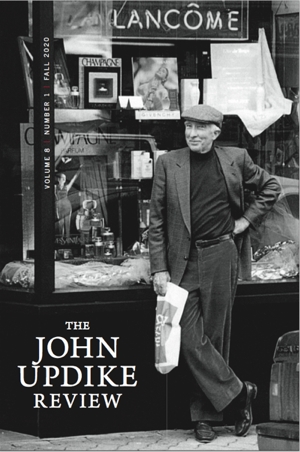
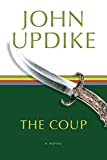
Volume 8: Number 1 of The John Updike Review was published earlier this month, with editor James Schiff and managing editor Nicola Mason devoting the running “Three Writers on” feature to The Coup. Updike’s 1978 novel is a black comedy narrated by the former leader of a fictional Islamic country in Africa who both embodies and hates all things American in what amounts to a wicked satire of American consumerism. Weighing in are D. Quentin Miller (“The Coup and the Pursuit of Happiness”), Matthew Shipe (“Guilt, American Style, in The Coup“), and Schiff (“Updike’s The Coup as Allegorical Autobiography”).

The articles in this issue of the peer-reviewed journal cover a wide range of topics:

“The ‘Magnificent Meanwhile’: Updike and Scorsese on Edith Wharton’s The Age of Innocence“—Peter J. Bailey

“Home to Oneself: John Updike and Alice Munro”—Robert Milder

“Olinger Revisited: John Updike Revisiting His Early Stories”—Haruki Takebe

“John Updike, Wallace Stevens, and the Gaiety of Language”—Donald J. Greiner

Rounding out the issue is Laurence W. Mazzeno’s review of The Moderate Imagination: The Political Thought of John Updike and the Decline of New Deal Liberalism, by Yoav Fromer.

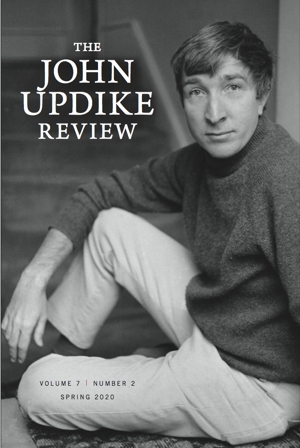
The striking cover photo of Updike in Killarney, Ireland is by Richard Purinton.

The John Updike Review is published twice yearly by the University of Cincinnati and The John Updike Society and is included with membership in the society. It is also available electronically and, for institutional subscriptions, through EBSCO.

Ereads picks their 10 Best Updike Books

Ereads, a self-identified “bunch of book enthusiasts who enjoy reading books and writing about them,” recently posted their “10 Best John Updike Books,” with series counting as one:

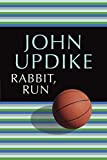
1) The Harry “Rabbit” Angstrom Series (including “Rabbit, Remembered” in Licks of Love and Other Stories)—”5 of the most exciting books you will ever read”

2) The Twelve Terrors of Christmas—“short and funny, for all the Christmas Scrooges”

3) The Centaur—”The way that John manages to capture the essence of the story and describe Chiron’s painful search for relief through these characters is what makes this book one of the best John Updike books ever”

4) The Complete Henry Bech—”entertaining . . . a wonderful series”

5) Gertrude and Claudius—”a strong competitor for being the all-time best John Updike book ever . . . a prequel to Shakespeare’s Hamlet

6) Brazil—The plot is filled with love, hate, endurance, tragedy, and lots more. The characters are as memorable as ever and John takes the time to describe everything that happens with passion and taste”

7) John Updike: The Early Stories—”Hidden inside this book is a lot of excitement, happiness, thrill, mystery, and much more”

8) Terrorist—”a serious one with many thought-provoking events and the ending is as suspenseful as it sounds”

9) Eastwick book series—”full of the paranormal, fantasy, mystery, and a lot of suspense”

10) In the Beauty of the Lilies—”an amazing historical fiction by John that takes place during the 1900s . . . . There are many weird things to discover about this family and many things to learn as well”

Latest John Updike Review spotlights The Maples Stories

The John Updike Review Vol. 7 No. 2 (Spring 2020) was recently published, and in it editor James Schiff turned the spotlight on The Maples Stories, Updike’s 18-story sequence chronicling the marriage—and divorce—of Richard and Joan Maple, characters based on the author and his first wife, Mary Pennington Updike.

In the “Three Writers on . . .” section—an innovative feature that distinguishes the journal from all others—Schiff (“Updike’s Maples Stories among Literary Depictions of Marriage”) joined Marshall Boswell (“The Maples Stories and the ‘Twilight of the Old Morality'”), Gail Sinclair (“How Far to Have Come: Updike’s Stories of a Marriage”), and Biljana Dojčinović (“‘A Beautiful Disaster’: Marriage in Updike’s Maples Stories“), who reprised comments made on a Maples Stories panel at the May 2019 American Literature Association conference moderated by society president James Plath.

The essays section features contributions from Donald J. Greiner (“Will John Updike ‘Sink’?: Posthumous Reputation and the Fickleness of Literary Fame”), Peter J. Bailey (“Updike’s David Kern Stories”), Sue Norton (“Writing and Well Being: Story as Salve in the Work of (More than) Two Updikes”) and Adel Nouar (“From Irony to Empathy and Back in John Updike’s Terrorist“).

Also included is “The Political Dimension of Updike’s Writing” by Laurence W. Mazzeno, a review of Updike & Politics: New Considerations, edited by Matthew Shipe and Scott Dill.

Print copies and access to online back issues are included with membership in The John Updike Society. The John Updike Review is published by the University of Cincinnati and The John Updike Society, with James Schiff serving as editor and Nicola Mason managing editor.

6th Updike conference rescheduled for October 1-3, 2021

Because of COVID 19 and concerns for elderly and international members planning to attend, the board of The John Updike Society voted to postpone the 6th biennial JUS conference by exactly one year.

Instead of being held September 30 through October 4, 2020, the conference will be held October 1 through October 3, 2021. The host institution remains Alvernia University, and the conference hotel will still be the Courtyard Marriott Reading. All of the academics who had papers accepted have been told that those papers are still accepted for the 2021 conference. New proposals may be emailed to James Plath, Dept. of English, Illinois Wesleyan University: jplath@iwu.edu.

The conference will coincide with the grand opening of The John Updike Childhood Home, 117 Philadelphia Avenue, Shillington, Pa., which the society owns. For the past four years the society has been restoring the house to how it would have looked in the early 1940s when Updike lived there and also acquiring exhibit materials. At 1 p.m. Saturday, October 2, 2021, there will be a formal ceremony to dedicate a Historic Pennsylvania Marker and unveil a plaque indicating that the house-museum is on the National Registry of Historic Places. Updike’s four children will attend and also participate in a panel on The Maples Stories. Dr. James Schiff will also offer a plenary talk on the recently completed (but still to be published) Updike letters project that he was commissioned by the Updike Literary Trust to edit. Other planned activities include a visit to the Plowville farmhouse and a walking tour of Rabbit, Run and The Centaur sites in the area.

The John Updike Society is comprised of more than 200 Updike scholars, fans, family members and friends, and the kind of just-plain-readers that Updike appreciated. Membership in the society is required to present a paper, but those who submit proposals can join at the time they register for the conference. Details are forthcoming.

An algorithm picks Updike’s greatest books

The Greatest Books project compiled a list generated from 128 “best of” book lists from a variety of great sources. An algorithm is used to create a master list based on how many lists a particular book appears on. Some lists count more than others, and on the lists that are actually ranked, the book that is 1st counts a lot more than the book that’s 100th.

Here’s what the algorithm picked for Updike’s “greatest” and their overall rank in the greater literary world, again as measured by the algorithm:

117. Rabbit, Run

147. Rabbit Is Rich

169.  Rabbit Redux

209.  Rabbit at Rest

1145.  Self-Consciousness

1568. The Poorhouse Fair

1627.  The Early Stories

2139.  The Centaur

2559.  The Coup

Interestingly, the book that made him an international celebrity—Couples—didn’t make the list, while a very funny satire that’s often overlooked came in at 2559. What would your John Updike “greatest books” list look like?

Blogger shares Abigail George artists-on-artists poems

Blogger Mia Savant posted a Ponder Savant entry on “Jackson Pollock and Other Poems by Abigail George” that includes the Pollock poem and also poems dedicated to John Updike and Georgia O’Keeffe.  Here’s the Updike poem:


John Updike

He writes. He writes. He writes. He writes. And it feels
as if he is writing to me. There’s the letting go of sadness,
the letting go of emptiness, of the swamp ape in the land.
Lines written after communion, and as I write this, I am
aware of growing older, men growing colder. And this
afternoon, the dust of it, the milky warmth of it loose like
flowers upon me fastening their hold on me, removes the
oppression that I know from all of life. Youth is no longer
on my side. The bloom of youth. Wasteland has become a
part of my identity. I am a bird. A rejected starling. To age
sometimes feels as if you are moving epic mountains. Valleys
that sing with the force of winds, human beings, the sun.
And he is beautiful. And he is kind. And he is the man facing
loneliness, and the emptiness of the day. And I am the woman
facing loneliness, and the emptiness of the day. But how
can you be lonely if you are surrounded by so many people.
I want to be those people, if only to be in your presence a
little while longer. Death is gorgeous, but life is even more so.
I have become weary of fighting wars. Of the threshold of
waiting. And so, I let go of solitude at the beach. I see my mother’s
face in every horizon. She is my sun. And the man makes
a path where there is no path before. The minority of the day
longs for power. The light reckons it has more sway over
the clouds. And there’s ecstasy in the shark, in his heart with
a head full of winter. Freedom is his mother tongue lost in
translation of the being of the trinity. Tender is the night.
The clock strains itself. Its forward motion. Its song. Its lull
during the figuring of the daylight. He’s my knight but he
doesn’t know it. He makes me forget about my grief, loss, my loss,
the measure of my grief. Driftwood comes to the beach and
lays there like a beached whale. Not stirring, but like some
autumn life, something about life is resurrected again, and the
powerful hands of the sea become my own. Between the grass
and the men, there is an innocent logic. I don’t talk to anyone,
and no one talks to me. It is Tuesday. Late. I think you can
see the despair in my eyes. The kiss of hardship in my hands.
It always comes back to that, doesn’t it somehow. The hands
The hands. The hands. Symbolic of something, or other it seems.
Wednesday morning. It is early. After twelve in the morning,
and I can’t sleep. For the life of me I can’t sleep. Between the
two of us, he’s the teacher. There is a singing sound in his voice.
I don’t know why I can’t read his mind anymore. There’s
confusion in forgetting that becomes a secret. Almost a contract
between two people. And when I think of him, I think of love
and Brazil, love and couples. And there’s a silent call from a
remote kind of land, and ignorance is a cold shroud. Some
things are born helpless in a world of assembled images, and
how quickly some people go mad with grief (like me), dream
of grief (like me), sleep with grief on their heart (like me). Speak
to me before all speech is gone. This image, or perhaps another.
His face is made up of invisible threads. Each more handsome
than the last. And my face becomes, turns into the face of love.

Abigail George is a Pushcart Prize-winning poet, essayist, writer, and novelist . She received four grants from the National Arts Council in Johannesburg, the Centre for the Book in Cape Town and ECPACC in East London. She is the author of 15 books, including two poetry chapbooks forthcoming in 2020: Of Bloom and Smoke (Mwanaka Media and Publishing) and The Anatomy of Melancholy (Praxis Magazine).