 Dale Estey wrote in Red Room: where the writers are that literary agent Andrew Wylie, who represents the John Updike Estate, is threatening to bypass publishers and sell authors’ e-book rights directly to Google, Amazon, or Apple.
Here’s the story.
Dale Estey wrote in Red Room: where the writers are that literary agent Andrew Wylie, who represents the John Updike Estate, is threatening to bypass publishers and sell authors’ e-book rights directly to Google, Amazon, or Apple.
Here’s the story.
 Sam Tanenhaus, editor of the New York Times Book Review, got permission to have a sneak peek at the Updike archive now being catalogued at the Houghton. And he talks with Jeffrey Brown about his experience and thoughts about Updike for Art Beat on the PBS NEWS HOUR website.
Here’s the link to “Conversation: Archive Offers Revealing Look at John Updike.”
Updike in Pennsylvania: The First Biennial John Updike Society Conference has been getting a lot of press lately, but members and soon-to-be members wanting to attend this historic event, Oct. 1-3 at Alvernia University, are reminded that July 1 is the deadline to register at the special discount rate of $85. After July 1 the price of basic registration goes up to $120, so take time out to send in your form and save some money. Join us in Updike country, Berks County, Penn., for tours of the Updike homes and sites, panels featuring family members and friends, scenes from the Rabbit tetralogy performed by the Reading Community Players Theatre, presentations by scholars from eight different countries, and keynote speakers Ann Beattie and Lincoln Perry. It will be a memorable experience!
Here’s the PDF for the program details, registration form, and travel/hotel information: UPDIKE IN PENNSYLVANIA.pdf
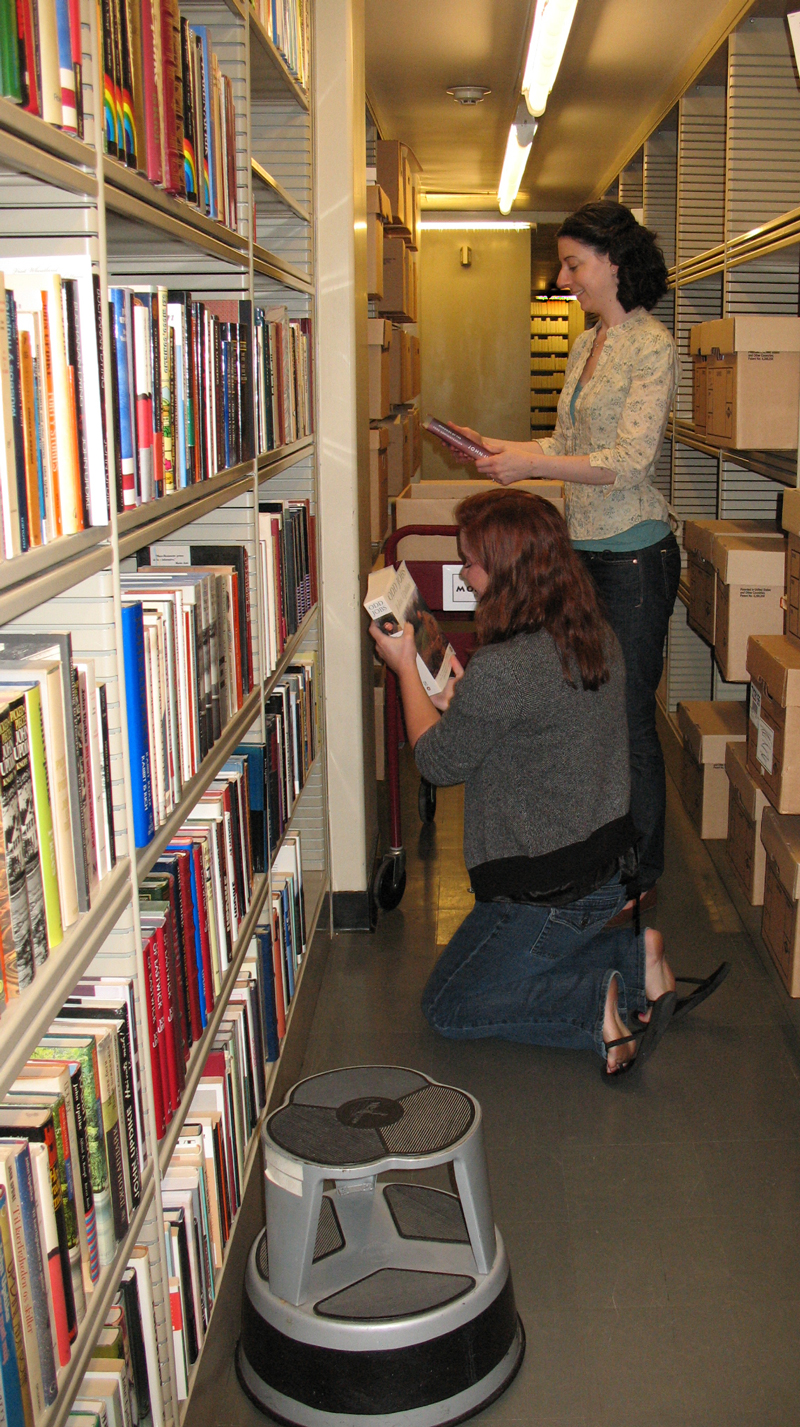 Yesterday’s New York Times had an update on the Updike archive that was deposited at the Houghton Library at Harvard University. The story also has some nice information about Updike’s college years, work (and play) habits, and the value of the archival materials at the Houghton—which “crowds an aisle and a half of metal shelving in the basement.” Here’s the link, with thanks going to member Quentin Miller for calling our attention to it. The photo of archivists unpacking and shelving the material is copyrighted by Houghton Library.
Here’s an earlier story about the archive from the Houghton blog.
 Poet Evelyn Lau, who gained notoriety for Runaway: Diary of a Street Kid (1989), an autobiographical account of coping in a world of drugs and prostitution in Vancouver, B.C., and also for her much-publicized alleged romantic involvement with creative writing professor and writer W.P. Kinsella (Shoeless Joe, 1982), has published a poem online in The Walrus titled “Dear Updike,” which begins with an epigraph from Updike’s “On Being a Self Forever.”
Here’s the link.
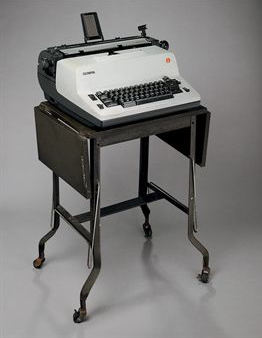 John Updike’s typewriter is for sale.
Christie’s Auction House has listed John Updike’s Olympia “electric 65c” typewriter with cover and metal typewriter cart as Lot Number 318 in Sale 2328, Fine Printed Books and Manuscripts Including Americana. The estimate for the typewriter is $4000-$6000. June 22, 2010 is the date of the auction.
The lot description dates the typewriter from 1967-68, probably purchased when Updike lived with his family in London from 1968-69 not long after he wrote Couples. Of interest is the ribbon, which passed only once and recorded a speech for a Gordon College commencement, a paragraph on writing well, a letter regarding an intro he wrote for Kafka’s Complete Short Stories, and a letter to his typist. According to Christie’s, “the typewriter was given to one of his daughters about 15 years before his death.”
Call it a case of bad timing. The Society is in the process of establishing an archive, with several collections already donated. But we’re just a little too new to have the money to purchase something like this to preserve for future museum display. The Updike typewriter is one of two in the sale, with Jack Kerouac’s priced in the $20,000 range. But the Updike typewriter is priced in the same range as a manuscript of Walt Whitman’s, and higher than a typed and signed letter from J.D. Salinger.
UPDATE: Christie’s lists the price realized as $4,375 for the typewriter.
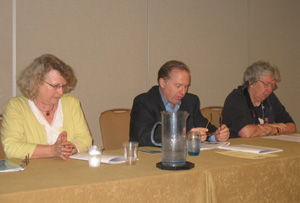
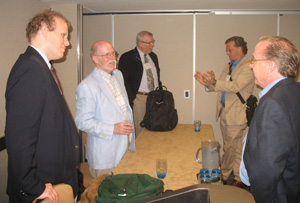 Although moderator Sally LeVan and panelist Kevin Frazier had to cancel because of personal reasons, the “John Updike and American Pop Culture” panel featuring Peter Bailey, Matthew Shipe, and Ed Allen went well, with yours truly stepping in to moderate, and the papers presented by Sylvie Mathé and Judie Newman were equally impressive in the “Updike Abroad” session moderated by James Schiff.
About 10 members made it to San Francisco for the panels and business meeting, and secretary Peter Bailey will be sending members minutes soon. It was wonderful to see old friends again and to meet new ones—something that will be even more fun at the Society’s first conference this October 1-3 at Alvernia University in Reading, Pa. Among the things we talked about in San Francisco were ways in which the Society might act to influence such things as anthology entries. We couldn’t help but be appalled that a new Wiley-Blackwell literature series included Updike in one volume on American short fiction but omitted him in several other volumes on contemporary American fiction. And the Updike stories and poems that are featured in anthologies are pretty much the same ones. A quick tour of the book displays at ALA turned up these:
 “A&P” is included in Making Literature Better: An Anthology for Readers and Writers, 4th Edition, edited by John Schlib and John Clifford; The Bedford Anthology of American Literature Vol. Two: 1865 to the Present, edited by Belasco and Johnson; 40 Short Stories: A Portable Anthology, 3rd Edition, edited by Beverly Lawn; The Story and Its Writer: An Introduction to Short Fiction Compact 7th Edition, edited by Ann Charters; The Bedford Introduction to Literature, 9th Edition, edited by Michael Meyer; Literature: A Portable Anthology, 2nd Edition, edited by Gardner, Lawn, Ridl, and Schakel;and Approaching Literature, 2nd Edition, edited by Schakel and Ridl.
“Separating” is included in The American Short Story and Its Writer: An Anthology, edited by Ann Charters.
“Outage” is included in The Bedford Introduction Literature, 9th Edition, edited by Michael Meyer.
The poems “Dog’s Death” and “Player Piano” are included in Poetry: An Introduction, 6th Edition, Michael Meyer; The Bedford Introduction to Literature, 9th Edition, edited by Michael Meyer. And “Ex-Basketball Player” appears in The Wadsworth Anthology of Poetry, edited by Jay Parini. There are more anthologies out there, of course, but these were the ones displayed, and it gives one pause.
Pictured in the top photo (from left, clockwise) after the first panel are Matthew Shipe, Peter Bailey, Ed Allen, Marshall Boswell, and James Schiff. In the other photo from the second panel (from left) are Sylvie Mathé, James Schiff, and Judie Newman.
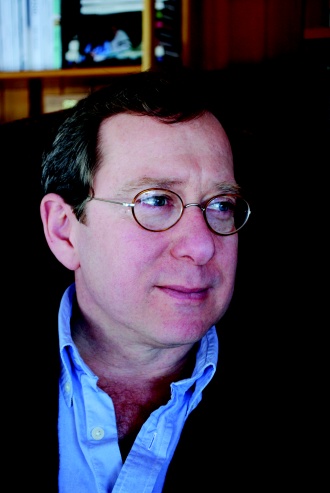 Adam Begley, longtime book review editor for the New York Observer, was recently announced as a recipient of a 2010 Guggenheim Fellowship Award to work on a biography of John Updike. According to the John Simon Guggenheim Memorial Foundation press release, Begley was one of 180 artists, scientists, and scholars out of some 3,000 applicants to win support. The average amount of Fellowship grants is approximately $43,000.
When The Observer first announced only a month after Updike died that Begley planned to write a biography, ripples went through the Updike world. For one thing, it seemed too soon, especially since everyone close to Updike knew how adamant he was that no biography be written. A “living death,” he called them. For another, there was the hope that if a biography ever were written, it would come from an Updike scholar, just as the first major biography on Hemingway came from Professor Carlos Baker, one of the major Hemingway scholars.
Begley, who lives in Northamptonshire, England, interviewed Updike on two occasions, but his only association beyond that is through his father, Louis, who graduated from Harvard’s English department the same year as Updike.
“HarperCollins came to me,” Begley wrote in an email, “and though I jumped at the opportunity to write this book (having written two profiles of JU, a half-dozen reviews, and an obituary), it wasn’t my idea.”
When I asked Edward Hirsch, president of the John Simon Guggenheim Memorial Foundation, to respond, he wrote back, “Adam Begley is a gifted writer whose work comes with the highest recommendations. We are excited about his book about John Updike. We are aware that it will be an unauthorized biography.”
Martha Updike, who, along with Updike’s editor, Judith Jones, forms The John H. Updike Literary Trust, had no comment.
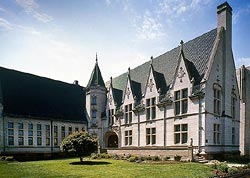 Society member Frank Fitzpatrick, a self-described “Updike fanatic” who has written about Updike for NPR and the Philadelphia Inquirer, where he has worked in the sports department since 1980, will be featured this Thursday, May 20, in a program at the Scranton Albright Memorial Public Library. In “John Updike’s Pennsylvania with Journalist Frank Fitzpatrick,” Fitzpatrick will show slides of Updike’s Pennsylvania and talk about the connection between place and the prolific writer’s work.
“Mr. Fitzpatrick read one of Mr. Updike’s early ‘Rabbit’ novels where the main character also played basketball,” library spokesperson Evelyn Gibbons told the Scranton Times-Tribune. “He became captivated by Mr. Updike’s novels and by the eloquent and insightful way Mr. Updike wrote about sports.”
Fitzpatrick is the author of three books, one of which was a 2001 Pulitzer Prize finalist. He is perhaps best known for The Lion in Autumn: A Season with Joe Paterno and Penn State Football.
The program, which will be held at 6:30 p.m. in the Periodicals Room, is free to the public, but tickets are required. They are available at the Circulation Desk. For more information, contact the library (570) 348-3000 or visit their website.
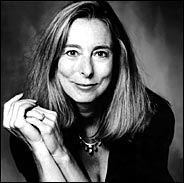 The John Updike Society is pleased to announce that the keynote speakers for Updike in Pennsylvania: The First Biennial John Updike Society Conference at Alvernia University, October 1-3 2010, will be writer Ann Beattie and painter Lincoln Perry.
Of Ann Beattie, Updike himself once wrote, “Miss Beattie’s power and influence . . . arise from her seemingly restless immersion in the stoic bewilderment of a generation without a cause.” A stylist herself, Beattie has been compared to both John Updike and John Cheever because she too chronicles life in America’s middle classes—the often small moments that lead to small epiphanies for her restive and slightly disconnected heroes and heroines.
Like Updike, Beattie burst on the New York scene with both a novel and collection of short stories (Chilly Scenes of Winter, Distortions, 1976) and has won acclaim for her work in both genres. She went on write six more novels (Falling in Place, 1981; Love Always, 1986; Picturing Will, 1989; Another You, 1995; My Life, Starring Dara Falcon, 1997), The Doctor’s House, 2002) and seven additional collections of short fiction (Secrets and Surprises, 1978; The Burning House, 1982; What Was Mine, 1991; Where You’ll Find Me and Other Stories, 1986; Park City, 1998; Perfect Recall, 2000; Follies: New Stories, 2005), with a novella (Walks with Men) and short story collection (Ann Beattie: The New Yorker Stories) scheduled for June and November publication, respectively.
One of America’s most talented short story writers, Beattie received the PEN/Malamud Award for excellence in the art of the short story 12 years after Updike was awarded the very first prize. Both Beattie and Updike also won the Rea Award for the short story, presented by the Dungannon Foundation—Beattie in 2005, and Updike a year later. In fact, Beattie was on the selection committee with Joyce Carol Oates and Richard Ford the year that Updike was chosen to be honored. Both writers admired each other, and Updike chose Beattie’s story, “Janus,” as one of The Best American Short Stories of the Century. Beattie lives with her husband, Lincoln Perry, in Charlottesville, where she is Edgar Allan Poe Professor of Literature and Creative Writing at the University of Virginia.
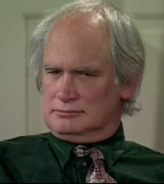 Lincoln Perry is a painter of national reputation who has his own Updike connection. Fascinated by the interesting narratives and juxtapositions that can emerge from painting “groups,” Perry created and exhibited twenty paintings which were inspired by Updike’s Rabbit tetralogy. “A similarity between me and Ann is that we are very curious about narrative and narrativity . . . but we’re suspicious about the power, the implied resolution to stories,” Perry once told an interviewer.
Perry, who is currently Distinguished Visiting Artist at the University of Virginia, has had solo exhibitions in New York, Washington, D.C., Maine, Florida, Virginia, and Pennsylvania. And he has been invited to contribute to group shows in Georgia, California, New Hampshire, Maine, New York, South Carolina, Louisiana, Idaho, Florida, Massachusetts, New Jersey, and Arkansas—including the “Contemporary Realism” show at The New York State Council on the Arts and “New American Figure Painting” at the Contemporary Realist Gallery in San Francisco. Also a muralist, his installations are on permanent view at the Met Life Building in St. Louis; One Penn Plaza in Washington, D.C; the Federal Courthouse extension in Tallahassee, Florida; Cabell Hall at the University of Virginia; and Lincoln Square in Key West. He is represented by Eye International, DeWitt Hardy, Les Yeux du Monde, Lucky Street Gallery, and the Ogunquit Museum of American Art.
Beattie will talk about Updike’s short fiction from the perspective of a short story writer, while Perry will show images and discuss his Rabbit, Run series.