Where everybody knows your name: Updike on Cheers?

John Updike never made a personal appearance on the long-running CBS-TV series Cheers, but the two-time Pulitzer Prizewinner was referenced several times in a Season One episode.

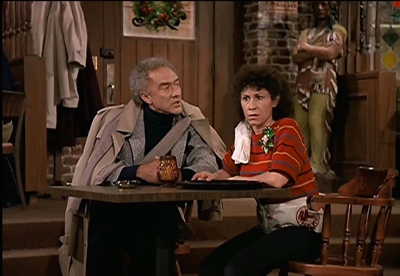
Cheers: The Complete Series Blu-ray was released on April 25, 2023, and as fans re-watched one of TV’s smartest sitcoms they heard Updike’s name mentioned several times in Episode 12: “The Spy Who Came in for a Cold One,” which aired Dec. 16, 1982. Earlier that year, in April, Updike had been announced as winner of the Pulitzer Prize for Fiction, honored for Rabbit Is Rich. In this episode, an eccentric (guest star Ellis Rabb, pictured below) visiting Cheers first pretends to be a spy, and then a writer. Thinking the man a literary prodigy, intellectual (read: snobbish) waitress Diane rushes to the phone to call someone in the publishing industry that she knows, and we get the following one-sided phone conversation:

“Yes. May I speak to him?

This is Diane Chambers.

He’s chatting with John Updike?

Well, interrupt.

No, I’m not kidding. I have something that makes Updike seem like small pommes de terre.”

Cheers was set in a bar near Boston Common that was run by former Red Sox pitcher Sam Malone (Ted Danson), whose baseball career had been derailed by alcoholism. With a great ensemble first-season cast that featured Shelley Long, Nicholas Colasanto, George Wendt, and John Ratzenberger, Cheers quickly grew on fans.
Cheers was created by James Burrows, Glen Charles, and Les Charles. Directed by Burrows, it was written mostly by the trio—though this particular episode was penned by David Lloyd.

Even with turnover in key roles, Cheers won 28 Primetime Emmys over its 11-year run and finished as a Top-10 TV show for eight of those years.

Fairway Philosophy blogger focuses on Updike the golfer

Fairway Philosophy blogger Matthew Chominski had Updike on the mind this past week. Two of his posts were devoted to Updike the golfer.

In an April 27, 2023 post, “Golf and the Shortness of Life,” Chominski wrote, “The great American author and golf devotee was once in the presence of a young woman who informed him that life was too short ‘for crossword puzzles and for golf.’ His responsory ruminations are worth quoting at length:

“‘The nature of humankind must be considered before we decide what life is too short for. Is it too short for sex, for instance, or is sex its business? Men and women need to play, and it is a misused life that has no play scheduled into it. Crossword puzzles, even, have a fit place in some psychological budgets. With them, as with golf, we set ourselves to solve a puzzle nature has not posed. Nothing in natural selection demands that we learn how to beat a small ball into a hole with a minimum number of strokes. . . . The great green spaces of a golf course remember the landscape in which the human animal found his soul. Certainly the sight of our favorite fairway wandering toward the horizon is a balm to the eyes and a boon to the spirit. Our mazy progress through the eighteen is a trek such as prehistoric man could understand, and the fact that the trek is fatiguingly long constitutes part of its primitive rightness.'” Read the whole post.

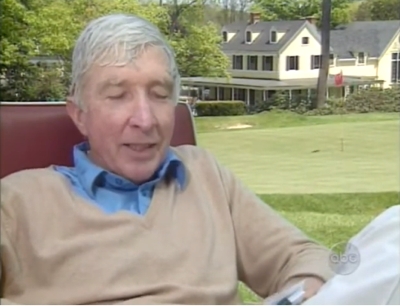
Then, on an April 29, 2023 post titled “Golf’s Peculiar Bliss,” Chominski reminded golfers and Updike fans of a video clip in which John Updike was filmed on his home course, Myopia Hunt Club, intercut with footage and a voiceover of Updike reading from his golf essays.

Rabbit Is Reference: Reviewing the Richard Avedon show

John Updike and his fictional legacy continue to be a part of American pop culture, the most recent case-in-point being a Washington Post review of a one-person show featuring fashion photographer Richard Avedon.

In “Review: An electrifying exhibit shows Richart Avedon at his most ambitious,” Sebastian Smee wrote, “The first of the ‘murals,’ as he called them, was a group portrait of Andy Warhol and 10 other members of the Factory. Avedon photographed the superstars in his studio over several weeks in the fall of 1969. Clustered together near the center of the image are five naked figures, one of them the transgender actress Candy Darling. The clothes crumpled on the floor at their feet feel oddly eloquent, legible both as statements of liberation and the shadows of their social selves. (I thought of Rabbit Angstrom, in John Updike’s ‘Rabbit, Run,’ enjoying, as he shed his clothes, the way ‘the flying cloth puts him at the center of a gathering nakedness.’) ‘You couldn’t keep the clothes on anybody in those years,’ Avedon later joked. ‘Before you could say “hello,” they were nude and ready to ride.’”

Avedon will be celebrated with “Avedon 100,” May 4-June 24, 2023 at Gagosian, 522 West 21st St., New York—an exhibition commemorating the centenary of Avedon’s birth featuring 150 “celebrated artists, designers, musicians, writers, curators, and fashion world representatives” and their favorite Avedon photographs.

Did Updike fans like Alex Katz’s portrait on the cover of Time magazine?

Not according to a Time magazine story celebrating “A Century of Impact: See How TIME’s Cover Evolved Over 100 Years.”

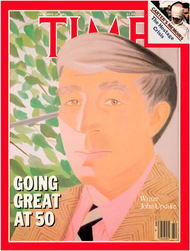
Updike, as painted by Katz, appeared on the cover of Time after he had won the Pulitzer Prize for Rabbit Is Rich. “Speaking of Katz—the Oct. 18, 1982, cover of novelist John Updike also created an interesting pairing. Painter Alex Katz, whose work generally flattened the subject’s perspective and reduced the features, was commissioned to paint Updike, whose fans were not all pleased with the result: “What a washed-out portrait of Updike on the cover!” one reader complained. But Katz offered some advice to viewers of art: “You can wreck a painting very easily,” he noted, “if you get obsessive about likeness.”

Updike had previously appeared on the April 26, 1968 Time magazine after Couples was published and drew attention to the “post-pill paradise” of suburban America.

Yahoo! feature identifies celebrities living with psoriasis

Surely there were more than 21 celebrities who had psoriasis, but a writer for news aggregate site Yahoo!’s “women’s health” section settled on that number . . . among them, John Updike (#20).

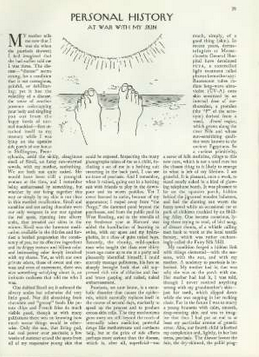
“The Pulitzer Prize-winning novelist and poet penned a 1985 essay for The New Yorker aptly titled ‘At War With My Skin,‘ where he addressed his struggles with the autoimmune disease. In his essay, Updike wrote, ‘Why did I marry so young? Because, having once found a comely female who forgave me my skin, I dared not risk losing her and trying to find another.'”

Read the entire article.

Dallas columnist invokes Updike in writing about infamous conspiracy theory

On the 50th anniversary of JFK’s assassination, the Dallas Observer‘s Jim Schutze wrote a column titled “Umbrella Man, Umbrella Man, Please Stay Away. Don’t Come to Dealey on JFK Day.” The title itself is pure, poetic, fun with language, so it’s perhaps no surprise that Updike turns up.

“Louie Steven Witt, are you still out there somewhere, alive? Would you tell me if you were? You know you’re back in The Dallas Morning News this morning, but only as a ghost,” Schutze began. Witt was identified as the “umbrella man” during the House Select Committee on Assassinations in 1978. The umbrella man was one of the closest bystanders when the assassin’s bullet struck President Kennedy, and the only one in the area with an umbrella who was opening and closing it. A signal?

“You have something in common with the old rich Dallas people sponsoring the 50th whatever-it-is-this-year. A half century ago all of you were abducted and transported into the bizarre quantum universe of Kennedy assassination conspiracy theory. When he wrote about you in particular, Mr. Witt, in The New Yorker in 1967, the late great novelist John Updike described the alternative reality that consumed you as ‘a sub-atomic realm where laws are mocked, where persons have the life-span of beta particles and the transparency of neutrinos, and where a rough kind of averaging out must substitute for absolute truth.”

Read the whole article.

What author cracks up Jerry Seinfeld? Would you believe John Updike?

An interview with comedian Jerry Seinfeld that originally appeared as a New York Times “By the Book” interview turned up on a number of sites, including a blog by Jack Limpert, editor of The Washingtonian for more than 40 years. Here are some of the exchanges:

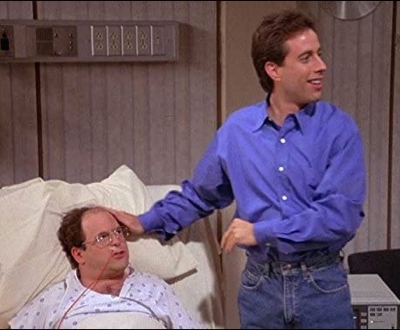
Asked if he reads much fiction, Seinfeld said, “When I used to read more, I really loved John Updike and John Irving. Updike, to me, was insane. I love microscopic acuity and I thought he was untouchable in that: the fineness, and the smallness of things that he would describe so well.

What was the last book that made him laugh?

“I don’t really laugh reading books,” Seinfeld said. “It’s pretty hard to laugh when you’re reading—the written word is tough. I mean, the Updike stuff is funny to me. You know, describing the circles of water under someone’s toes when they get out of the pool. That makes me laugh more than anything, that he would zero in on that.”

Which three writers, dead or alive, would he invite to a literary dinner party?

“Well, Updike I mentioned. I think David Halberstam would be a great dinner guest. And I’m into this Marx Brothers thing now, so I would like to sit with this guy [Robert] Bader for dinner. And Lincoln! I consider him to be a great writer.”

What does he plan to read next?

“I’m out of stuff, but along the same lines as John Updike I might give Nicholson Baker a shot.”

Read the whole interview.

New Yorker piece ponders father-son writers

Tad Friend‘s musings on who gets custody of the family tales in “With father and son writers, who gets to tell the family story?” appeared in the April 18, 2022 issue of The New Yorker.

Friend writes, “When I was young, I admired no writer’s stories more than John Updike’s. Book jackets sporting his woodsy tousle and horndog smile were everywhere, like portraits of a Balkans despot. Updike surrounded us; in some thermostatic way, he established the climate. I was already a watchful white guy, and I already wrote for the Harvard Lampoon, as he had. All I had to do was move to New York, sum up the culture, and reap the hosannas. Easy-peasy.

“When I got to New York, burning with the prescribed low steady fever, I met with a New Yorker writer who’d been hired out of Harvard three years earlier, another Updike in utero. I’d sent him my clips, hoping he’d say, “You should start here tomorrow!” Scratching his ear meditatively, he in fact said, “You know what I’d do if I were you? I’d move to a place like Phoenix and write for an alternative newspaper. Learn how power shapes a midsize American city, and how to report, and all the facets of our craft. And then, after ten years or so, if you still have a mind to, return to New York.”

To make a long story short, “In 1998, a dozen years later than the Updike Protocol had prescribed, I joined the staff of The New Yorker. One of my first stories was about two workmen in Sun Valley who’d dug up a jar of gold coins on land owned by Jann Wenner, the Rolling Stone co-founder; each schemed to take the treasure, but Wenner ended up with it. Day wrote, ‘It may be rather nineteenth century of me, but I wondered what The New Yorker’s goal was in publishing it. To show the triumph of a New Yorker who didn’t care?’ After I stopped responding to these irksome questions, he stopped posing them.”

Friend’s latest book is In the Early Times: A Life Reframed.

Updike’s Witches are reappraised 330 years after Salem

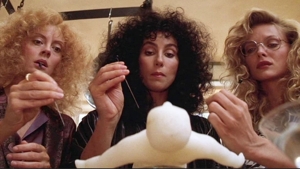
In “Revisiting The Witches of Eastwick 330 Years After Salem” for the Chicago Review of Books, Chicago-based writer Sara Batkie writes, “Fifty-odd years ago, covens were the locus of Satanic activity in such movies and books as Rosemary’s Baby and Suspiria. But the rise of second-wave feminism and women in the workforce in the late ’70s and early ’80s gave way to a gentler, more domestic spellcaster, a trend arguably initiated by John Updike’s 1984 novel The Witches of Eastwick and the film adaptation three years later.”

After giving credit where she thinks credit is due, Batkie offers a refrain that’s familiar to Updike readers: “Most of his previous work was steeped in middle class realism, bound by such earthly concerns as which friend’s wife to sleep with and the masculine urge to escape from familial obligations. The inner lives of women were not often foregrounded, to put it generously, though Updike was one of our most skilled sensualists, and it’s clear he admired the ‘fairer sex,’ even if he didn’t always understand them.”

Batkie suggests that maybe Updike added witchcraft to his first real attempt to write about the inner lives of women in order to “hedge his bets. If something didn’t ring true to his female readership, it could be attributed to the three women’s unique powers.”

Batkie gives the film higher marks than the novel when 2022 feminism is the standard, but concludes, “So where does that leave us today, post-third-wave and likely post-Roe? Though neither Updike nor [director George] Miller set out to predict our fracturing present, both versions of The Witches of Eastwick now feel like a warning, or at least a precaution. Magic has its limits, both personally and politically. A woman’s right to bodily autonomy is no longer a fringe belief, no matter what men in power like Alito might think.”

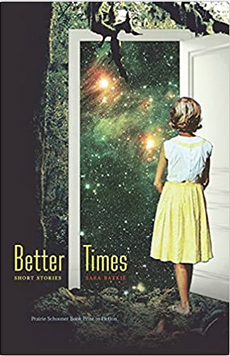
Batkie is the author of Better Times: Short Stories, which won the 2017 Raz/Shumaker Prairie Schooner Book Prize in Fiction. Read her whole Chicago Review of Books essay here.

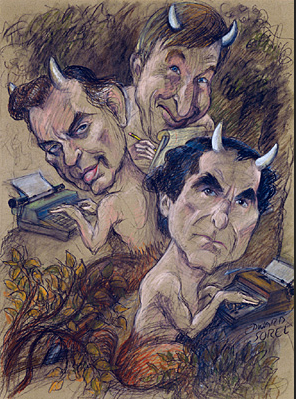
Edward Sorel paints a devilish portrait of Vidal, Updike, and Roth

John Updike’s two Time magazine cover portraits are in the National Portrait Gallery, but he’s also depicted on The Laureates of the Lewd, a 1993 pastel by Edward Sorel that was created as an original illustration for a Gentleman’s Quarterly article.

From the National Portrait Gallery, Smithsonian Institution website:
“Sorel’s three roguish satyrs—Gore Vidal, John Updike, and Philip Roth—were gamboling around the literary landscape making mischief and money in the late 1960s. As James Atlas pointed out in his Gentleman’s Quarterly article “The Laureates of the Lewd,” Updike’s 1968 book Couples, followed by Vidal’s Myra Breckinridge and Roth’s Portnoy’s Complaint brought the literary side of the Sexual Revolution to a new level of uncensored candor. American erotic life was out in the open again, in all its complexity and variety. But these books were as much about disillusionment as sex, reflecting the turmoil of generational conflict, a revolution in birth control, a controversial war, protests, assassinations, and race riots. Roth himself noted that if Portnoy’s Complaint had not appeared at the end of a decade ‘marked by blasphemous defiance of authority and loss of faith in the public order, I doubt that a book like mine would have achieved such renown in 1969.'”