Editor Schiff and Updike siblings interviewed about the Selected Letters

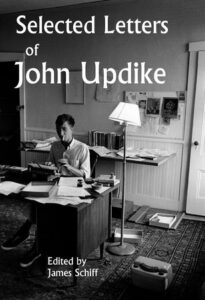
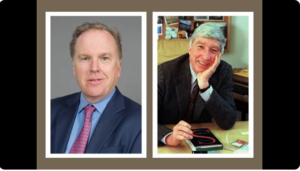
In his introduction to an interview he conducted with James Schiff, Joe Donahue wrote, “John Updike remains one of the most admired and prolific voices in American Literature. Over five decades he produced novels, short stories, poems, criticism, and essays that examine faith and art, desire, and the American experience in all its complexity. . . . Now in the new book ‘Selected Letters of John Updike’ editor James Schiff offers readers a window into that private world drawing from decades of correspondence. Schiff presents a portrait of Updike as both craftsman and confidante, generous, witty, and endlessly reflective about writing and life.”

Here’s the link to the WAMC Northeast Public Radio podcast.

More conversation about John Updike and the letters comes from a Radio Open Source interview with Michael Updike and Miranda Updike conducted by Christopher Lydon, a Boston-area fixture who interviewed John Updike on numerous occasions. In sending the link to the Updike siblings, Lydon wrote, “We want you to take a bow… and enjoy this piece as we do! You and Michael are heroic here, and funny and deep… And we all fall in love with your marvelous dad, all over again.”

Here’s the link to “John Updike’s Vocation.”

If you haven’t gotten a copy of the book yet, here’s a link to order from Bookshop.org, where every purchase supports local independent bookstores.

Christopher Lydon considers John Updike’s ‘Terrorist’

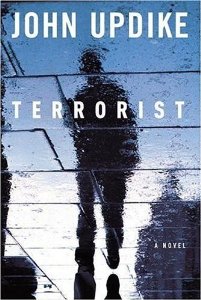
Boston radio’s Christopher Lydon has interviewed Updike on numerous occasions, and now he’s turned his admiration for Updike into “Open Source” conversations. In “John Updike and his Terrorist,” Lydon shares an interview he did with Updike about the post-9/11 novel and adds his own comments:

Terrorist is cinematic and political—wonderfully so, as I read it. It may be as close to the movie Syriana as we’ll ever get from Updike.
“It’s not for me to vouch that he nailed every answer here. But I can report the huge pleasure for one reader—picking up a piece of our conversation recently on The Great American Novel—in ‘public’ fiction, masterfully made, encompassing the depressive high-school guidance counsellor Jack Levy, and the hateful Secretary of Homeland Security, whose name sounds like Haffenreffer; and at the center of it all, Ahmad Ashmawy Mullow at the brink of manhood, flickering between earnestness and extremism, trying to solidify a Muslim consciousness in what feels like a wasteland of selfishness and materialism.'”

On January 28, 2009, one day after Updike died, Lydon had paid tribute to the legendary writer who chose the Boston area for his home for his adult life, in “John Updike: Ted Williams of Our Prose”: “John Updike had every kind of grace about him, including for me an aura of divine blessing. I liked his religious inquiries better than the Rabbit books—novels like A Month of Sundays, Roger’s Version, and In the Beauty of the Lilies, and of course stories like ‘Pigeon Feathers’ about a boy’s crisis of faith, which ends in his famous meditation on the pigeons he’s shot, on orders, in his mother’s barn, and the irresistible beauty of the blue and gray patterns in their dull coloring.”

Serbian TV spotlights Updike scholars

RTS, the Serbian public broadcast service, took note of two Serbian scholars of John Updike appearing on a panel at the recent American Literature Association conference in Chicago.
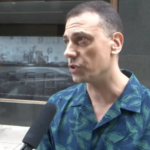
RTS interviewed Biljana Dojčinović and Nemanja Glintić for a segment that comes around the 18:55 minute mark in a Serbian-language for satellite TV broadcast all around the world.

Dojčinović talked about what was covered in the panel on “Revisiting Olinger Stories (1964) at 60 and The Afterlife (1994) at 30: A Roundtable,” while Glintić talked about what it meant for his thesis-in-progress.
Here is the link.

Novelist Spotlight podcast focuses on Updike, features Schiff

On May 3, 2024, the “Novelist Spotlight: Interviews and insights with published fiction writers” blog looked in the rear-view mirror to discuss a writer who, according to host and novelist Mike Consol, wrote more beautifully in English than anyone else.

“Novelist Spotlight #153: The great John Updike, revisited by James Schiff” covers a lot of ground. Schiff, a professor of English at the University of Cincinnati and the editor of The John Updike Review, responds to such questions as his personal attraction to Updike, the early charge that Updike was big on style and small on content, backstories to Rabbit, Run, Updike’s attraction to art, Updike’s juggling of work and family, the thousands of letters Updike wrote, his time at Harvard, his sexually frank and graphic language, the Couples years, his alleged feud with Tom Wolfe, and, of course, Updike’s choice of subject matter.

Ann Beattie speaks to Updike’s descriptive powers

In a March 2023 interview with V.V. Ganeshananthan and Whitney Terrell, Ann Beattie talked about her new collection of essays, More to Say: Essays and Appreciations, which contains an essat on “John Updike’s Sense of Wonder.” Beattie was the keynote speaker at the 1st Biennial John Updike Society Conference in Reading, Pa., back in 2010, and a version of her talk—and this chapter—was published by The John Updike Review in 2011.

The Lit Hub-hosted interview series noted that in the interview Beattie discussed “her recent LitHub essay about Donald Barthelme’s short story ‘The Balloon’ and the Chinese spy balloon. She also talks about her recently published first collection of essays, More to Say: Essays and Appreciations, in which she writes about the work of authors, photographers, and artists she admires, including Elmore Leonard, Sally Mann, John Loengard, and her own husband, visual artist Lincoln Perry.

“Beattie explains why as a nonfiction writer, she prefers close looking and reading; considers defamiliarization in the hands of Barthelme and Alice Munro; analyzes former visual artist John Updike’s depiction of the natural world; and reflects on developing increased comfort with writing about visual art. She also reads excerpts from both her Lit Hub piece and the essay collection.”

Here’s the link to the Lit Hub interview.

A 2009 broadcast on Updike and religion is now online

Shortly after John Updike died, Radio National of the Australian Broadcasting Corporation asked Updike scholars Avis Hewitt, James Plath, and James Schiff to talk about Updike’s “unparalleled legacy of writing that combined an abiding interest in sex with a profound belief in God.”

That broadcast, which aired on Sunday, March 1, 2009, is now available online. Here is the link.

Updike poem is the subject of The Christian Humanist Podcast

The Christian Humanist Podcast recently turned to John Updike’s poem “Americana” for Episode 332, with MIchial Farmer and David Grubbs talking about the poem, airports, and hotel rooms.

The Christian Humanist Podcast is the work of “Three Christians, teachers, and intellectuals [who] gather digitally to hold forth on literature, theology, philosophy, and other things human beings do well. Taking the question at hand utterly seriously and ourselves not at all, the Christian Humanists attempt to record weekly during the school year and take on some interesting questions.” Nathan Gilmour, who is not a part of this episode, is the third Christian Humanist.

Updike’s 90th Birthday Celebration streamed on Facebook Live

John Updike was born 90 years ago on this date. To celebrate, John Updike Childhood Home Director of Education Maria Lester organized and hosted a reading featuring prominent Berks County residents. Watch the Facebook Live recording of the 90th Birthday Celebration at The John Updike Childhood Home, 117 Philadelphia Ave., Shillington, Pa., featuring readings from Updike’s works, interviews, letters, and even personal love poems written as a 10 year old in Shillington.

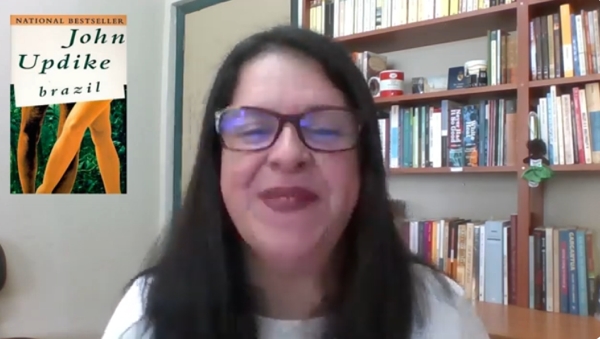
:01—Introduction and reading by Maria Lester, Director of Education at The John Updike Childhood Home (pictured)

4:54—Samantha J. Wesner, Senior Vice President Student & Campus Life, Albright College

17:18—Conrad Vanino, Shillington Councilperson and Fire Police Lt.

22:13—Charles J. Adams III, Editor, The Historical Review of Berks County

35:48—Bill McKay, Superintendent, Governor Mifflin School District

44:55—Melissa Adams, Executive Director, The Reading Public Library

49:10—Jackie Hirneisen Kendall, Updike’s classmate and first “crush”

53:55—Dave Silcox, Updike’s Berks County contact for 10 years

57:40—David W. Ruoff, former student and friend of Wesley Updike

1:01:00—Jack De Bellis, author of Updike’s Early Years, The John Updike Encyclopedia, and John Updike Remembered