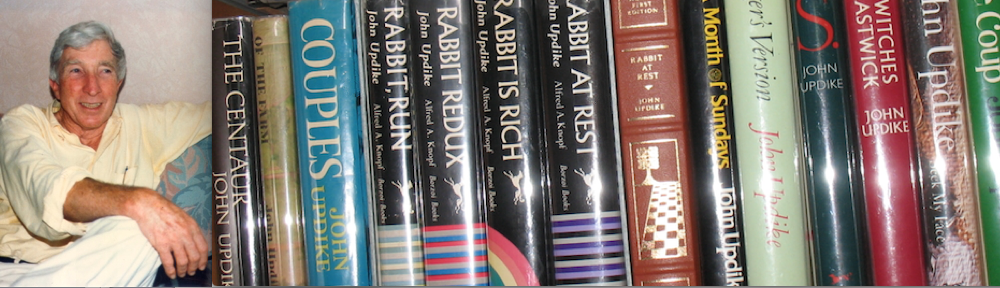

ALA, Chicago, 2022
John Updike Society board member Biljana Dojčinović was recently interviewed by Charles Carlini of Casa Carlini publishing, who wished to confront the difficult questions underlying why Updike seems less read these days. “Did the sheer brilliance of his style mask a certain thematic narrowness? Were his lush sentences and psychological insights ultimately confined to the worldview of a privileged few? Such questions have sparked fresh debate about his rightful place in the literary canon.
“One of the sharpest voices in this conversation is Biljana Dojčinović, a scholar whose work pushes beyond easy categories. A professor of literary studies with expertise in Anglo-American modernism, Dojčinović brings a distinctly transnational lens to Updike’s fiction, interrogating how his narratives handle (or mishandle) issues of gender, power, and identity. Rather than slotting him neatly into the roles of either misunderstood genius or emblem of patriarchal excess, she urges readers to sit with the contradictions—those moments where Updike is most dazzling, and most troubling.”
Dojčinović cautioned, “When it comes to biases, we need to be careful not to confuse the author with his characters, nor with the assumptions and prejudices we ourselves bring to the reading experience.”
“It’s no coincidence that all great literary works are, in some way, critical of the times they depict,” Dojčinović said. “When a writer speaks from a certain distance, it creates space for us to reflect on what we’re reading. In the modernist style, there’s no guiding authorial voice—it’s up to us to decide what’s right or wrong. That can be challenging; irony, for instance, is often missed. And when that happens, the meaning of a work can be lost entirely.”
Asked how readers should “reconcile historical context with present-day critiques,” Dojčinović responded, “When we read literature from earlier periods—or even from different cultures—we need to stay mindful of the contextual differences. More than that, we should make an effort to learn about those contexts. Take slang, for example—it’s clear we shouldn’t apply contemporary meanings to a title like The Turn of the Screw by Henry James. And yet, we often impose our present-day values and interpretations onto works from the past or from unfamiliar cultures. That’s where many misunderstandings begin.”
 The remaining letters are directed to various editors, his parents (whom he addresses as “Plowvillians”), and others that collectively give some sense of his relationship with The New Yorker. The final letter, addressed to fiction editor Deborah Treisman, is a poignant one, given that it was written just 17 days before Updike passed away:
 “His Rabbit quartet of novels . . . is among the peerless accomplishments of 20th century fiction in its chronicle of living through the confusion of the Viet Nam war, feminism, civil rights and the sexual revolution in the person of the series’ titular character, Rabbit Angstrom. Not deep of thought but rich in resentment, Angstrom was an analog of American culture itself, a congested vein of self-seeking that never recovered from the raw sensation of youthful vigor; Angstrom, like the country itself, resentfully fumbled about for years ruing the loss of vitality and trying to replace it with new things, the crabby possessiveness of the middle class.”
 Heer had written, “Not too long ago, the Fourth of July was a festive occasion: a day of national celebration, hot dogs and parades, flag-waving and fireworks. John Updike memorialized the traditional July 4 holiday in Rabbit at Rest (1990), the
  “John Updike’s 1960 novel introduced readers to Harry ‘Rabbit’ Angstrom, perhaps the most iconic character in suburban literature. Harry ‘Rabbit’ Angstrom is a middle-class man who feels there is something missing from his life. The novel follows Rabbit as he flees his suburban responsibilities—his pregnant wife, his job, his entire life—in a desperate attempt to recapture the vitality of his youth. Frank Wheeler, Piet Hanema, Frank Bascombe – these are a handful of the suburban men in the fiction of Richard Yates, John Updike, and Richard Ford. These writers all display certain characteristics of the suburban novel in the post-WWII era: the male experience placed at the forefront of narration, the importance of competition both socially and economically, contrasting feelings of desire and loathing for predictability, and the impact of an increasingly developed landscape upon the American psyche and the individual’s mind. Updike’s genius was in making Rabbit both sympathetic and infuriating—a man whose suburban malaise drives him to make increasingly destructive choices. The novel launched a series that would span four decades, chronicling the evolution of suburban America through one man’s journey.”
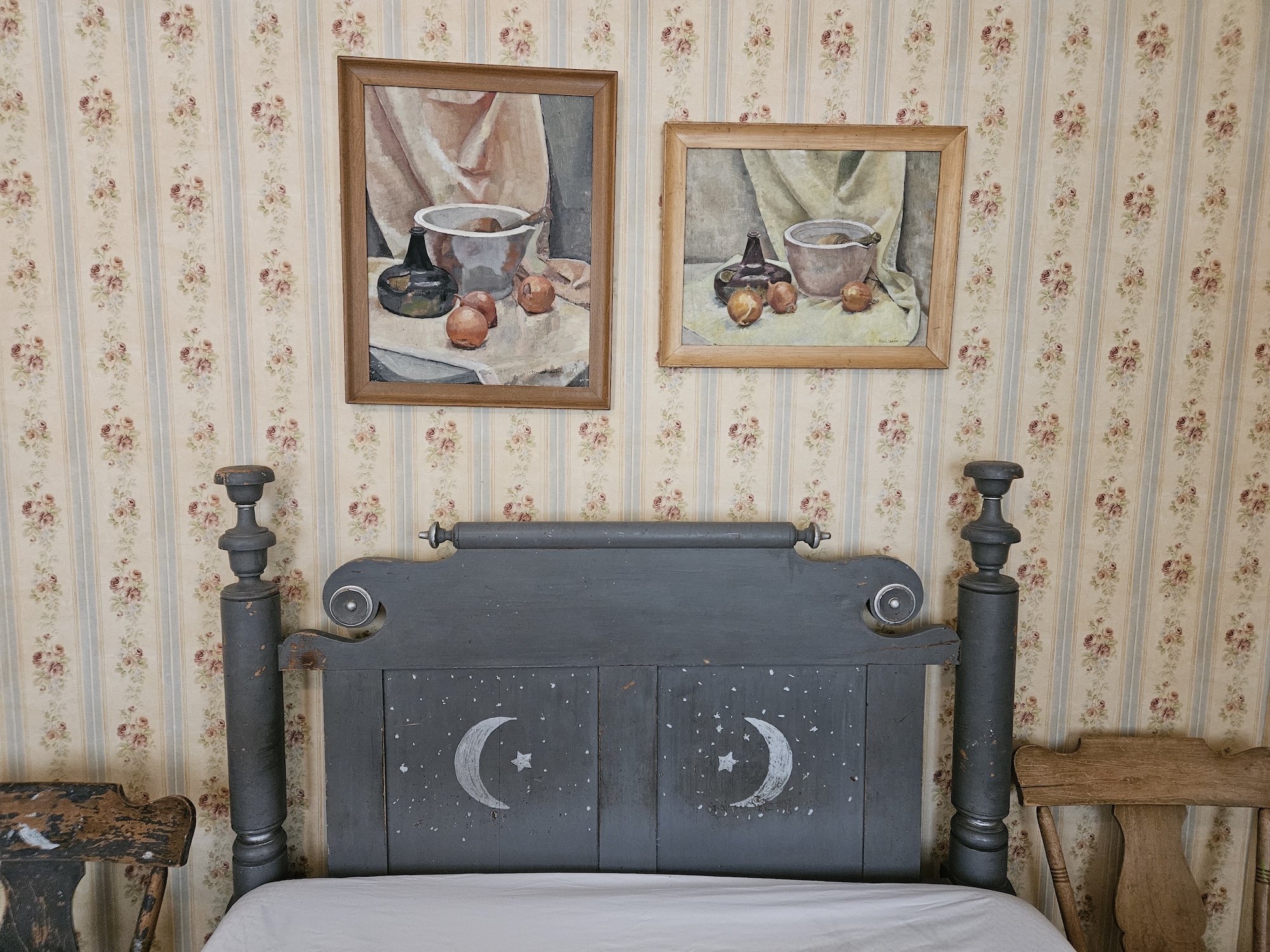 “At the greengrocer’s on Monday morning they purchased still life ingredients. The Constable School owned a great bin of inanimate objects, from which Leonard had selected an old mortar and pestle. His idea was then to buy, to make a logical picture, some vegetables that could be ground, and to arrange them in a Chardinesque tumble. But what, really, was ground, except nuts? The grocer did have some Jamaican walnuts.
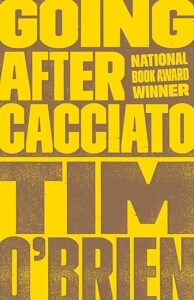 The issue was negative versus positive reviews. Christopher Lehmann-Haupt’s New York Times review was cited as an example of the former, with Lehmann-Haupt arguing that “by repeatedly invoking Catch-22 Mr. O’Brien reminds us that Mr. Heller caught the madness of war better, if only because the logic of Catch-22 is consistently surrealistic and doesn’t try to mix in fantasies that depend on their believability to sustain. I can even imagine it being said that