Updike mentioned in short story collection

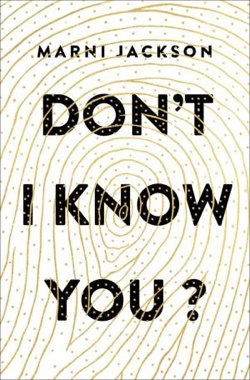
dontcoverIn Don’t I Know You?, writer Marni Jackson presents a collection of linked stories detailing the exploits of fictional writer Rose McEwan, with an author’s note explaining the fine line between fiction and reality:  “These stories are works of fiction” infused with “autobiographical elements”? But hasn’t it always been so?

As reviewer Philip Marchand notes, “The stories are of two kinds: the first, the predominant strain, are plausible narratives in which one can easily imagine the celebrity in question. ‘Doon,’ which launches the collection, introduces Rose as an adolescent writer taking a creative writing course taught by a scarcely older young man, one John Updike. Here is the first challenge faced by Jackson: how to create a character convincing in its outlines, compared to the ‘real’ person bearing that name.

“It can be delicate. In the story featuring Bob Dylan, the author must ponder mundane details and make them convincing. For example, how does the great Bob Dylan brush his teeth? Jackson must decide. ‘For several minutes he scoured his teeth over the kitchen sink, brushing and spitting methodically,’ she writes. Does he floss? Yes, asserts Jackson. ‘Then he flossed, making the thread pock rhythmically.’

“Updike reveals himself in a different way. Watching Rose sew, his curiosity is aroused by the white trim along the bottom of her sleeveless top. ‘I like that,’ he says. But he is a writer: it is not enough for something to catch his fancy—it must have a name. And what does this object call itself? ‘Rickrack,’ she tells Updike.

“It wouldn’t surprise me if Jackson did lift ‘rickrack’ from the great mass of Updike prose. . . .

“In ‘Doon’ and ‘Free Love’ the celebrities are more witnesses than participants, although Updike does play a significant part in Rose’s growth and development. (‘I didn’t think playfulness and humor were allowed,’ she states at one point, and it is not hard to see the hand of Updike in this revelation.) . . . .”

Here’s the full review:  “Meet Leonard Cohen the ice cream vendor and Keith Richards the surgeon in Marni Jackson’s Don’t I Know You?”


Schiff Foundation supports Updike Society projects

In the past, The Robert and Adele Schiff Family Foundation had donated the money that enabled The John Updike Society to purchase the home at 117 Philadelphia Ave. in Shillington, where the Pulitzer Prize-winning author spent his first 13 years, and since then the foundation has contributed annually to help cover the costs of repairs, restorations, and maintenance.

This year’s donation provides a substantial increase—$280,000—for continued work on the house restoration, as well as $30,000 to be applied toward annual expenses, $50,000 “untouchable” money to grow an endowment that will help fund annual expenses well into the future ($1.5 million is needed, at bare minimum, to fund annual expenses moving forward), and $20,000 for a new initiative to help fund travel to the Fifth Biennial John Updike Society Conference in Belgrade, Serbia.

Details on the travel grants will be announced in a future post and email to members.

14991788_1813920192153127_8301741406437647514_nThe donation allows work on the house—which had temporarily stopped, due to a lack of funds—to proceed again, and the crew from R.J. Doerr has already begun tearout work in the kitchen and second-floor sleeping porch. Workmen found more marbles that had fallen from their Black Room hiding place under floorboards, and also found the “footprints” of the original cabinets, stove, and sink. Anyone who took a tour of the house and walked onto the second-floor porch and noticed how “spongey” it was will not be surprised to learn that the wood is rotted and that the porch needs to be completely rebuilt, for safety’s sake. That work proceeds now.

The John Updike Childhood Home has been ruled eligible to apply for the national register of historic places, and the application process as well as a separate application for a historic marker are also moving forward.

The society is grateful to The Robert and Adele Schiff Family Foundation for their continued support. Pictured is the restored parlor and living room.

Donors are still sought for other aspects of the complete restoration—which will include planting privet around the perimeter of the property, re-doing and expanding the parking area, and changing the landscaping to incorporate elements from Updike’s childhood—and sponsoring/supporting exhibits to be placed inside the museum. An archivally safe exhibit case costs $2,000 and up, depending on size, and the goal is to place exhibits in cases in every room and on every level. Corporate and foundation sponsors are especially sought to sponsor exhibits. Contact James Plath (jplath@iwu.edu) if interested in helping.


Updike on the cover of a sex manual?

In a category that can only be termed “random news,” John Updike and Radiohead’s Thom Yorke are both featured on the cover of an Iranian sex manual titled Marital and Sexual Problems in Men. Though the story is recent, based on a Tehran tweeter, the book itself was spotted three years ago by journalist Sobhan Hassanvand. Updike would no doubt be amused, not only by the cover but by what passes for “news” on the Internet. Updike’s pose seems to be from a promo shot from his collection of short stories, Trust Me. Here’s the story link.

screen-shot-2016-11-29-at-7-42-16-am

Jon Houlon’s Talkin’ Rabbit blues now online

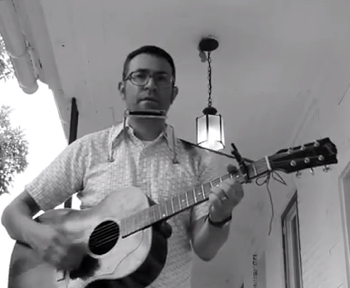
houlonAt the third John Updike Society conference in Reading, Pa., Jon Houlon entertained registrants with a song he wrote, “Talkin’ Rabbit (Harry Angstrom’s Blues),” and at the recent conference in Columbia, S.C., he debuted an expanded video version. Now it’s online, and those who missed it can hear his take on the Rabbit novels.

A word of caution:  like the Rabbit novels themselves, this video contains rough language and graphic sexual references.

Here’s the video.

In Memoriam: Larry C. Randen

randenIt is with great sadness that we report the death of member Larry C. Randen, 75, of Rosemount, Minn. Larry, who died Nov. 4, 2016 from heart disease, was well known in Updike studies, not only for the papers he’s published, but for the years he spent as an assistant editor for The Centaurian, helping editor Jim Yerkes identify publication-worthy items. When The Centaurian ceased publication, he offered his services to The John Updike Society, and with David Lull had been finding newsworthy items for the society webpage since the very beginning.

Larry further demonstrated his dedication to Updike studies by donating his papers to The John Updike Collections of the Alvernia University Archives and Special Collections, assembled by The John Updike Society to further Updike scholarship in the city that meant so much to the author. The Larry C. Randen Collection contains items collected by Larry, including clippings of news reviews, interviews, and other items related to John Updike. While the rest of us were naively thinking that once something was posted online it would always be there, Larry had the foresight to make hard copies of the things that were published in The Centaurian and on the society website, so that even if the server crashes or data is lost (as it was in the case of The Centaurian) those articles are preserved.

Larry was a tremendous asset to the society and a tireless contributor to Updike scholarship. He will be sorely missed, and the society offers condolences to his wife, Lollie; children Christopher and Heidi; Lollie’s children Brian, Amber, and Amanda; sisters Jill and Susan; brother William; AFS Brother Hans; and his grandchildren. We want you all to know how important Larry was to this society and that the work he did lives on, for which we are grateful. Here is the full obituary: larry-c-randen

A Celebration of his Life will be held Tuesday, Nov. 29, between 2-4 p.m. at the Cremation Society of Minnesota, 7110 France Ave. S., Edina, Minn. For more information, call (952) 924-4100.

Shop to benefit the John Updike Society

It doesn’t cost any more and it doesn’t take any more time. But once you access the Amazon Smile site and declare your support of The John Updike Society, then bookmark that page, you can shop at Amazon as you always have. The big difference? Amazon will donate a small portion of each purchase to the Society to help us continue the good work that’s being done to preserve The John Updike Childhood Home. Click here or on the banner below to get started!

1015749_us_amazonsmileholiday_batch2_610x240v2-_v527339673_

After you finish shopping, you’ll get a message like this:

screen-shot-2016-11-07-at-8-48-47-pm

Call for papers: A Political Companion to John Updike

John Updike Society members Scott Dill (Case Western University), Yoav Fromer (Tel Aviv University), and Matthew Shipe (Washington University in St. Louis) are editing a book with the working title A Political Companion to John Updike and have put out a call for papers. Chapters should be 6,000-9,000 words (including endnotes and works cited) and follow guidelines established by The Chicago Manual of Style, 16th edition.

The editors are “particularly interested in engaging Updike’s later (or less explored) works,” though they welcome proposals about all of his writings, both fiction and non-fiction. The deadline for proposals is Monday, January 30, 2017. Abstracts of 300-400 words and a one-page CV should be sent to: politicalupdike@gmail.com. Any questions can also be directed to the editors at that email address. Below is the complete Call for Papers.

updike-and-politics-cfp

Society honors The Robert and Adele Schiff Family Foundation

At the closing dinner of the Fourth Biennial John Updike Society Conference, the society honored The Robert and Adele Schiff Family Foundation with its Distinguished Service Award.

screen-shot-2016-10-21-at-8-27-35-amThe award is small, a token but heartfelt appreciation; the service is huge. The Robert and Adele Schiff Family Foundation gave the society the money to purchase The John Updike Childhood Home at 117 Philadelphia Ave. in Shillington, Pa., where Updike said his “artistic eggs were hatched.” Since then, foundation donations have enabled the society to hire a historic restoration specialist and to restore the interior and exterior of the house to pre-1945, when young Updike famously saw it recede as he looked out of the car window en route to the family’s new home at the Plowville farm—a move that took him away from classmates and the house he loved. Because of the tremendous generosity and support of The Robert and Adele Schiff Family Foundation, significant changes have been made to return the house to the way it once was. Updike’s bedroom has been reconfigured to its original size, with “The Black Room” (which he talks about in the short story by that name) next to it. The upstairs hallway now extends all the way to the front of the house, as it did during Updike’s time, and the living room and parlor are separated by columnar dividers, as they were when young Updike lived in the house. And the Victorian spindlework whose removal he mourned has been reinstated.

The John Updike Childhood Home is an important literary site and museum-in-progress that will become every bit as much of a part of America’s cultural history as the Mark Twain homes in Missouri, New York, and Connecticut, the Fitzgerald home in Alabama, and the Hemingway homes in Florida, Illinois, and Idaho. The society is grateful to The Robert and Adele Schiff Family Foundation for playing such a large part in establishing this cultural monument. Pictured is society vice-president James Schiff, accepting the award on behalf of his family foundation from society president James Plath. Also receiving plaques at the dinner were Thomas F. McNally and Elizabeth Sudduth, in gratitude for going above and beyond the call of duty in hosting the conference, and Don Greiner, for serving as director.

See you in Serbia! John Updike Society members look toward 2018

This past week John Updike Society members met in Columbia, South Carolina for another highly successful conference (see our Facebook page for photo gallery), which ended with a session in which David and Miranda Updike shared and commented on a slideshow of family photos from the sixties. At the meeting that followed, society president Jim Plath brought everyone up to date with what’s happening at The John Updike Childhood Home and then announced the location of the society’s 2018 conference, the result of a unanimous board vote: In 2018 the society will travel abroad for the first time, to Serbia, for a conference hosted by the University of Belgrade and directed by board member Biljana Dojčinović.

As members chatted, a number of them were already plotting which countries to visit before or after the June 2016 conference, noting that there are often ridiculously low fares to the Dalmatian coast in nearby Croatia (Dubrovnik, Split), where members could enjoy several days before flying to Belgrade.  Below are slides from the PowerPoint announcement.

screen-shot-2016-10-17-at-11-29-34-am

Continue reading

McEwan says Rabbit books best contender for Great American Novel

Screen Shot 2016-09-03 at 7.30.41 PMIn their September 9, 2016 issue (page 9) Entertainment Weekly (EW.com) played 12 questions about books with esteemed writer Ian McEwan, whose new novel, Nutshell, features an unusual narrator:  an unborn baby.

Favorite book as a child?  The Gauntlet, by Ronald Welch
Book read in secret as a kid?  Lady Chatterly’s Lover, by D.H. Lawrence
Best book read for school?  The Go-Between, by L.P. Hartley
Book that cemented him as a writer?  Portnoy’s Complaint, by Philip Roth
What he’s read over and over? A few Shakespeare plays, like Hamlet (who stalks through the pages of my new novel)
A book people might be surprised to learn he loves?  Coma, by Robin Cook
A book he’s pretended to have read?  Ulysses, by James Joyce
His literary hero?  The hippie-Hamlet hero of William Kotzwinkle’s novel, The Fan Man
His literary “crush”?  English poet Alice Oswald
Early works of his that make him cringe? “I neither cringe nor strut, but I stand by it all”
What he’s reading now?  The Age of Em, by Robin Hanson; A Peace to End All Peace, by David Fromkin

And what book does he wish he’d written?

“I wouldn’t mind putting my name to John Updike’s Rabbit sequence—in my view, the best contender for the Great American Novel.”