Program announced for Updike conference in Serbia

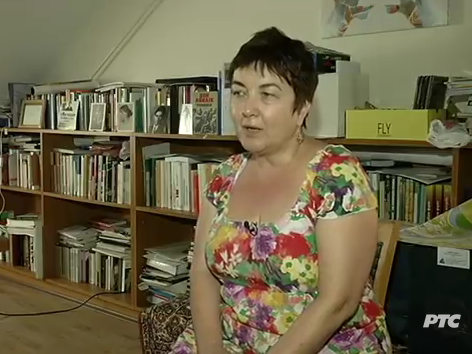
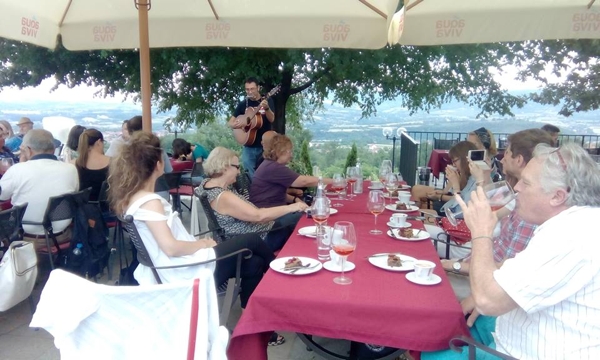
Professor Biljana Dojčinović, from the Dept. of Comparative Literature and Theory of Literature, Faculty of Philology, University of Belgrade, has released the final program for the upcoming Fifth Biennial John Updike Society Conference that will take place June 1-5, 2018.

JUS5 PROGRAM

Sixty-five people from 14 different countries will participate: 22 from the Republic of Serbia; 21 from the U.S.A.; three each from the U.K. and Japan; two each from Romania, Bulgaria, France, India, and the Republic of Ireland; and one each from Canada, Israel, Russian Federation, Georgia, and the Czech Republic.

The first conference the society will have held outside the U.S. is hosted by the Faculty of Philology, University of Belgrade, with the support of the Ministry of Education, Science and Technological Development of the Republic of Serbia.

Featured speakers will be writer Ian McEwan, writer-scholar Alexander Shurbanov, and slate sculptor Michael Updike, the youngest son of John Updike.

Though registration is closed, people in the area may want to take note of the McEwan keynote and the closing panel hosted by the National Library of Serbia, both of which are open to the public.

At the membership meeting on the final day, society president James Plath will announce the location of the 2020 conference.


A liberal view of John Updike’s genius

Chet Raymo recently published a short essay on “Updike” for the “Opinion-Liberal” section of Before It’s News in which he begins,

“‘Ancient religion and modern science agree: We are here to give praise. Or, to slightly tip the expression, to pay attention.’ I am quoting John Updike, who probably understood science better than any other major literary figure. He had an oarsman’s grip on religion, too. Add women—their unaging beauty, their desirability—and you have the Holy Trinity of his work.

“I don’t believe I took note here of Updike’s passing in 2009, at age 77. I should have. We were near enough contemporaries. We shared foibles, frailties and preoccupations. Our geographic trajectories were not dissimilar. I could not, of course, hope to equal his huge talent, but I followed along behind as he bounded rabbity ahead.
“I have just read his posthumous collection of stories, My Father’s Tears.* The names change, as usual, but the protagonists are the same, that is to say, some transmogrification of Updike himself. And, as usual, in these final stories science, religion and women figure strongly, but now shadowed by the encroachments of old age and death.”
Raymo discussses Martin Fairchild, Updike’s character from “The Accelerating Expansion of the Universe” from that collection, and concludes, “Giving praise. Paying attention. Updike did that in spades. I can’t remember where, but in some much earlier work, perhaps the same essay from which I gleaned the initial quote, he said this: ‘What we certainly have is our instinctual intellectual curiosity about the universe from the quasars down to the quarks, our delight and wonder at existence itself, and an occasional surge of sheer blind gratitude for being here’.”

Cartoon caption contest writer goes all-Updike

A blogger who identifies himself only as Docnad on his blog, Attempted Bloggery, has published an Updike-inspired caption to a Benjamin Schwartz cartoon—his entry in the March/April 2018 Moment Cartoon Caption Contest. As he writes, “Moment is a magazine of Jewish news and culture.”

Why not have an oink-oink here and an oink-oink there?”
“How come Old MacDonald never wanted borscht?”
“You mean you really don’t care that it’s rabbit season?”
“Rabbi Angstrom? Rabbit Angstrom here. I’m afraid neither
one of us lives up to John Updike’s conception.”
“Dig, man, dig! Save a hand puppeteer!”
“We’ve had seven litters—what we call mitzvahs!”
“Here’s my impression of Bugs Bunny reading Rabbit, Run: ‘Eh… What’s Updike?'”
“How much might it be worth to you if no one were to
disturb your crops through, say, Sukkot.”

(Note from the blogger:  “Pigs and rabbits are never kosher. Borscht is made from beets. Harry “Rabbit” Angstrom is the protagonist of John Updike’s four Rabbit novels. His appearance in two of my submitted captions was the result of a suggestion—a challenge really—by fellow caption contestant Gerald Lebowitz. A mitzvah is literally a commandment, but in common usage it’s a good deed to perform. Sukkot is the harvest festival.”

In Memoriam: Pavel Šrut

Radia Praha reported on May 2, 2018 that Czech Republic author Pavel Šrut died a week ago and was laid to rest at the age of 78.

“Mr Šrut was one of the Czech Republic’s most respected authors of poetry and books for children. His popular trilogy Lichožrouti or Oddsockeaters won him the Magnesia Litera Award for literature.

“Apart from his work for children, he was also a translator from English and Spanish. His translations include books of Robert Graves, D.H Lawrence and John Updike.

“He also authored lyrics to many songs, including hits sung by Michal Prokop, Vladimír Mišík and Petr Skoumal.”

Best Pennsylvania author? Need you ask?

Pop Sugar released a list of “50 Authors From 50 States — Here’s What to Read From Each of Them,” and to no one’s surprise John Updike was the author from Pennsylvania that they recommended to readers, and Rabbit, Run was the book they specifically named.

“John Updike was born in Reading, PA,” they write (West Reading, actually), “and raised in the nearby town of Shillington. Updike’s childhood in Berks County, PA, later served as the influence for his Rabbit Angstrom tetralogy, including Rabbit, Run.”

Updike the benchmark for magical prose?

A story from The Guardian, “Book clinic: which current authors produce the most magical prose,” uses Updike as the lead-in and apparent benchmark for prose that sparkles. As the subtitle suggests, “The supernatural, witchcraft or sex can be spellbinding, while others conjure gold from the everyday human struggle.”

Writer Amanda Craig begins with a question from a Beijing reader: “John Updike described himself as the sorcerer’s apprentice. Who today delivers the most magic in their prose?”

She responds, “Magic may be evoked in many ways and Updike did it both in the sense of mixing the mundane with the supernatural (The Witches of Eastwick) and in conjuring contemporary fiction whose realism is threaded through with hypnotic lyricism (the Rabbit novels, Couples, etc).”

She recommends Philip Pullman’s His Dark Materials, AS Byatt’s Possession and short stories, and then, comparatively, two others:

“If it is Updike’s realist magic you are after, then Meg Wolitzer is, like him, a lyrical chronicler of love and marriage – but unlike Updike, brilliant at female characters as well as male ones. Her descriptions in The Interestings and The Female Persuasion of loneliness, love, growing maturity and reading itself evoke quotidian joys and sorrows with humour, generosity and hope.

“Diana Evans is another superb domestic realist. Her new novel, Ordinary People, contains some of the best descriptions of happy and unhappy sex I’ve read since Ian McEwan’s Atonement. She writes about black south Londoners struggling with young families, ambition, adultery and disappointment with the wry insights Updike gave to his white east coasters.”

Sunday Times culture writers pick favorite short stories

John Updike made the list of favorite short stories picked by the culture writers of The Sunday Times. In “The 100 best stories, from Charles Dickins to Cat Person: As The Sunday Times EFG Short Story Award winner is announced, Culture writers pick their favourite tales,” Updike’s “A&P” (1961) was included:

“Updike wrote 186 short stories, and almost all of them could be included here. Written in the voice of a checkout boy at an A&P supermarket, this tells what happens when ‘in walks these three girls in nothing but bathing suits.’ It has Updike’s trademark sensual detail, sexual tension and mastery of work-life technicalities, and sees a minor moment become a major life incident.”

“A&P” first appeared in The New Yorker on July 22, 1961, and was reprinted in Pigeon Feathers, later appearing as a limited edition published by Redpath Press (1986). It remains Updike’s most frequently anthologized short story, along with “Separating” and “Friends from Philadelphia.”

Continue reading

Abstracts for Fifth John Updike Society Conference published

Professor Biljana Dojčinović from the Faculty of Philology, University of Belgrade, has edited and published the Book of Abstracts for The Fifth Biennial John Updike Society Conference, which will be hosted by the Faculty of Philology 1-5 June 2018.

A PDF copy of the publication is offered here for the convenience of Updike scholars and readers, courtesy of Professor Dojčinović, the Faculty of Philology, and the Ministry of Education, Science and Technological Development of Republic of Serbia.

JUS 5 Abstracts

Biljana Dojčinović is the director of the national project Кnjiženstvo—theory and history of women’s writing in Serbian until 1915—and editor-in-chief of Knjiženstvo, A Journal in Literature, Gender and Culture. She has been a member of The John Updike Society since its founding and a member of the editorial board of The John Updike Review since 2010. Her Ph.D. was focused on the narrative strategies in John Updike’s novels, and in 2007 she published a monograph in Serbian on Cartographer of the Modern World: The Novels of John Updike. She is also the author of numerous essays on Updike’s works and other topics, as well as five more academic books.


Serbian poet’s A Dream for John Updike translated into English

In 1977, the year when Couples was translated and published in Serbian, the prominent Serbian (then Yugoslavian) woman poet Ljiljana Djurdjić wrote a poem titled “A Dream for John Updike”—obviously inspired by the novel The Centaur, which was translated in Yugoslavia in 1968.

Her poem was published in 1977 in the literary magazine Književna reč and was recently translated by Biljana Dojčinović and Milica Abramović in anticipation of the 5th Biennial John Updike Society Conference to be held June 1-5 2018 at the Faculty of Philology, University of Belgrade, in Serbia. “Another proof of John Updike’s popularity in Yugoslavia in the ’70s,” conference director Dojčinović writes. Below is the new translation and a scan of the poem as it first appeared in print, published here in translation for the first time:

Ljiljana Đurđić, 1977 Književna reč

A DREAM FOR JOHN UPDIKE

As if trillions
Had been marching behind me
In that insomnia
Suffocated by the gracefulness of protozoa
The followers of an acrid wind
From the Galaxy of The Centaur
Could have easily forgotten
That there had ever been
A space trodden by
The hoves of the wild horses
With the animal gentleness
Of parasites and amoebas
In the guts of a hippopotamus
Should we equate it with
The image of a herd
Crossing the Rubicon?

Translated by Biljana Dojčinović and Milica Abramović

Shillington approves renaming portion of creek Rabbit Run

In an unsigned article published in the Monday, April 23 2018 Reading Eagle, it was announced that the Shillington Borough Council “on Thursday voted unanimously ‘to name a portion of the unnamed tributary to the Angelica Creek, which runs along Gov. Mifflin School District property, in commemoration of novelist John Updike’.”

School officials described the section in greater detail:  “The stream originates within Cumru and winds through Shillington Park, then adjacent to Mifflin Park Elementary and Governor Mifflin Intermediate Schools to eventually join with Angelica Creek in the Ken-Grill area.”

Jeanne E. Johnston, assistant secretary of Cumru Township, said that the name “Rabbit Run” was suggested last September by Cumru Township’s board of commissioners to commemorate the second and perhaps best-known novel written by John Updike, “whose childhood home was in the borough,” and that “the Kenhorst Borough Council already has agreed to support the comprehensive naming. The Berks County Planning Commission is also onboard. Thomas C. McKeon, vice-chairman of the BCPC, wrote a letter of support to the U.S. Board on Geographic Names (BGN) stating that “The Commission notes that the naming is a great way to honor author John Updike, who was a resident of Berks County. In addition, the stream naming will aid local emergency services in identifying places around the area.”

Since the BGN has already notified Johnston of “its willingness to name the entire stream, including those portions in Kenhorst,” it is expected that the final decision “likely will be rendered this summer,” according to Johnston. Here is the online version of the story; below is a scan of the article that appeared in the newspaper.