Begley on Updike and Roth

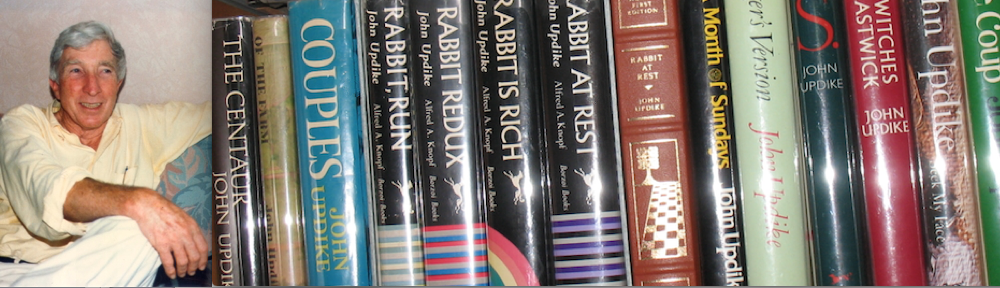
Begley’s in the news again, and so are John Updike and Philip Roth. Begley’s remarks about “Updike’s friendship with and estrangement from another great American writer, Philip Roth,” appear in the Wednesday, April 23 edition of EverydayeBook.com, posted by David Burr Gerrard:

“Philip Roth With—and Versus—John Updike, by Adam Begley” 

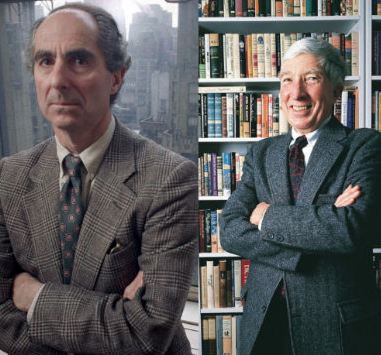
“The story of Updike’s relationship with Philip Roth is a sad one,” Gerrard writes. “In some ways they were perfect for each other . . . . All the way through the 1970s and 1980s, they corresponded. When they saw each other, they were like the smartest kids in the class, getting together and making barbed comments and gossiping madly and talking about literature.

“Their letters are hysterical: Roth warning Updike that it was fine for him to mine his territory in Pennsylvania, but he better be damned sure not to do anything about New Jersey; Updike sending Roth his long and very ambitious autobiographical poem called ‘Midpoint,’ crossing out the title and writing instead, ‘Poor Goy’s Complaint.’

“Then came some darker stuff,” Gerrard writes, then summarizes what caused the rift between them, concluding, “These are two of the most important writers of the second half of the century, and in cahoots they could have been brilliant. For many years, they weren’t.”
Interview: How to Write John Updike’s Deathbed

The AWL today (April 21, 2014) published an interview with Updike biographer Adam Begley titled, “How to Write John Updike’s Deathbed.” Asking the questions was Elon Green.

In it, Begley is asked about the deathbed section in Updike, and whether family members saw the book before publication. Begley says that there were numerous corrections to the death scene and also answers questions about the book’s fact-checking, what he regretted leaving out of the book, whether Updike suffered for his art, and what women writers he admired.

Here’s the link to the article, “How to Write John Updike’s Deathbed.”


Dangerous Minds considers a Roth-Updike exchange

Screen Shot 2014-04-21 at 2.57.20 PMDangerous Minds, a pop culture website, recently published a piece titled “Philip Roth to John Updike: FTFY! Updike to Roth: LOL! STFU.”

In it, Martin Schneider considers literary feuds past and present, finally settling on an exchange of letters following a 1999 New York Review of Books publication of an essay on literary biography in which Updike had referenced negative remarks about Roth in a biography (Leaving a Doll’s House) published in 1996 by Roth’s ex-wife, Claire Bloom.

“Three years later, Roth was still bristling at the apparent presumption of guilt . . . . Roth wrote in to complain, resulting in one of those exquisite disputes that happen often in the pages of The New York Review of Books. Letters going each way, eye squarely on the reader, outraged rhetorical high dudgeon in abundance . . . . But this one would be short and sweet. Roth offered to rewrite a key sentence—on the Internet, you could distill part of his lengthy, indeed overlong missive as the common Internet acronym, the breezy and condescending “FTFY”: “Fixed that for you!” Updike didn’t take the bait, deciding that his original sentence was good enough, thank you very much.”

Both letters are published verbatim in the article.

Ozick: Kafka did not transcend his Jewishness, no matter what Updike claimed

In a review of Kafka: The Decisive Years and Kafka: The Years of Insight, by Reiner Stach (Princeton University Press), writer Cynthia Ozick took exception with Updike’s remarks made in the introduction to Kafka’s Collected Stories:

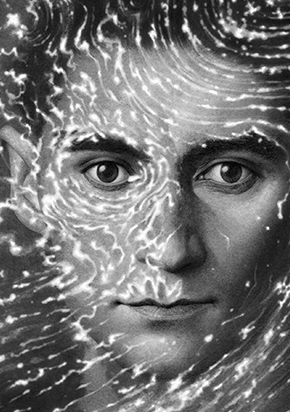
Screen Shot 2014-04-19 at 8.16.05 AM“In an otherwise seamless introduction to Kafka’s Collected Stories, John Updike takes up the theme of transcendence with particular bluntness: ‘Kafka, however unmistakable the ethnic source of his ‘liveliness’ and alienation, avoided Jewish parochialism, and his allegories of pained awareness take upon themselves the entire European—that is to say, predominantly Christian—malaise.’ As evidence, he notes that the Samsas in ‘The Metamorphosis’ make the sign of the cross. Nothing could be more wrong-headed than this parched Protestant misapprehension of Mitteleuropa’s tormented Jewish psyche. . . . The idea of the parochial compels its opposite: what is not parochial must be universal. And if the parochial is deemed a low distraction from the preponderant social force—’that is to say, predominantly Christian’—then what is at work is no more than supercilious triumphalism. To belittle as parochial the cultural surround (‘the ethnic source’) that bred Kafka is to diminish and disfigure the man—to do to him what so many of Kafka’s stories do to their hapless protagonists.”

Here’s the full review, which appeared in the April 11, 2014 Books section of the New Republic:  “How Kafka Actually Lived; He did not transcend his Jewishness, no matter what Updike claimed.”

Flavorwire offers The Skeptic’s Guide to John Updike

Today Flavorwire posted an article from Jason Diamond that was obviously inspired by the release of Adam Begley’s biography, and yet it’s not a review. In “The Skeptic’s Guide to John Updike,” Diamond mistakenly credits the Boston area for Updike’s “rearing,” but offers that people who already like Updike’s work will like Begley’s “excellent new biography,” which “will give you more insight into a writer you might still be conflicted about reading.” He also advises resistant readers to try The Complete Henry Bech, Hub Fan Bids Kid Adieu, and the LOL volume of the complete short stories.

Chatterbox collection brings top-dollar at auction

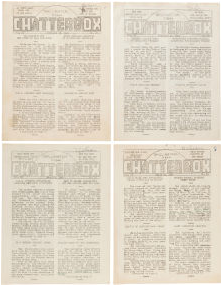
A collection of 25 Chatterboxes that belonged to Updike pal Barry Nelson sold at auction on April 2, 2014 for a whopping $18,125. For a little perspective, an inscribed copy of Updike’s first novel, The Poorhouse Fair, is currently selling for $625, and you can also buy a signed copy of Updike’s first book, The Carpentered Hen and other tame creatures, for the same price.

Screen Shot 2014-03-21 at 9.26.45 PM

Philip Roth takes NT Times to task over Begley review

A day after The New York Times published a review of Adam Begley’s biography of John Updike, the Times followed with a letter they received from Philip Roth, who took exception with one of the claims made in the review:

To the Editor:
 
In his review of Adam Begley’s biography of John Updike (Arts pages, April 9), your reviewer allows that “Mr. Roth has denied” a claim made about him that would have seemed to me unlikely enough on its surface not to bear gratuitous repeating in The Times.
Your reviewer writes, “Claire Bloom, after her divorce from Philip Roth, said Updike’s negative review of Mr. Roth’s ‘Operation Shylock’ (1993) so distressed Mr. Roth that he checked himself into a psychiatric hospital.”
For the record, in the weeks and months immediately after Updike’s March 15, 1993, review of “Operation Shylock” in The New Yorker, I was teaching two classes in literature at Hunter College, giving readings from my book “Patrimony” in Lansing, Minneapolis, Pittsburgh, Cambridge, South Orange and at the New York “Y,” and completing work on the first chapters of “Sabbath’s Theater.”
On March 19 I enjoyed my 60th-birthday celebration at the home of friends in Connecticut and in early June drove to Massachusetts to receive an honorary degree from Amherst College.
PHILIP ROTH
New York, April 9, 2014

Biographile asks Begley about Updike

Biographile posted an interview with Updike biographer Adam Begley yesterday in which they asked about Updike’s mother, the importance of religion to his fiction, and the challenges Begley faced in writing a biography of a man whose career seemed, at least to the outside world, smooth.

Here’s the story:

“Alive to the World of Literature: Biographer Adam Begley on John Updike”

NPR spotlights Begley’s UPDIKE

NPR spotlights Adam Begley’s biography Updike today, featuring an audio interview and a published version that includes “Interview Highlights”:

“Biographer Explains How John Updike ‘Captured America'”

Asked what kind of dinner guest Updike was, Begley responds, “You would be aware that he was noticing you with terrific intensity, and you might find even that he’d put you in a story next time.”