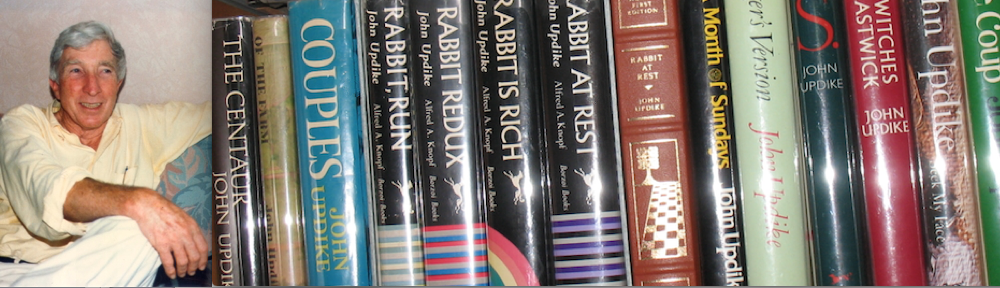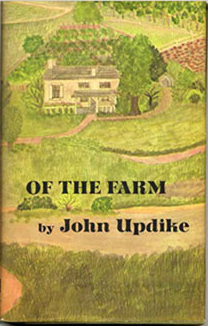
A collection of 25 Chatterboxes that belonged to Updike pal Barry Nelson sold at auction on April 2, 2014 for a whopping $18,125. For a little perspective, an inscribed copy of Updike’s first novel, The Poorhouse Fair, is currently selling for $625, and you can also buy a signed copy of Updike’s first book, The Carpentered Hen and other tame creatures, for the same price.
Publishers Weekly Radio spotlights Updike bio
Rose Fox and Mark Rotella welcomed the author of Updike to interview show in a segment titled, “PW Radio 65: Adam Begley.” Also featured on the show was reviews editor Alex Crowley talking about Poetry Month.
Philip Roth takes NT Times to task over Begley review
A day after The New York Times published a review of Adam Begley’s biography of John Updike, the Times followed with a letter they received from Philip Roth, who took exception with one of the claims made in the review:
New York, April 9, 2014
Biographile asks Begley about Updike
Biographile posted an interview with Updike biographer Adam Begley yesterday in which they asked about Updike’s mother, the importance of religion to his fiction, and the challenges Begley faced in writing a biography of a man whose career seemed, at least to the outside world, smooth.
Here’s the story:
“Alive to the World of Literature: Biographer Adam Begley on John Updike”
NPR spotlights Begley’s UPDIKE
NPR spotlights Adam Begley’s biography Updike today, featuring an audio interview and a published version that includes “Interview Highlights”:
“Biographer Explains How John Updike ‘Captured America'”
Asked what kind of dinner guest Updike was, Begley responds, “You would be aware that he was noticing you with terrific intensity, and you might find even that he’d put you in a story next time.”
Higgins on Begley’s case for rereading Updike
Jim Higgins, who may be familiar to readers as the Milwaukee Journal Sentinel journalist who has been reading an Updike short story weekly and posting his considerations, has been thinking about Updike again—this time in the context of the forthcoming Adam Begley biography, Updike, which will finally be available to the general public next week.
“Adam Begley’s bio makes strong case for rereading ‘Updike'”
Plath shares Updike house news with his campus
John Updike Society president Jim Plath will give a talk on Friday, April 4 at Illinois Wesleyan University as part of the annual Faculty Colloquium series. His presentation is punningly titled “Backdoor Scholarship: A Report on The John Updike Childhood Home.”
“Plath to Discuss ‘Backdoor Scholarship’ and The John Updike Childhood Home”
New York Observer writer considers the case for Updike as a major artist
Even before it falls into the hands of average readers on April 8, Adam Begley’s biography, Updike, is doing what scholars and society members expected: reawakening the debate over Updike’s status as an American writer.
There has always been a small segment who think he “writes like an angel but has nothing to say,” and reports of his demotion in the canon have been greatly exaggerated, given his continued presence in major anthologies. Michael H. Miller of the New York Observer weighs in, but only concludes “Updike, like George Caldwell in The Centaur, a character modeled after his own father, did the best he could with what was given to him—a massive flawed talent. Here’s the whole article:
Begley: How JU Turned Everything in His Life to His Advantage in Fiction
Vulture.com today posted a story by Updike biographer Adam Begley—a segment, really, from Updike. For those who can’t wait to get a copy, it’s pretty much an official teaser:
“How John Updike Turned Everything in His Life to His Advantage in Fiction”
Updike will be published on April 8, and is currently available in hardcover from Amazon.com for $21.77 or on Kindle for $14.44.
Blogger contemplates a passage from Self-Consciousness
The Friday, March 21 2014 post for The Bully Pulpit blog was titled “John Updike on Falling Airplanes and His Faith in a Fallen World,” in which the writer thoughtfully responds to a long “magisterial” passage from Updike’s Self-Consciousness: Memoirs.
“Updike is a writer who pulls the sublime from effortless, conversational sentences, affirming his reflection that ‘to give the mundane its beautiful due’ was the purpose of his writing style. And man, do you feel the power of that impulse in these memoirs,” JR Benjamin writes. He considers as well a poem by Philip Larkin and concludes, “Not to put too fine a point on the issue, but I think the contemporary American Church, with its Hollywood aesthetic and prosperity gospel, has lost much of that crucial, validating seriousness” both that informed both Larkin’s and Updike’s sense of religion and church-going.