David Updike on Growing up Updike

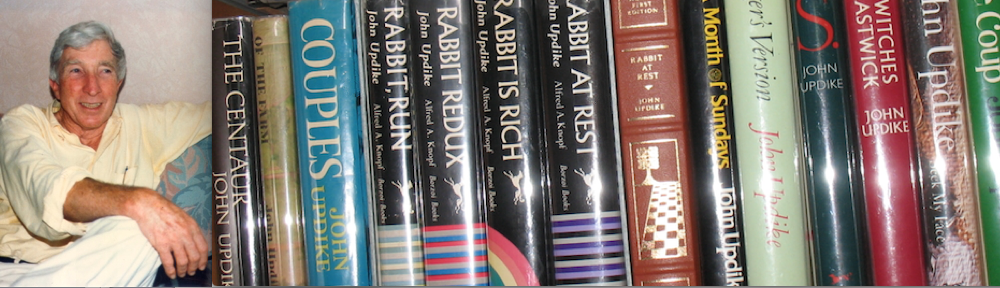
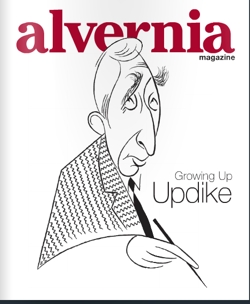
GrowingupUpdikeDavid Updike, the current John Updike Scholar in Residence at Alvernia University, is featured in a new Alvernia Magazine article titled “Growing up Updike” (pp. 20-24).

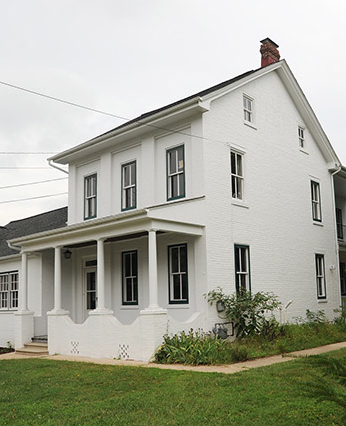
In it, he talks about what it’s like being the son of one of America’s most celebrated authors and shares memories of one particular family trip to Pennsylvania, where his father “took us to see his old house in Shillington, but was too shy to knock and ask to go in,” so he “walked us back to the playing field [at the high school behind the house] and the shelter where he used to play roof ball,” David writes.

“Even at an early age I could sense his disappointment that we seemed to underappreciate these places which, for him, held such sweet emotional weight—the memory of childhood, of his being seven, or so, and sprinting out of the side door of his house [at 117 Philadelphia Ave.] to join his friends in the Pennsylvania twilight, to play a final game of roof ball.”

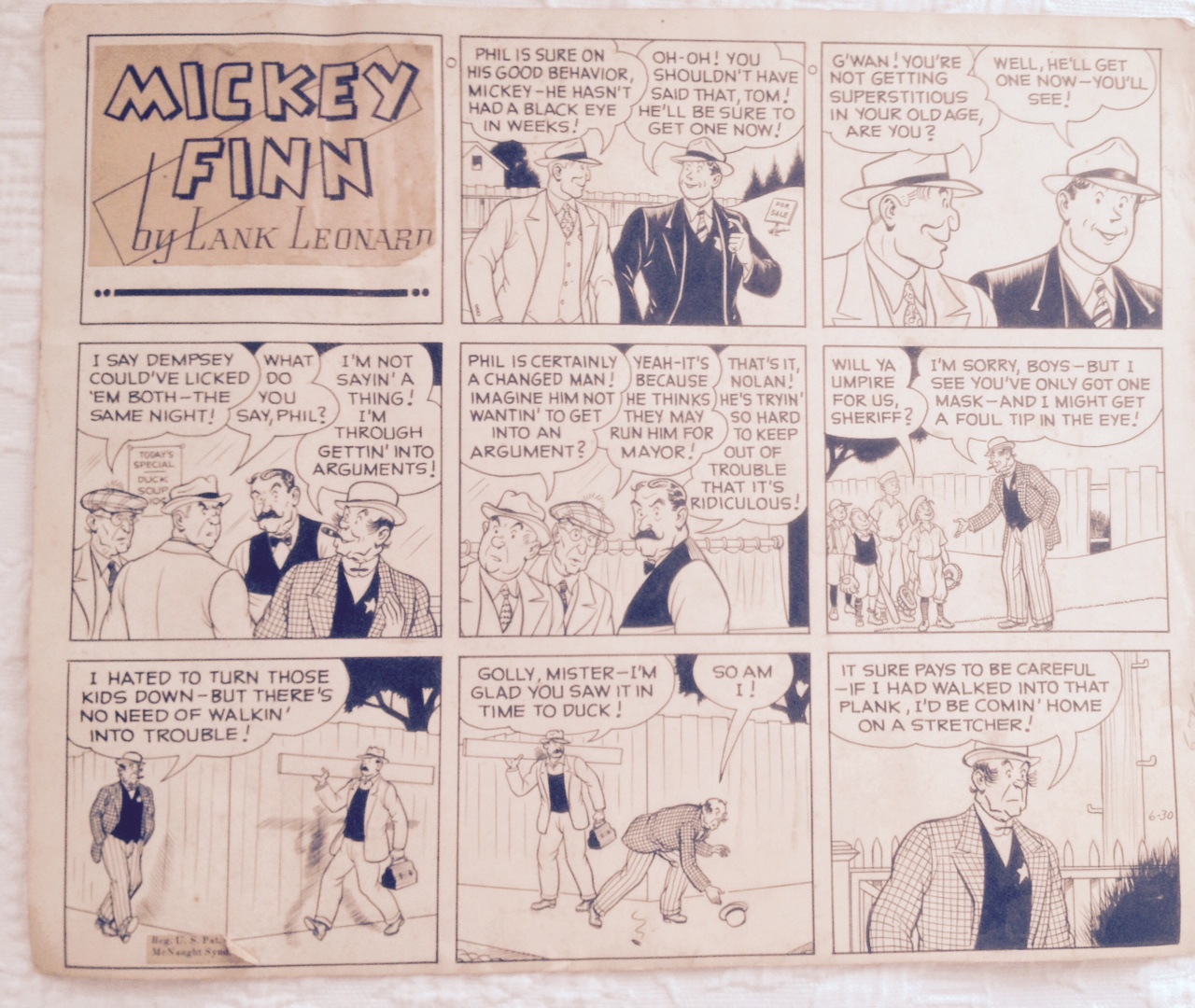
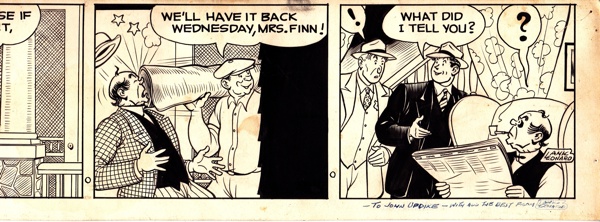
DavidUpdike“It must have been a surprise to my parents, as it was to me, when I started to write short stories, and then odder still, had them accepted by The New Yorker. Photography, not writing, had been my preferred medium, and I knew well that my father had toiled for a decade or so—sending off countless cartoons, and spots, and light verse—before his poems were accepted by The New Yorker.

“I knew that my own success was somehow unjustified—unearned. I need not have worried, for in my mid-twenties things got more difficult, and I was languishing in New York, where I had moved for no very good reason . . . .”

Berks-Mont promotes David Updike conference talk

As with the previous John Updike Society conference hosted by Alvernia, plenary sessions that would appeal to local residents are “open,” and Berks-Mont recently posted a story on David Updike’s upcoming conference talk at 2 p.m. on Thursday, October 2 in Francis Hall Theater.

“There will be family pictures and some artwork, along with my own narrative and excerpts from my father’s writing as well as his mother, Linda Grace Hoyer, who was born and died in Plowville and published two collections of short stories,” Updike said.

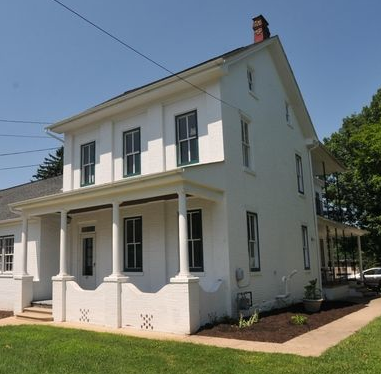
Updike also mentioned The John Updike Childhood Home, which the society owns and is in the process of turning it into a museum and literary center.

“I am happy his home is being turned into a museum. I hope it has a useful life beyond the occasional tourists, something like a writing center for local students manned by college students,” Updike said.

The details of management will be decided by the board, which consists of JUS board members plus the curator and a representative of the Updike family—with Elizabeth Cobblah Updike serving the first term. Right now, the house is still a “deconstruction” zone. Then comes the construction, and finally decisions pertaining to the running of the museum and extent to which the house can be used as a literary center.

But the general consensus is that the house should indeed be used by writers and students. Before the society board voted to establish a board to run the house, they approved remodeling of the annex to include an education room, where classes could meet, lectures could be given, and a video on Updike in Pennsylvania could be shown on a TV monitor.

“David Updike will share photos, narrative and excerpts at upcoming conference”


Ecenbarger updates Philly on Updike house progress

Screen Shot 2014-08-07 at 7.00.33 AMThis morning The Philadelphia Inquirer published a story on The John Updike Childhood Home—“Updike’s home to open as museum”—that was written by William Ecenbarger. If the name sounds familiar, perhaps you read about Ecenbarger’s tour of Updike country with Updike himself, with which Adam Begley chose to open the first chapter of his recently published biography. This time there was no drive, and Ecenbarger’s tour guide was curator Maria Mogford, who led him through the house that’s still in the “deconstruction” phase as it moves closer to becoming a finished product as one of America’s literary landmarks.

“When it opens, probably next year, the site will join childhood residences-turned-museums of other famed American authors,” Ecenbarger writes. “Mark Twain is forever linked to Hannibal, Mo.; William Faulkner to Oxford, Miss.; Emily Dickinson to Amherst, Mass. But in one respect, the building at 117 Philadelphia Ave. will stand out.

“More than any other American writer, Updike made his first home an ongoing setting, in intricate detail, for his 61 volumes of novels, short stories, poems, and essays. The house, where he lived with his parents and a grandparent and where he said his ‘artistic eggs were hatched,’ was also where many of his last stories are set.

“‘He said if he ever had a ghost, it would haunt this house,’ says Mogford, an English professor at nearby Albright College.”

But don’t let that stop you. Society president James Plath slept in the house on one visit and can vouch for the fact that it remains as happy a place as it was in Updike’s memory. Though the house isn’t finished yet, Mogford will still take people through it on private tours if the requested day and time mesh with her schedule. Hardhats are not required. Contact her via email at mmogford@albright.edu.


John Updike Childhood Home gets a tenant

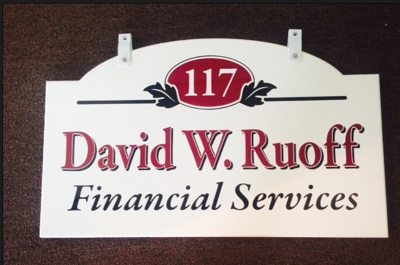
RuoffsignageThe John Updike Childhood Home is still being renovated, but the annex built by Dr. Hunter—who lived in the house after the Updikes left and needed additional space for his practice—is being rented as of July 1 to a tenant who grew up in the neighborhood, knew John Updike, and counts Updike’s father, Wesley, among his mentors.

The Borough of Shillington has approved David W. Ruoff Financial Services as a tenant in the annex of The John Updike Childhood Home, in effect establishing an onsite presence and giving the society a small rental income that will go toward monthly utilities, fees, and taxes.

The society reconfigured the annex space so that the former doctor’s waiting room will serve as the museum’s education room, with chairs lined up so groups of 24 or so can listen to speakers, or, thanks to a donation from Bruce Moyer, watch Updike-related videos on a TV monitor. The former doctor’s office has been turned into a museum gift shop, while a bathroom will be shared by the museum and the tenant, who will occupy the rooms that Dr. Hunter used for his examinations. One of those rooms even has an x-ray light that’s still operational.

Both the society board and the tenant are excited about the new arrangement.

“I consider it a privilege to occupy that space which is 1/2 block from where I was raised in Shillington, Pa.,” Ruoff said. “I knew John in his youth, but I knew his father Wesley Updike a lot better. As you know, his father was a math teacher in the Shillington High School for many years. I consider him one of my mentors during my childhood.

MaxwellRuoff said Wesley Updike “would throw snowballs at a blackboard to start showing us how to use the  decimal system: ‘Numbers to the right are smaller, numbers to the left are bigger—you get that David?’

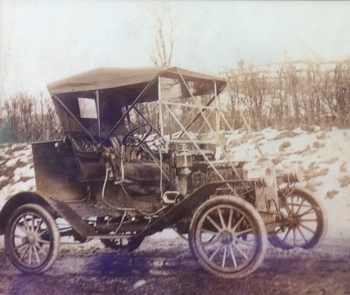
“My mother was born 99 years ago on Philadelphia Ave. Then my grandfather moved the family up to Fourth Street, which is right next to the Jewish cemetery overlooking Shillington and Reading. The family would delight in seeing my grandfather coming from Reading on Lancaster Ave. (now 222) and they had no trouble identifying him because he had the only car in Shillington at that time. He sold spices to hotels, etc., and it was actually a company car”—a 1910 Maxwell.

Ruoff said that “John Updike gave a lot of people around here paranoia—drove everybody crazy figuring out who was who [in the fiction].”

Ruoff, who started his life insurance agency in 1967 and financial service organization in 1974, has joined The John Updike Society and looks forward to sharing stories with members.


Updike house restoration draws Illinois interest

On May 7, 2014 The Pantagraph (Bloomington-Normal, Ill.) did a story on Updike Society president Jim Plath’s involvement with the ongoing restoration of The John Updike Childhood Home in Shillington, Pa.

For the curious:

“IWU professor helps save John Updike home.” 

The last time the newspaper published an item about the house it led to the donation of a handsome set of Updike first editions that will be on display at the house, once construction is completed. Who knows? Maybe this one will lead to more donations.

Article on Updike house restoration appears

Today, Berks-Mont News featured an article on the restoration of The John Updike Childhood Home, written by Emily Thiel, editor of The Southern Berks News and Community Engagement Editor for Berks-Mont Newspapers:

“Happy Birthday John Updike:  John Updike Society and Berks Habitat for Humanity work to transform Updike childhood Shillington home as museum”

Updike house deconstruction moving right along

volunteersThe outside of The John Updike Childhood Home has been recently painted, and with a break in the weather volunteers from Habitat for Humanity of Berks County and Bellman’s Church got together to strip wallpaper from the living room and downstairs hallways and to remove newer floor tiles that had been added when the house was converted to a business.

Habitat’s Russell Poper, Director of Construction for the Updike project, had much good news to report:  they removed half of the tiles downstairs without causing damage to the original flooring, and they were able to locate a clean “footprint” on the floor showing the shape and exact placement of the original room divider. The Society will try to rebuild the house as it was when Updike lived there, and that means putting back the living room divider, re-establishing the wall and door in Updike’s bedroom that led to a “black rifleroom,” and eventually reconstructing a grape arbor that dominated the side of the house.

Poper also said the group discovered a drawing of a rifle on the foyer wall when they stripped off the wallpaper. It could be Updike’s, since we know he was allowed to draw on the upstairs hallway walls, or it could be something the Hunters (who bought the house later) tried and abandoned. Needless to say, we’ll be investigating! Anyone with information about the drawing should contact curator Maria Mogford: mmogford@alb.edu. Pictured above are the volunteers working this past weekend in the living room, and the rifle they uncovered in the foyer.

The John Updike Society is grateful to the volunteers who’ve been helping to turn the house into a community showpiece.

PECO Foundation donates $20,000 to help restore The John Updike Childhood Home

The John Updike Society has received a $20,000 donation from the PECO Foundation, a charitable trust based in New York City, “to help support the John Updike Society’s project to preserve the Updike family house.”

H. Roemer McPhee, who is on the board, is a huge Updike fan—not just familiar with all the novels and short stories, but able to quote from them. This past summer he toured the house and Shillington-Plowville sites with his mother, Updike Society president James Plath, and John Updike Childhood Home curator Maria Mogford. And he saw firsthand the work that needed to be done.

Last year the PECO Foundation contributed $3000 but upped their donation this year to help with much-needed house repairs and restoration, which are expected to cost some $300,000.

The contribution looms even larger than that, because it’s the first major donation other than ones received from The Robert and Adele Schiff Family Foundation, whose generosity enabled the society to buy the house and begin the restoration. “It paves the way for other major donors to climb onboard and together create a literary landmark that can be appreciated for many generations to come,” Mogford said.

Mogford said that the exterior of the house has been painted this fall, and that work inside will begin again in the spring and continue throughout summer of 2014, in anticipation of being at least “presentable” for the Third Biennial John Updike Society Conference to be held the first week in October of 2014. That conference, like the first, will be hosted by Alvernia University.