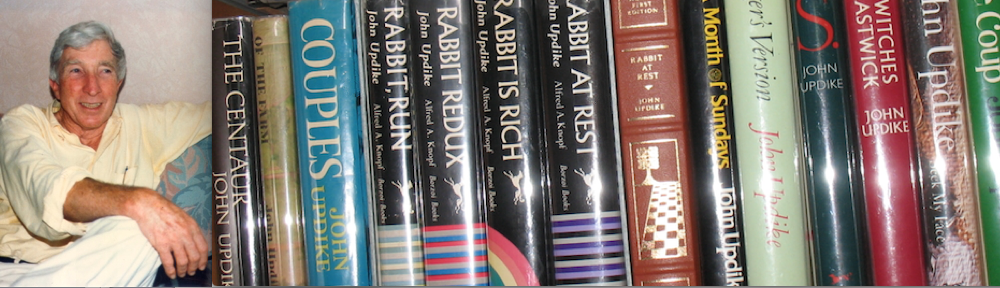
 In perhaps its most competitive year, with at least a third of the 138 applicants being highly accomplished writers and artists, a trio of judges from The John Updike Society selected Taylor Brown as the recipient of the 2026 John Updike Tucson Casitas Fellowship. The award consists of a two-week residency at the Mission Hill Casitas within the Skyline Country Club in Tucson, Arizona—casitas that John Updike owned and where he wrote during a part of each spring between 2004-09. The casitas stay is made possible by a generous donation from Updike Society members Jan and Jim Emery, owners of the casitas. The fellowship includes a $1000 prize provided by the Society, which administers the fellowship.
While staying at the Casitas, Brown will work on Rise, River, Rise, a literary novel-in-progress set amid the continent’s largest blackwater wetland, the Okefenokee Swamp. The novel interweaves deeply researched swamp history and lore with a contemporary storyline of environmental activists (“tree sitters”) trying to halt mining activity in the area.
Fellowship coordinator Robert Luscher said that the judges were unanimous in their selection, impressed by Brown’s high level of meticulous research reminiscent of the research Updike did for many of his novels, and by a narrative construction and character development that was compelling on multiple levels. “We perceived echoes of Mark Twain and Richard Powers in the scene that was submitted, enjoyed the Southern Gothic atmosphere, and were impressed by the seamless introduction of significant cultural and environmental elements,” Luscher said.
Brown, who grew up on the Georgia coast, is the recipient of the Southern Book Prize, the Montana Prize in Fiction, the Ron Rash Award for Fiction, the Audie Award in Fiction, the Weatherford Award in Fiction, and was named Georgia Author of the Year for Literary Fiction. His work has also been a finalist for the John Steinbeck Award, the Thomas Wolfe Fiction Prize, the Doris Betts Fiction Prize, and the Writer’s Digest Writing Competition. Like Updike, Brown is a prolific writer, best known for his novels: Fallen Land (2016), The River of Kings (2017), Gods of Howl Mountain (2018), Pride of Eden (2020), Wingwalkers (2022), and Rednecks (2024), with another novel, Wolvers (2026), forthcoming from St. Martin’s Press. He is also the author of a short story collection (In the Season of Blood and Gold), and his reporting, essays, and short fiction have appeared in a wide range of publications, including The New York Times, The Wall Street Journal, Garden & Gun, The Bitter Southerner, The Southwest Review, and numerous literary journals. He lives in Savannah, Georgia, where he is the founder and editor-in-chief of the custom motorcycle publication BikeBound. Besides old motorcycles, he says he likes thunderstorms and dogs with beards. You can find him at www.taylorbrownfiction.com or @taylorbrown82.

 Leslie Pietrzyk, whose first collection of short stories, The Angel on My Chest, won the Drue Heinz Literature Prize, was selected over 193 applicants to be the 2025 John Updike Tucson Casitas Fellow. The fellowship consists of a $1000 prize from The John Updike Society and a two-week residency at the casitas formerly owned by John and Martha Updike, where the two-time Pulitzer Prize winner spent time golfing and writing in his later years. The casitas, located in the Santa Catalina Foothills, are owned by Jan and Jim Emery, and the annual residency is made possible by their generosity. (Photo: Wikipedia)