 Chase Replogle, pastor of Bent Oak Church in Springfield, Mo., posted a chapter excerpt that didn’t make the final cut of his book, A Sharp Compassion. “I think it still matters, he wrote. “It is taken from the chapter on affirmation and examines how the church has been tempted to avoid what offends.”
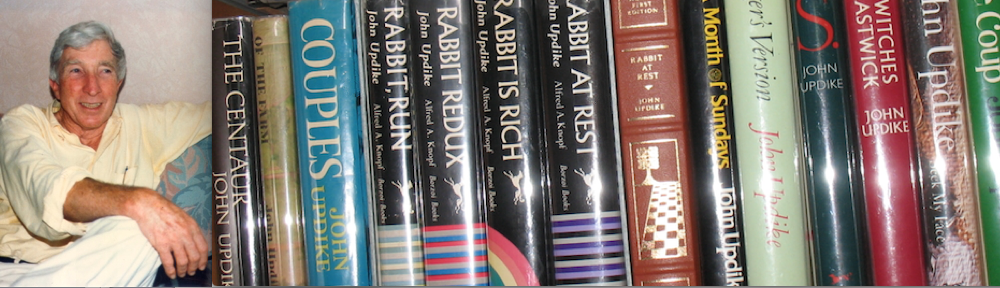
In comparing Jack Kerouac’s On the Road and John Updike’s Rabbit, Run, which Updike said was written in part as a response to Kerouac’s novel, he notes, “Both novels talk plenty about God. Both raise questions Americans have historically turned to the church to help answer. But Updike alone recognizes the unique temptation the church faces.
“In Updike’s novel, Rabbit genuinely believes that abandoning his family is a kind of spiritual pursuit to find himself. He explains to his pastor, ‘Well I don’t know all this about theology, but I’ll tell you. I do feel, I guess that somewhere behind all this… there’s something that wants me to find it!’ His pastor, Jack Eccles, works tirelessly to reconcile Rabbit with his estranged wife, but Eccles has his own insecurities. He is convinced that his clerical robe and collar rob him of relatability and cost him Rabbit’s genuine respect. He feels he isn’t relevant to Rabbit’s life and interests. His pastoral insecurities lead him to covet Rabbit’s friendship. He imagines that being Rabbit’s friend is an essential prerequisite to leading him back to faith.”
Read the entire excerpt from A Sharp Compassion.
 In
In 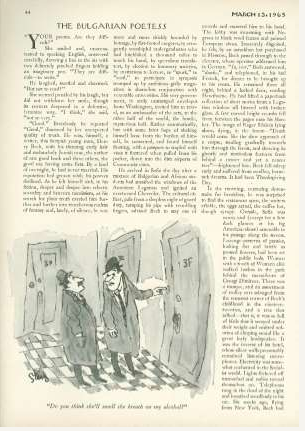 ABSTRACT: This article provides an innovative perspective on John Updike’s visit to Eastern Europe in the 1960s, including Bulgaria, as reflected in his short story “The Bulgarian Poetess” first published in The New Yorker on March 13, 1965. The inspiration for this interpretation is as much academic as it is anthropological. It comes from Updike’s use of my own surname, Glavanakova, which is not a common Slavic one, for the fictional character of the real-life Bulgarian poetess he met, whom researchers have established to be Blaga Dimitrova. Many have delved into the text aiming at a detailed and, more significantly, an authentic reconstruction of events, places and people appearing in the story (Katsarova 2010; Kosturkov 2012; Briggs and Dojčinović 2015). A main preoccupation of these analyses has been to establish the degree of factual distortion in Updike’s representation of the people and places behind the Iron Curtain. The pervasive imagery of the mirror, implying both its reflecting and doubling function, and the repetitive use of cognates associated with truth and honesty in the story suggest the focus of this article, which falls on the dynamics between authenticity and artifice from the perspective of autofiction by way of illustrating how one culture translates into another “at the opposite side[s] of the world” (Updike, “The Bulgarian Poetess”). In my interpretation, autofiction opens ample spaces for representations and discussions of identity and self-/reflexivity in a transcultural context.