Book nerd offers five interesting Updike facts


Screen Shot 2015-03-17 at 6.47.28 AMBrian Hoey
, a self-described “book nerd,” yesterday uploaded a piece for www.BooksTellYouWhy.com titled “Sex, Trash, and Eminem: Five Interesting Facts About John Updike,” one of which—that he couldn’t write sex scenes—is debatable.

But one “fact” may be new to the larger community of Updike readers and scholars:

4) His influence extends beyond Literature and into Rap Music.

“Or, at least, Eminem has read the firRabbitIsRichst installment in Updike’s ‘Rabbit’ tetrology, Rabbit, Run (1960). The noted rapper was, apparently, so moved as to nickname the protagonist in his 2002 film 8 Mile ‘Rabbit,’ laying claim to a revitalization of the white-American-everyman archetype that Updike so forcefully established five decades ago. The film’s soundtrack, too, referenced Updike’s contribution to the canon with a track entitled ‘Rabbit Run,’ for those who might have missed the first reference.”

Irish journalist picks her favorite fictional moms

Screen Shot 2015-03-15 at 10.36.10 AMMother’s Day is approaching and The Irish Times today ran a piece by literary correspondent Eileen Battersby.

In “Eileen Battersby picks her favorite fictional mums for Mother’s Day,” the journalist names John Steinbeck’s Ma Joad (The Grapes of Wrath) as one of her favorites. She also cites moms who appeared in fiction by James Stephen, Virginia Woolf, Louisa May Alcott, Jane Austen, Cynthia Ozick, Thomas Wolfe, Tim Winton, Paul Smith, Toni Morrison, Harriette Arrow, William Maxwell, Bertolt Brecht, Sun-Mi Hwang, and John Updike.

Which mom could it possible be from the Updike canon, you wonder? Certainly not Ma Springer or Harry’s mom, and of course Janice is a big no. The mothers from The Witches of Eastwick were hardly moms at all. The mom from Of the Farm? Close.

Battersby admires the mother remembered in Updike’s prize-winning short story, “A Sandstone Farmhouse,” which was republished in The Afterlife and Other Stories by John Updike (1995).

“In this wonderful story, among his finest, the great Updike describes a middle-aged man, Joey, remembering his mother at various stages of her life. It is a story about his mother, and about every mother, because every mother was also once a very different person. At the heart of the story is the mother’s determination to move her family, her parents as well as her son, to the family home she set out to restore. It is about how a mother returned to her family home and sustained it was the place where both her vital years and her old age were spent.”

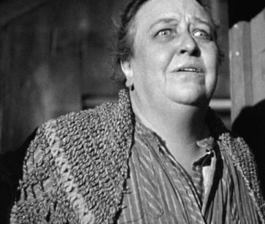
Pictured is Ma Joad from John Ford’s film version of Steinbeck’s Dustbowl novel, who gets one of the film’s best lines:  “Rich fellas come up an’ they die, an’ their kids ain’t no good an’ they die out. But we keep a’comin’. We’re the people that live. They can’t wipe us out; they can’t like us. We’ll go on forever, Pa, ’cause we’re the people.”

Updike makes a Pi Day reading list

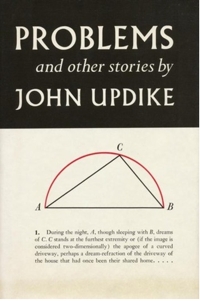
ProblemsPaste Magazine today featured a booklist post from Tyler Kane on “8 Entertaining Math-Inspired Reads for Pi Day.”

Topping the list was An Abundance of Katherines by John Green, better known for The Fault in Our Stars. Right behind him was John Cheever’s The Geometry of Love, followed by Thomas Pynchon’s Gravity’s Rainbow, David Foster Wallace’s Infinite Jest, Michael Crichton’s Jurassic Park, The Number of the Beast by Robert A. Heinlein, John Updike’s Problems, and Brandon Sanderson’s The Rithmatist.

Of Problems, Kane writes, “Abandoning your family is as easy as simple math in John Updike’s bummer tale of domestic frustration. You’re treated to pages of a logic puzzle, dealing with the causes and effects that occur when A, B and C interact. Here, we see our main character juggling laundry, his children’s expenses and psychiatric visits—all in a new life with a younger woman. The worst part? This all looks easier on paper.”

Begley bio makes more end of year lists

End-of-year accolades keep coming for Adam Begley and his biography of Updike:

Biographile: Discover the World Through Biography and Memoir
Updike by Adam Begley

“Like his sometimes-rival Cheever, Updike was a writer named John who liked to pick at the pretty exterior of American suburbia and see what he could find. The results of his excavations were some of the most vivid works of American literature to date, albeit ones marred somewhat by Updike’s obvious discomfort with the fairer sex. Journalist Begley is a compassionate biographer, but doesn’t avoid discussion of Updike’s stormy personal life.”

The Lone Reader
3. Updike – Adam Begley

There are few writers I admire more than Updike. His work was so prolific and of such quality, it’s hard to compare him to anyone. What Begley’s biography does is link the writer’s work to his life. Indeed, the best moments are when Begley spends time on what Updike wrote, especially the discussion of the short stories. It may be rather reverential, but the book does display Updike as a flawed man, one who deeply regretted some of his decisions. It shed light not only on the man but on his work and after reading it, I returned to the Olinger short stories and saw them in a new light. Begley has written a readable, fascinating biography.

 janetsomerville: Musings about books, film and theatre
Updike by Adam Begley

A masterful literary biography that has me pledging to read as much of Updike’s oeuvre as I can. Each time I finished a book, I penned a hand-written missive to Adam Begley. So far, I’ve enjoyed Seek My Face, Always Looking: Essays on Art, and Self-Consciousness the most.

Entertainment Monthly shares Top Five Anti-Holiday Reads

UpdiketerrorsThere haven’t been many Grinches or Scrooges or shouts of “Bah Humbug” this holiday season, but Entertainment Weekly has offered the next best thing:

“‘Tis (Not) The Season: Top Five Anti-Holiday Reads.”

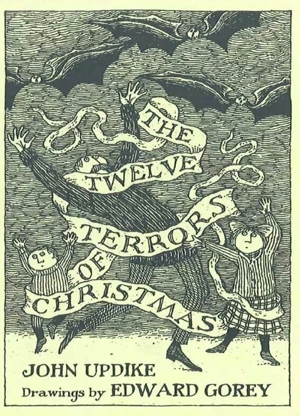
Updike has been making a lot of “best” lists this season, and he makes this one as well, coming in at #2 right behind Dr. Seuss’s How the Grinch Stole Christmas! with a book that may be unfamiliar to many Updike fans: The Twelve Terrors of Christmas, featuring illustrations by fellow Harvard alum Edward Gorey. The hardcover book was published in 2006 by Pomegranate Communications and released in a revised edition a year later. You can find a copy, as with almost all out-of-print books, at Abebooks.com.

In making the selection, Entertainment Monthly‘s Madeline Poage writes, “An old one, but a good one, Updike’s wry voice and natural sense of humor flows organically through this compact work. A deconstruction of every facet of Christmas, the book unpacks every ritual and tradition down to the bare bones. Mercilessly witty and disturbingly accurate, every aspect of Christmas if put to the test against logic—what are Santa’s true motives? How do reindeer landing of roofs not destroy them by accident? Do the elves need a union? And of this wouldn’t be complete without Edward Gorey’s illustrations, haunting and stark on every page. For anyone tired of the Christmas hype, this is an absolute must.”

More Best Books lists for Begley

The Best Book list accolades continue to come for Adam Begley’s biography, Updike. Click on the titles to access the full articles:

Mail Online
William Boyd picked Updike as “My Book of the Year”: “It’s curious how one can love a contemporary writer, read pretty much the entire oeuvre, yet remain almost wholly ignorant about the author’s life. John Updike was the case in point for me. I started reading him in my teens and carried on until his death in 2009. But this year brought Updike by Adam Begley (Harper £25) to fill the gap in my knowledge. It’s a wonderful, wise biography, judicious and intimately revealing, and does full justice to the highly complex individual that was Updike.”

stevereads: what I read and why
This blogger, no fan of Updike, nonetheless named Updike #3 on his list of Best Books of 2014: Biography:  “Our monster-roundup, nearing completion, now advances far enough to include the milquetoast version that is lousy and forgotten 20th-Century novelist John Updike, the subject of this smart, sensitive, utterly fantastic biography by Adam Begley, who re-reads all of Updike’s novels even though they aren’t worth reading, re-lives all of Updike’s failed relationships even though not one single one of them reflects well on the ‘Rabbit, Regurgitated’ author, and sifts through all of Updike’s whining, minatory correspondence. It’s a protracted, masterful examination, a hefty and elegant tombstone with which to bury forever a worthless career.

WordsnQuotes
Another blogger ranked Updike “tied with Naomi Wood’s Mrs. Hemingway at #11″: “An illuminating biography, Updike beautifully unfolds John Updike’s difficult journey as a writer critically and creatively. If you are an Updike fin, this is the most thrilling experience since the first time you fell in love with Updike’s prose. Superbly intimate, Updike reads like a novel, Begley has a natural ease of swaying us into John Updike’s life and elevating the curiosity in one of the greatest American authors. Geeky looking in appearance and quiet Updike seems like a peculiar and boring subject to cover, but Begley implores us sot reevaluate the interest found in Updike’s life.

“John Updike himself was a work of fiction, every line he had written chronicles his progress as a human being. When critiquing a work of art, as W.K. Wimsatt and Monroe Beardsley taught us, art and the artist must not be evaluated simultaneously; but as revealed by Begley, Updike’s mysterious charm lies in the latter reflection. Ailed by poverty and determined to never be a victim of it, Updike was a workaholic, sensitive, and internally a charmer with a killer wit. Most Updike readers will be surprised to discover that their beloved, private author drew direct inspiration from his experiences, although a true introvert, he confessed details of his life in his ornate prose. If you have read a couple of Updike novels, we recommend you dig a bit further, read more Updike and come back to this biography.”

brain pickings
On her blog, Maria Popova notes “The Best Biographies, Memoirs, and History Books of 2014” and gets to Updike at #15: “John Updike (March 18, 1932–January 27, 2009) wasn’t merely the recipient of two Pulitzer Prizes and a National Humanities medal, among a wealth of other awards. He had a mind that could ponder the origin of the universe, a heart that could eulogize a dog with such beautiful bittersweetness, and a spirit that could behold death without fear. He is also credited with making suburban sex sexy, which landed him on the cover of Timemagazine under the headline “The Adulterous Society” — something Adam Begley explores in the long-awaited biography Updike.

“Begley chronicles Updike’s escapades in Ipswich, Massachusetts, in the early 1960s, just as he was breaking through with The New Yorker — the bastion of high culture to which he had dreamed of contributing since the age of twelve. His literary career was beginning to gain momentum with the publication of Rabbit, Run in 1960 — the fictional story of a twenty-something suburban writer who, drowning in responsibilities to his young family, finds love outside of marriage. That fantasy would soon become a reality for 28-year-old Updike, a once-dorky kid who had gotten through Harvard by playing the class clown clad in his ill-fitted tweed jackets and unfashionably wide ties.
Dive deeper with the story of how Updike made suburban sex sexy.”

AbeBooks
There’s no text and no ranking, only a round-up of covers that link to places where you can buy the books, but Updike is also included in the bookseller network’s “Notable Non-Fiction Books of 2014.”
Updike memoir and bio make more best books lists

Screen Shot 2014-12-08 at 7.20.06 AMAdam Begley’s highly regarded biography Updike made two more lists, and so did Updike’s own Self-Consciousness:

The Irish Times posted “Bert Wright: Books of the Year,” a very short list in which Wright wrote, “Adam Begley’s superb biography of my literary hero, Updike (Harper), achieved what all good literary biographies do, illuminating the life and the work while increasing one’s affection for the subject all the more.”

The Week published “Laura Kipnis’ 6 favorite books about wounded masculinity,” in which “The author of Against Love recommends works by John Updike, Norman Mailer, and more.” Kipnis’ most recent book, Men: Notes from an Ongoing Investigation, is spotlighted as is Updike’s memoir:

Self-Consciousness by John Updike (Random House, $16). Would Updike have been such a fabulous writer if he weren’t afflicted with terrible psoriasis? And a stutter? According to Updike, they should be credited with whatever courage and originality he possessed. His shamelessness on the page distracted him from his real-life shame.

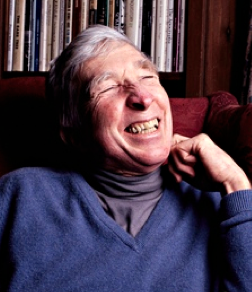
The Guardian posted “The best biographies and memoirs of 2014,” an article by Paul Laity that features a great photo of Updike by Michael Brennan/Corbis and these remarks about the Begley bio:

“Adam Begley’s admiring Updike (Harper) made it clear how assiduously the creator of Rabbit Angstrom mined his own life for his fiction. It gives details of his sex life without being prurient and is fascinating about his support for the Vietnam war and hostility to the counterculture.”

Pictured is a detail from the Brennan/Corbis photo.

Two more writers name Updike bio a favorite

Screen Shot 2014-11-30 at 9.18.32 PMThe Minneapolis Star Tribune posted an updated article on “Holiday Books: Our critics choose their 10 favorite books”— though, not to nit-pick, what the headline writer ought to have said was “Our 10 critics choose their favorite book.” And Malcolm Forbes selected Adam Begley’s biography, Updike, as his:

Updike by Adam Begley (Harper, $29.99) does what all good literary biographies should — shows how life influences art. Through meticulous research into Updike the man and critical readings of Updike the writer, Begley constructs a compelling and intimate portrait of a true American great. We come away with a better understanding of this prolific man of letters but also with the urge to rediscover him. Updike’s star fell somewhat in the years before his death, but this stunning work could be the first sizable step toward rehabilitation.

Meanwhile, in an updated Guardian story, “Writers pick the best books of 2014: part 1,” Blake Morrison named three favorites, among them (what else?) Begley’s bio:

“You wait a century for a major Norwegian writer then two come along at once … In Per Petterson’s novel I Refuse (Harvill Secker), childhood friends Jim and Tommy meet by chance, decades later, at a point of crisis for them both. The familiar Scandinavian tropes are present (snow, skating and depression) but the texture is more Ingmar Bergman than Stieg Larsson: the suspense isn’t in the plot but the prose, with its extraordinary looping sentences. The translator is Don Bartlett, the man responsible for bringing us Karl Ove Knausgaard, the third part of whose life writing epic, Boyhood Island (Vintage), also weighed in here this year: why its seemingly banal episodes should be so compelling remains one of the great mysteries of our time.

The best biography I’ve read in 2014 is Adam Begley’s Updike (HarperCollins), an admiring but not uncritical portrait of a novelist who was merciless in drawing on his own experiences, sexual and otherwise.

And I’m enjoying A Modern Don Juan, edited by Andy Croft and NS Thompson (Five Leaves), in which 15 contemporary poets lend fresh interest to Byron’s cantos, thanks to some ingenious modern rhymes (sequined cap / Gangsta rap, Che poster / pop-up toaster, Minerva’s Owl / Simon Cowell).


A HeraldScotland best books round-up includes Updike

Screen Shot 2014-11-29 at 8.40.57 AMHeraldScotland, the online version of The Herald and Sunday Herald, posted a list of “Books Of The Year 2015: Herald Choices,” book recommendations from their “well-read panel” compiled by Lesley McDowell.

Adam Begley’s biography, Updike, was one of the picks by Richard Holloway, whose books include Leaving Alexandria: A Memoir of Faith and Doubt.

RICHARD HOLLOWAY
AUTHOR AND FORMER BISHOP OF EDINBURGH
Philip Larkin said the instinct to preserve lies at the bottom of all art, and it is certainly the key to his own poetry. People loved his poems but many of them were never sure about him. Fortunately, James Booth’s Philip Larkin: Life, Art And Love (Bloomsbury, £21.55) goes a long way to helping us understand the man better, as well as the poems he wrote.
John Updike was another artist who followed the Larkin line and made the past present in everything he wrote. Now he too has been well served by a biography by Adam Begley (Updike, Harper, £25) that shows just how much his fiction was his own life preserved so that the rest of us could enter it. Of the novels I have read this year, the most memorable was Michel Faber’s The Book Of Strange New Things (Canongate, £18.99). People will categorise it as science-fiction. They’re wrong. It’s a beautiful parable of the human condition.

Meanwhile, across the “pond,” Updike received a mention in the “Gift Books: Biography” section of The Wall Street Journal:

“Elegantly written as well as psychologically acute, both John Lahr’s Tennessee Williams: Mad Pilgrimage of the Flesh (Norton, 765 pages, $39.95) and Adam Begley’s Updike (Harper, 558 pages, $29.99) superbly chronicle the second half of the 20th century from the vantage point of two very different American authors. Tennessee Williams, the consummate outsider, said he wanted to speak the truth as he saw it, but his romance with the theater brought him pleasure as well as self-consuming pain. Copiously drawing on Williams’s stunning letters and journals, Mr. Lahr balances quotation and interpretation, sympathy and criticism, in this searing and unforgettable portrait of the artist who gave voice to the repressed, the reviled and the restless. And in his fond but gimlet-eyed depiction of John Updike, a consummate insider, Adam Begley depicts the celebrated author as professional writer and proficient evader. Mr. Begley’s Updike comes across as vigorously self-confident and tacitly aggressive, as well as frank and furtive. As the author notes, ‘biography ought to give a sense of what its subject was like to shake hands with,’ and he accomplishes just that in this lucid, elegant and not-to-be missed book.”

Begley bio makes two more lists

Adam Begley’s bio continues to get attention more than half a year after its publication. The latest are a couple more inclusions on lists:

The Chicago Tribune‘s Kevin Nance featured Updike as one of their “Fiction, nonfiction books to gift.”

Updike by Adam Begley (Harper, $29.99)

For fans of the great American author of the epochal “Rabbit” books and a groaning shelf of other novels and collections of poems, essays and criticism, this is the biography we’ve been waiting for. Richly reported, appreciative but warts-and-all, Begley’s book connects the dots between John Updike’s work, his contradictory personality and his often turbulent, even scandalous life, which fueled those famous fictional sex scenes. He knew whereof he wrote.

Updike also made the BookPage “Best Books of 2014” list, coming in at #17, with a link to an April 2014 column by Robert Weibezahl that also used the “connect-the-dots” analogy to describe Begley’s “evenhanded portrait of Updike as highly intelligent, diligent in his work habits, impish in humor and general kind, that nonetheless does not whitewash his less admirable traits . . . .”