In “From Bedtime Stories to Cultural Struggles: Updike’s Domestic Lens,” Original Magazines examines an Updike short story that appeared in The New Yorker, “Should Wizard Hit Mommy?”
The article called Updike’s literary snapshot of a bedtime ritual happening all across America “The Suburban Calm Before the Storm” and “The Story That Keeps Asking Questions.”
“The New Yorker had evolved far beyond its origins as a humor magazine. By the late 1950s, it had become the most prestigious launchpad in American letters—a place where fiction wasn’t decoration but dissection. J.D. Salinger had already used its pages to expose the phoniness beneath polite society. Philip Roth was sharpening his knives. And Updike, still a rising voice, had chosen the most intimate battlefield imaginable: the space between a parent’s authority and a child’s emerging autonomy.
 “The magazine knew what it was doing. Sophistication and subversion, wrapped in the same elegant package.”
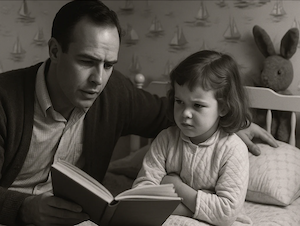
The article continued, “In Updike’s story, Jack—the father—spins nightly tales for his daughter Jo. The ritual should be simple: father narrates, child listens, sleep follows. But Jo has developed opinions. When Jack’s story about Roger Skunk ends with the creature’s mother insisting he keep his foul smell rather than the roses the wizard gave him, Jo rebels. She wants the wizard to hit the mother. She wants the ending rewritten.
“Jack refuses.
“What follows isn’t violence or melodrama—it’s something more unsettling. A quiet standoff between generations, between the way things have always been done and the way a child thinks they should be. The bedtime story becomes a referendum on authority itself.
“Updike wasn’t writing about skunks and wizards. He was writing about 1959 America, where the next generation was beginning to ask a question their parents found uncomfortable: Why must it be this way?”
The article concluded, “The June 13, 1959 New Yorker didn’t just publish a story about parental authority—it marked the beginning of that authority’s long, slow erosion. Updike’s ‘Should Wizard Hit Mommy?’ remains uncomfortable precisely because it refuses resolution. Jo’s question hangs in the air, unanswered.
“Should the wizard have hit the mommy? Should children obey without understanding? Should tradition survive simply because it’s tradition?
“In 1959, these were bedtime story questions. By 1969, they were revolution.”
Read the whole article.