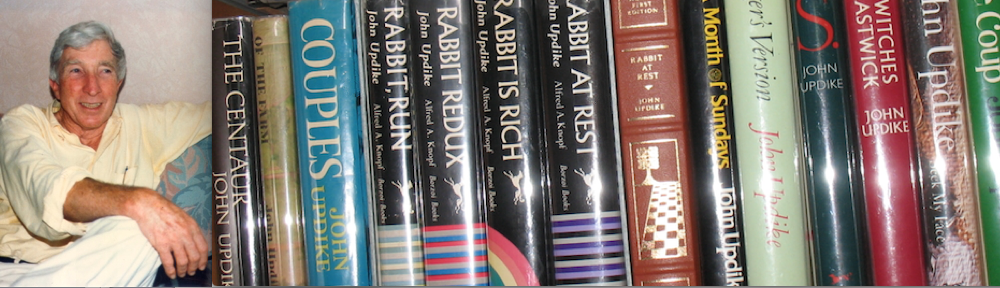
In a June 9, 2025 piece published by The New Statesman, George Monaghan considered “The revenge of the young male novelist; Can good writing solve our crisis of masculinity?”
Of course, John Updike came up, and so did a writer once influenced by him who later seemed to make a bigger name for himself by attacking him: David Foster Wallace. The context: ego as it relates to writers.
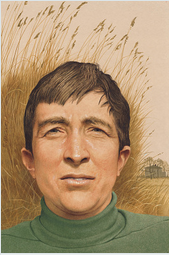 “American novelist John Updike claimed not to write for ego: ‘I think of it more as innocence. A writer must be in some way innocent.’ We might raise an eyebrow at this, from the highly successful and famously intrusive chronicler of human closeness. Even David Foster Wallace, the totem effigy of literary chauvinism, denounced Updike as a ‘phallocrat.’ But if we doubt such innocence of Updike, pronouncing as he was at the flushest height of fiction’s postwar heyday, we might believe it of these new novelists, writing as they are and when they are. Without a promise of glory, and facing general skepticism, they have written from pure motives. They are novelists as Updike defined them: ‘only a reader who was so excited that he tried to imitate and give back the bliss that he enjoyed’.
“So it may be no bad thing if none of these novels quite fetches the reviews Wallace’s masterpiece Infinite Jest did (‘the plaques and citations can now be put in escrow. … it’s as though Wittgenstein has gone on Jeopardy!’). These guys want to start a moment, not end one. They more want to write novels than be novelists. It is hard to say what relief these books might bring to a societal masculinity crisis, but in composing them their authors have displayed at least the two simple virtues Updike wanted to claim for himself: ‘a love of what is, and a wish to make a thing.'”