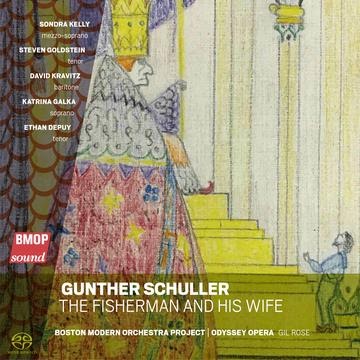
It’s not available on CD yet, but Amazon has unlimited free streaming and MP3s of the new release from the Boston Modern Orchestra Project: Gunther Schuller’s The Fisherman and His Wife, with libretto by John Updike. Full details are in the booklet provided by BMOP.
In reviewing the MP3s for NetTheatreGeek.com, Kitty Drexel writes,
 “The Fisherman and His Wife is based on the Grimm Fairytale. As forewarned by the orchestra, this isn’t your Dad’s happy-go-lucky, Disneyfied fairy tale. Schuller and librettist John Updike set the German tale with its depressing end. It tells of humanity’s great greed and warns that abusive marriages without respectful boundaries are doomed to fail.
“Once upon a time, somewhere in Germany or maybe in your own town by the sea, an impoverished Fisherman (Steven Goldstein) catches an enchanted flounder (David Kravitz). The flounder convinces the Fisherman that he is actually a prince! The Prince claims that he ‘shall not taste well.’
“Back at home, his Wife (Sondra Kelly) hurls abuse at the Fisherman for letting the Prince go. She says that the Fisherman should have asked the Prince for a wish. The Fisherman is confused. He likes his simple life. His home may only be as small as a vinegar jar but he has a loving wife, a loyal cat (Katrina Galka), and a home. The Wife convinces the Fisherman to go back to the Prince to ask for a luxurious cottage where they could live in ease. It’s the least the Prince could do since the Fisherman saved his life.
“As in all fairy tales, the Wife isn’t content with just a cottage. She tests the Prince’s powers. She demands from the Prince a castle, then a kingdom because she wants to be King, then to be Emporer, to be Pope, and then finally to be as powerful as God. Each time the simple Fisherman goes to the Prince and asks for the wishes that his wife demands. Each time the Prince grants the wish and tells the Fisherman to go home because the wish has been granted. Only the last wish bears unexpected results. The Fisherman, his Wife, and their Cat must learn to live with the consequences of their greed.”
Drexel concludes, “Schuller’s opera isn’t easily digestible for every age. Adults hoping to introduce the next generation to opera could use The Fisherman and His Wife to do so. But, it will require critical discussion. On the other hand, John Updike’s clever lyrics are safe for the whole family.”

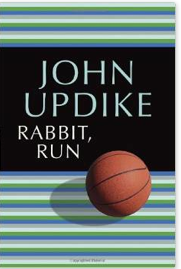 TCK Publishing has 100 books they think everyone ought to read, and it’s no surprise that Updike’s Rabbit, Run made the list. It was the book that brought Updike fame in 1960, a response to Jack Kerouac’s On the Road that tried to show that, yes, you can “run” or road-trip to your heart’s delight as you seek to find America or yourself (whichever comes first), but that there are casualties, people you hurt when you leave them behind.