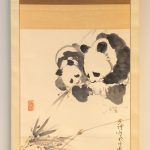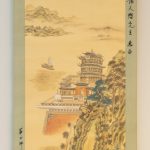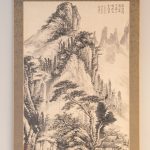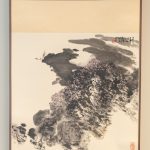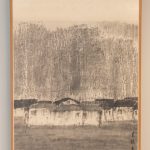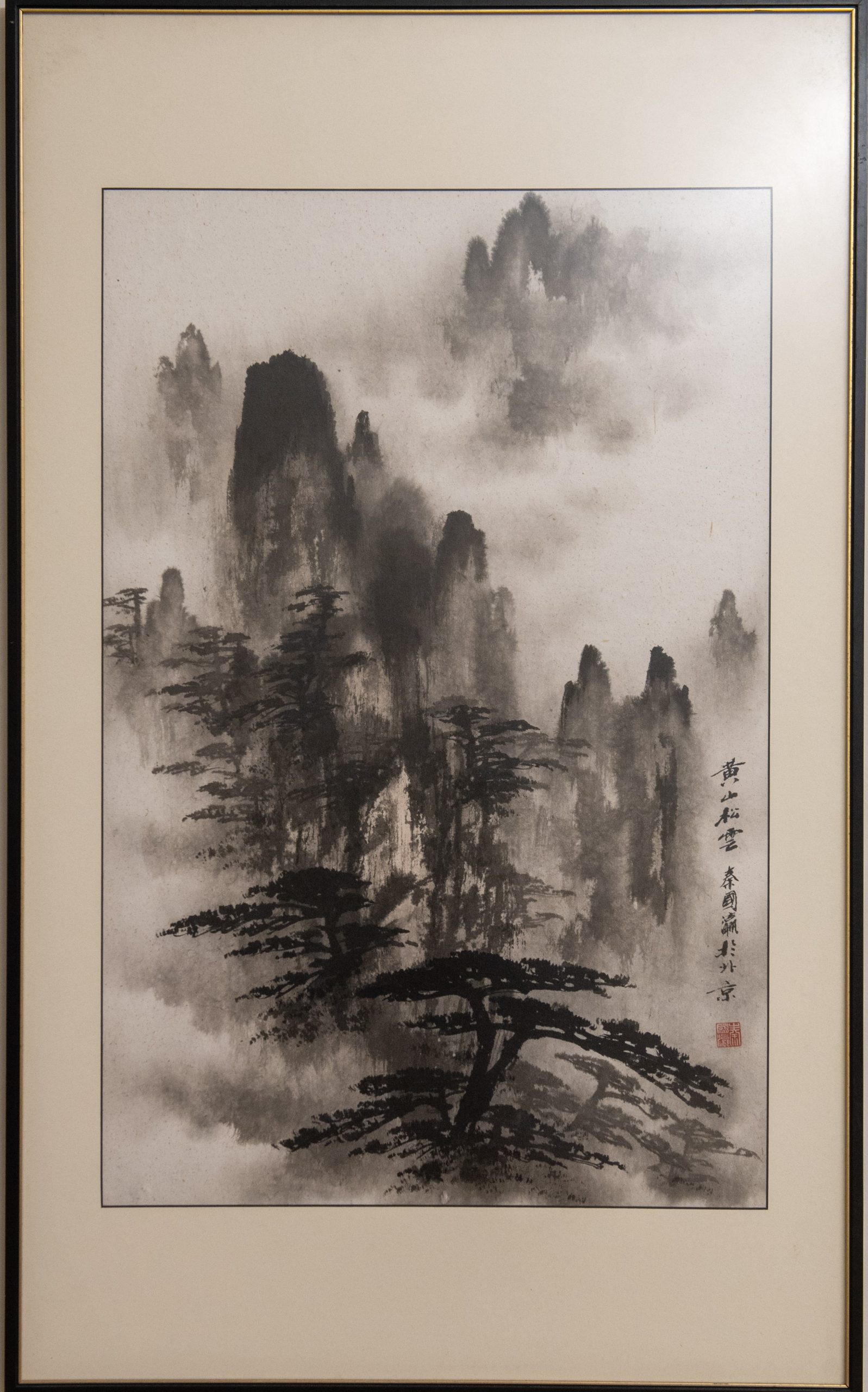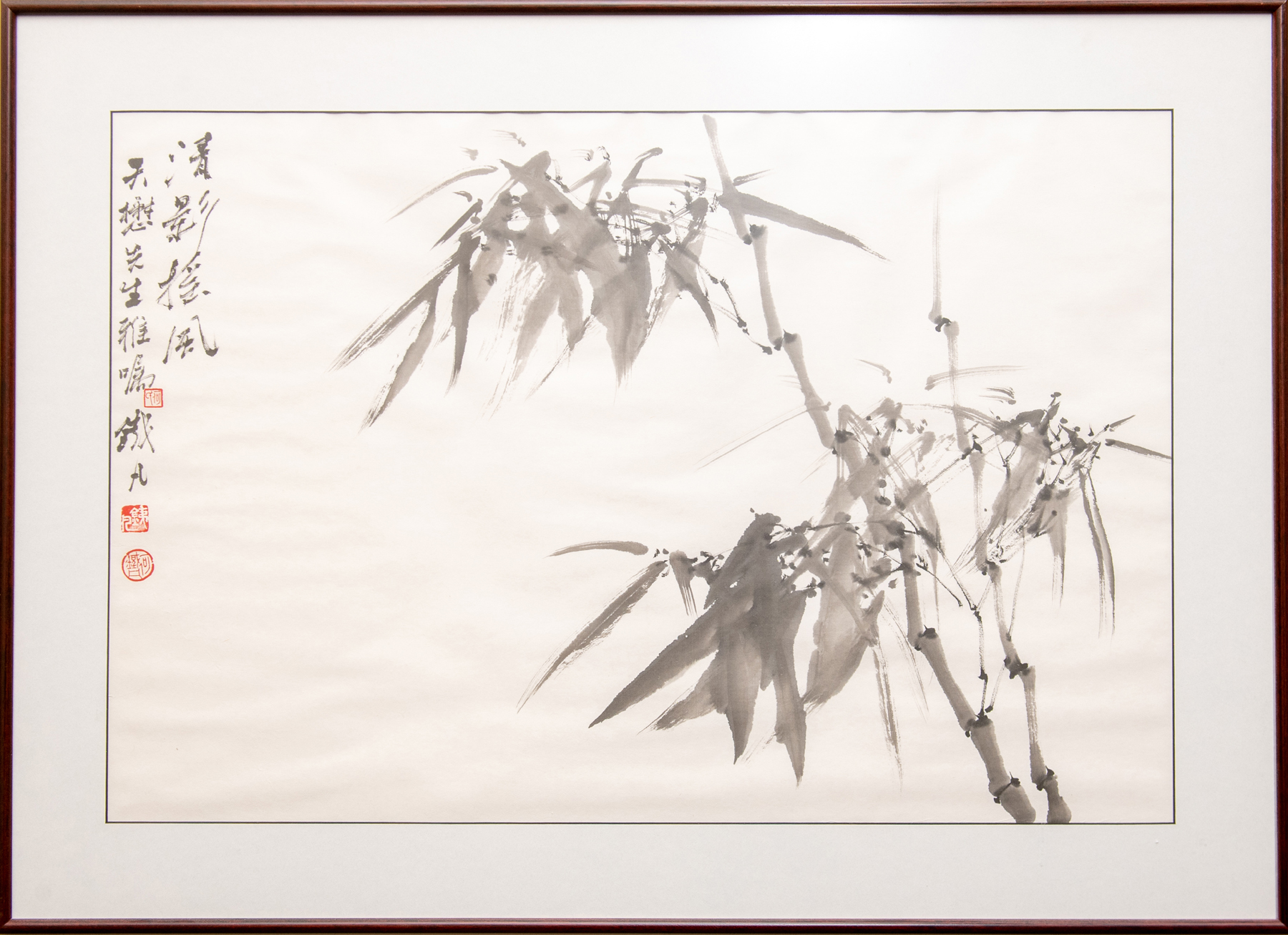
In the last post, I announced that our work making a collection of Chinese art available was complete. I am pleased to announce that due primarily to efforts by current students we now have more information to share about these works! This post contains individual images of the works, their translations, and details the students found on some of the artists. I will also add information to the works in the descriptions in the online Campus Art Collection.
Special thanks for providing English translations of these works go to
Dawn Mengheng Wang, Class of 2022;
Esther Siqi Yang, Class of 2023;
and Amber Ruofei Shuang, Class of 2025.
Dawn’s father, Yuhua Wang, who is a Professor of Chinese History, identified the traditional Chinese characters on the paintings.
Thanks also to Dr. Tom Lutze, IWU Professor of History, for finalizing the translations of the poetry. Dr. Lutze notes that, as with any attempt to translate poetry from one language to another, more improvements would be possible.
What follows is a gallery of six images that contain brief text about the works. Two pieces with poetry are shown individually below the gallery.
[Click on any image to enlarge.]
-
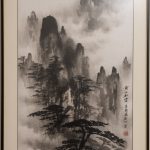
- Pine Trees and Clouds of Yellow Mountain. QIN Guoying, painted in Beijing
-
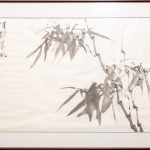
- Qin Ying Yao Feng (Wind Shakes the Bamboo Shadow). Mr. [XIE] Tianmao asked HE Tiefan to paint [this piece]. (Note: The donor, Mark Sheldon’s, Chinese name is XIE Tianmao.)
-
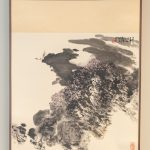
- [Painted in] Autumn, 1987, [when LI] Wenxin was in Beijing
-
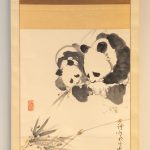
- TAN Zan painted [this piece] in the Ziyun Studio.
-
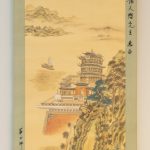
- Central China Normal University sent this painting to Mr. XIE Tianmao. September, 1991. (Note: The donor, Mark Sheldon’s, Chinese name is XIE Tianmao.)
-
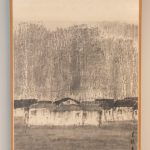
- LU Sheng painted [this piece].
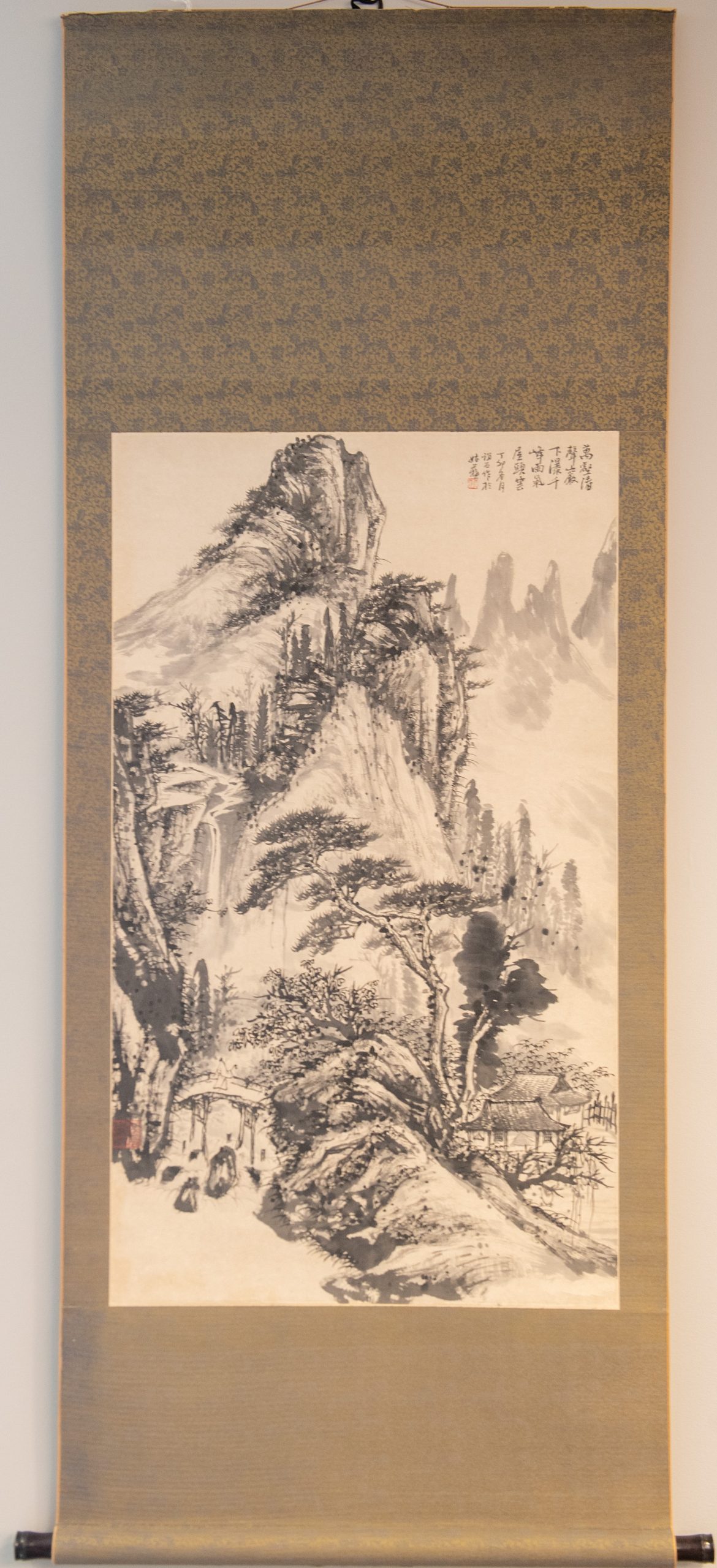
Artist: XU Shi
Date: Winter, 1987
Location: Suzhou
The waterfall cascades down from the rock,
the timbre of pine needles blends with the tenor of water–a chorus of nature
(万壑涛声巌下瀑)
The mountain rain gathers into clouds,
the billows envelop the house where the hermit lives
(千峰雨气屋头云)
For this last work, our students offer two possible translations.
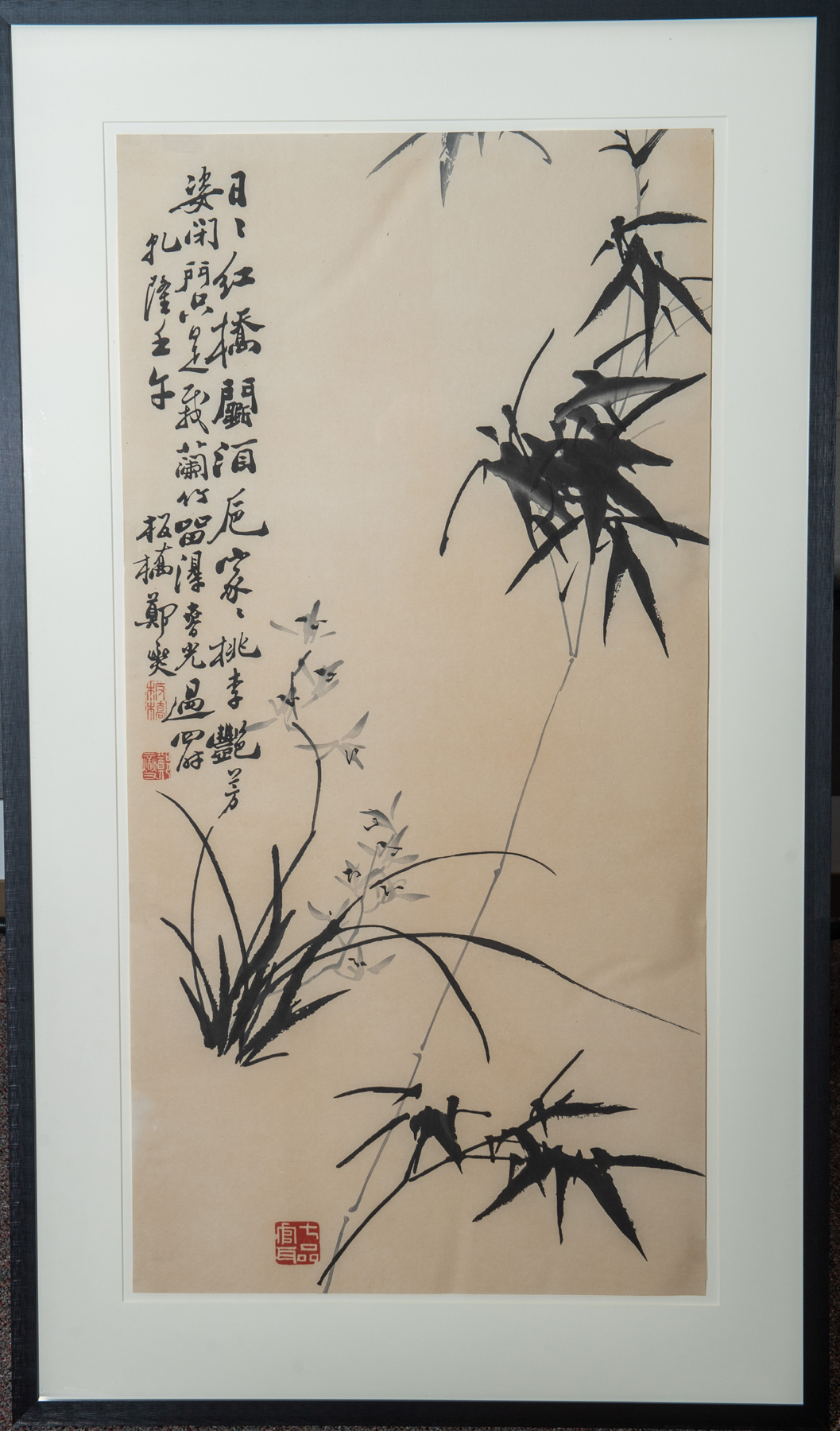
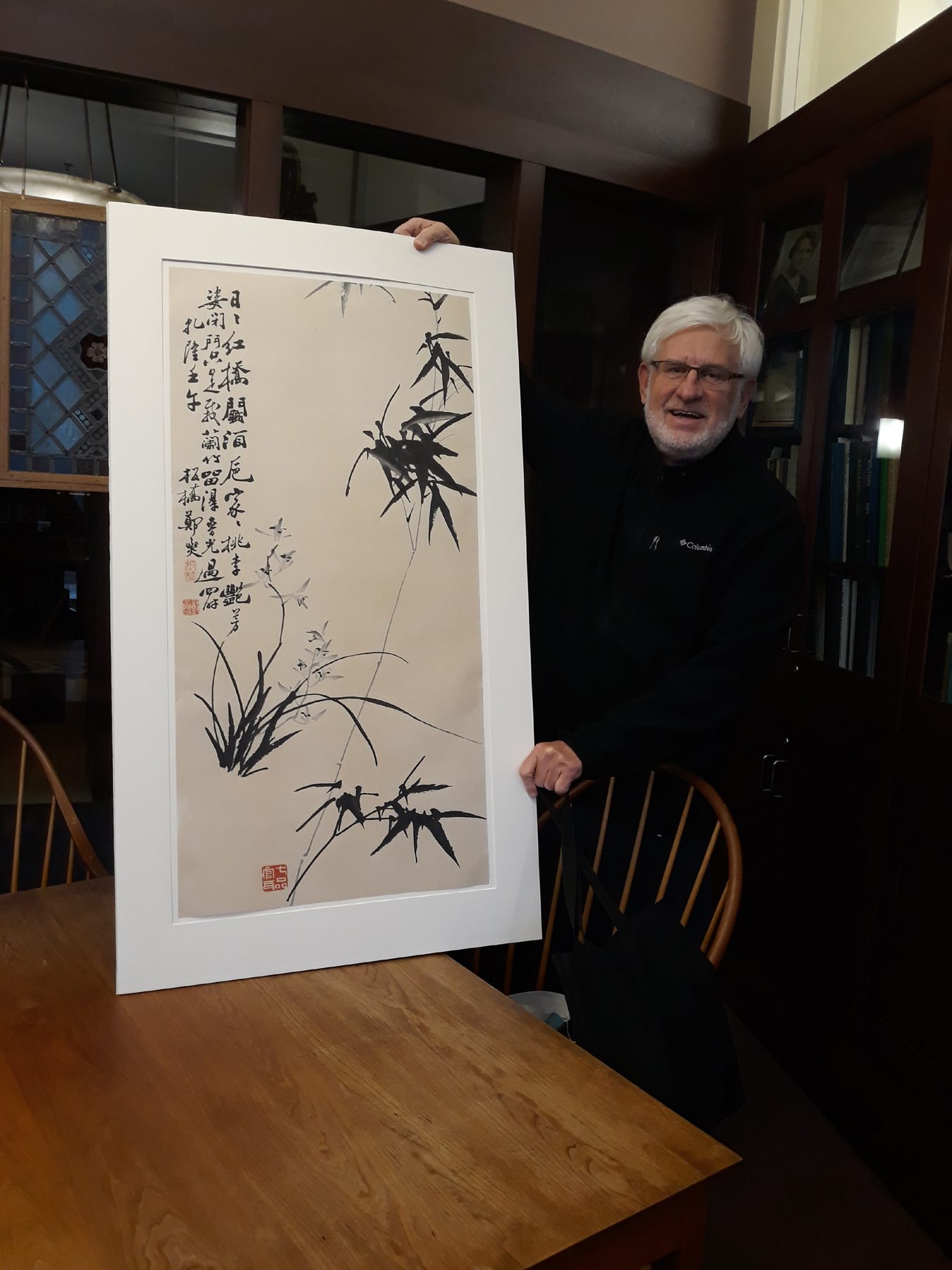
Title: Bamboo and Orchids Original ink wash artist: ZHENG Xie (commonly known as ZHENG Banqiao). The Rongbaozhai workshop, located in Beijing, created this print.
Translation (#1) (written as the artist completed the painting):
Every day, I drink with my friend on the red bridge.
(日日红桥斗.酒)
Everywhere, peaches and plums present their beauty.
(家家桃李艳芳)
Yet only orchids and bamboo adorn my home
(闭门只是栽兰竹)
They mark my independence–I follow no trend to change my lifestyle.
(留得春光过四时)
Translation (#2):
Day after day, in the beauty of spring, I go to Hongqiao to drink with friends.
(日日红桥斗.酒卮),
House after house, everywhere I look, peach and plum trees blossom in beauty.
(家家桃李艳芳姿).
Yet in my yard I prefer to grow elegant orchids and bamboo.
(闭门只是栽兰竹).
I thereby stay true to myself, refusing to conform to the ways of the mainstream.
(留得春光过四时).
Our students also provided these additional details about the original artist and the printer of this work:
ZHENG was a significant figure in Chinese art history. Born in 1693 (Qing Dynasty), he was known for his love of bamboo, a central feature in many of his paintings. He also drew attention for his non-conformist anti-conservatism and was identified as one of the “Eight Eccentrics of Yangzhou.”
This painting is an original piece of Rongbaozhai’s woodblock watermark art. Woodblock watermark art is a centuries-old copying technique that itself is a skilled art form, involving painting, carving, and printing to create extremely high-quality reproductions of traditional Chinese paintings and calligraphy, both vivid and colorful. Rongbaozhai is an art workshop with a long history in Beijing, one of whose specialties is the preservation from generation to generation of the skills of producing woodblock watermark art.