The Best Book list accolades continue to come for Adam Begley’s biography, Updike. Click on the titles to access the full articles:
Mail Online
William Boyd picked Updike as “My Book of the Year”: “It’s curious how one can love a contemporary writer, read pretty much the entire oeuvre, yet remain almost wholly ignorant about the author’s life. John Updike was the case in point for me. I started reading him in my teens and carried on until his death in 2009. But this year brought Updike by Adam Begley (Harper £25) to fill the gap in my knowledge. It’s a wonderful, wise biography, judicious and intimately revealing, and does full justice to the highly complex individual that was Updike.”
stevereads: what I read and why
This blogger, no fan of Updike, nonetheless named Updike #3 on his list of Best Books of 2014: Biography: “Our monster-roundup, nearing completion, now advances far enough to include the milquetoast version that is lousy and forgotten 20th-Century novelist John Updike, the subject of this smart, sensitive, utterly fantastic biography by Adam Begley, who re-reads all of Updike’s novels even though they aren’t worth reading, re-lives all of Updike’s failed relationships even though not one single one of them reflects well on the ‘Rabbit, Regurgitated’ author, and sifts through all of Updike’s whining, minatory correspondence. It’s a protracted, masterful examination, a hefty and elegant tombstone with which to bury forever a worthless career.
WordsnQuotes
Another blogger ranked Updike “tied with Naomi Wood’s Mrs. Hemingway at #11″: “An illuminating biography, Updike beautifully unfolds John Updike’s difficult journey as a writer critically and creatively. If you are an Updike fin, this is the most thrilling experience since the first time you fell in love with Updike’s prose. Superbly intimate, Updike reads like a novel, Begley has a natural ease of swaying us into John Updike’s life and elevating the curiosity in one of the greatest American authors. Geeky looking in appearance and quiet Updike seems like a peculiar and boring subject to cover, but Begley implores us sot reevaluate the interest found in Updike’s life.
“John Updike himself was a work of fiction, every line he had written chronicles his progress as a human being. When critiquing a work of art, as W.K. Wimsatt and Monroe Beardsley taught us, art and the artist must not be evaluated simultaneously; but as revealed by Begley, Updike’s mysterious charm lies in the latter reflection. Ailed by poverty and determined to never be a victim of it, Updike was a workaholic, sensitive, and internally a charmer with a killer wit. Most Updike readers will be surprised to discover that their beloved, private author drew direct inspiration from his experiences, although a true introvert, he confessed details of his life in his ornate prose. If you have read a couple of Updike novels, we recommend you dig a bit further, read more Updike and come back to this biography.”
brain pickings
On her blog, Maria Popova notes “The Best Biographies, Memoirs, and History Books of 2014” and gets to Updike at #15: “John Updike (March 18, 1932–January 27, 2009) wasn’t merely the recipient of two Pulitzer Prizes and a National Humanities medal, among a wealth of other awards. He had a mind that could ponder the origin of the universe, a heart that could eulogize a dog with such beautiful bittersweetness, and a spirit that could behold death without fear. He is also credited with making suburban sex sexy, which landed him on the cover of Timemagazine under the headline “The Adulterous Society” — something Adam Begley explores in the long-awaited biography Updike.
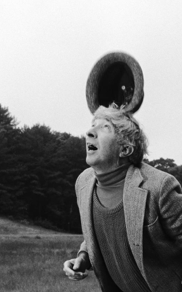
“Begley chronicles Updike’s escapades in Ipswich, Massachusetts, in the early 1960s, just as he was breaking through with The New Yorker — the bastion of high culture to which he had dreamed of contributing since the age of twelve. His literary career was beginning to gain momentum with the publication of Rabbit, Run in 1960 — the fictional story of a twenty-something suburban writer who, drowning in responsibilities to his young family, finds love outside of marriage. That fantasy would soon become a reality for 28-year-old Updike, a once-dorky kid who had gotten through Harvard by playing the class clown clad in his ill-fitted tweed jackets and unfashionably wide ties.
Dive deeper with the story of how Updike made suburban sex sexy.”
AbeBooks
There’s no text and no ranking, only a round-up of covers that link to places where you can buy the books, but Updike is also included in the bookseller network’s “Notable Non-Fiction Books of 2014.”
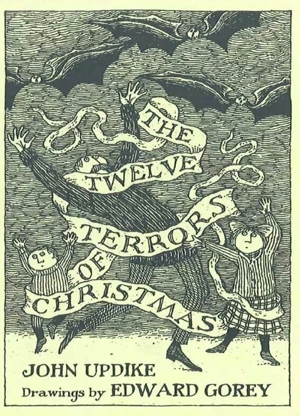 There haven’t been many Grinches or Scrooges or shouts of “Bah Humbug” this holiday season, but Entertainment Weekly has offered the next best thing: