News of Updike home purchase prompts Habitat for Humanity offer and media coverage

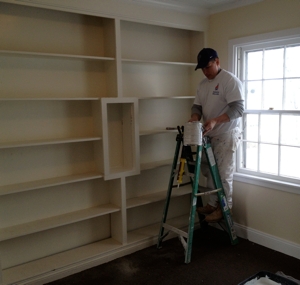
News that The John Updike Society had finalized the purchase of the childhood home at 117 Philadelphia Ave. in Shillington, Pa., was met with a quick and generous response from Habitat Humanity of Berks County. Executive Director Tim Daley said that the project was just the sort of thing that his group could align with. It’s a community museum, it’s significant to Berks County, and Habitat for Humanity has been looking to contribute to the community in additional ways beside their traditional single-family constructions, he said. Daley offered their resource of volunteers and “some expertise” to assist the society in repairing and restoring the house and grounds, and that offer was happily and gratefully accepted.

News of the sale also spread quickly. When anyone asks if John Updike is still “relevant,” just point to the media attention that followed the society’s purchase of the childhood home. In the Reading area it was front-page news and covered on television as well. But it was also picked up elsewhere. Here are some of the links:

“Updike childhood home sold, paving way for museum; Society pays $180,000 for childhood home of author” — Reading Eagle 

“John Updike Society finalizes purchase of home” —WFMZ 69 News

“Updike’s Pa. childhood home bought, museum planned” — The Inquirer

“Group buys John Updike’s childhood home in Shillington, Pa.; restoration and museum planned — The Washington Post

 “John Updike’s Pennsylvania Childhood House Bought, Museum Planned” —The Huffington Post

Now the work . . . and the fun . . . begins.

It’s official: The John Updike Society now owns Updike’s childhood home

Today was the closing for the sale of the John Updike childhood home at 117 Philadelphia Avenue in Shillington, Pa., and after a long process The John Updike Society now officially owns the building and property. The eventual sale price—reduced because of needed safety-issue repairs and a furnace that the home inspector pronounced “on its last leg”—was $180,000, rather than the $200,000 original price.
Shillington realtor Conrad Vanino, Jr. represented the society at closing, while president James Plath signed, scanned, and returned the necessary documents via email. Conrad worked for the society gratis, and the entire membership owes him a big thank-you, with special thanks going to The Robert and Adele Schiff Family Foundation for making the purchase possible.

Obit web magazine spotlights “Updike’s Dark Certainty”

The online magazine Obit—whose tagline in “Death is only half the story. Obit is about life . . .”—featured John Updike on January 28, 2009. In “Updike’s Dark Certainty,” Robert Roper visits “Updike country—the region where suburban platting meets knicker-dropping” and offers an lyrical-interpretive summary of Updike’s literary life, along with a bottom-story link to several obits and appraisals of Updike.

The item comes to us belatedly from Dave Lull, via Larry Randen.

Delbanco book includes Updike response to questions

Member Larry Randen called our attention to a book written by Nicholas Delbanco, “who was in the class Updike taught at Harvard before he retired from academe in the summer of 1962. It includes a letter dated August 26, 2007 in response to three questions Delbanco asked him (and many others) for his book, “Lastingness: The Art of Old Age” (New York/Boston: Grand Central Publishing, 2011, ISBN 978-0-446-19964-3.”

Randen says that Updike’s response to the form letter sent to writers, quoted in its entirety, appears in Chapter 8, “Gratification.” Also included in a mid-section gallery is a photo of Updike and Delbanco in Bennington, Vermont, 1980, taken by Elena Delbanco.

Guay and Mogford to serve as site and program directors for the 2014 conference

In early October of 2014 The John Updike Society will convene for its Third Biennial Conference in Reading, Pennsylvania. Directors for the conference are now set. Member Sue Guay, who brokered Alvernia University’s sponsorship of the first conference and worked tirelessly to ensure that everything ran smoothly, will serve as Site Director for the 2014 conference. And member Maria Mogford, curator of The John Updike Childhood Home and an English and Education instructor at Albright College in Reading, Pennsylvania, will serve as Program Director. Mogford has taught writing and literature courses at Albright, Penn State and Bucks New University in High Wycombe, England.

The Society is grateful for their willingness to serve. Planning will begin soon, as each conference takes more than a year to put together. Mogford will announce a call for papers at some point in the future, so be thinking ahead to 2014.

Pictured is Dr. Frank A. Franco Library Learning Center, where Alvernia University president Tom Flynn welcomed members with a reception at the memorable first conference.

Guardian blogger “seeds” Updike fourth in his Great American Novelist tournament

Matthew Spencer of The Guardian has decided to use reader feedback to determine not the Great American novel, but the Great American novelist in a 32-bracket “tournament.”

Spencer seeded Updike fourth, and in his first “match” Updike goes up against Ursula K. Le Guin. Readers have to register with The Guardian to be able to post feedback which will influence the outcome.

To qualify for the tournament, writers had to produce four novels that are four possible “greats.” Spencer chose the Rabbit tetralogy for Updike’s four entries. Personally, I would have left Rabbit Redux off the list and substituted The Centaur. And for Hemingway, who was seeded eighth, I would have swapped To Have and Have Not and The Garden of Eden for The Old Man and the Sea and For Whom the Bell Tolls. So there are some curious choices here, and some equally curious rankings. For the Top 10 seeds, William Faulkner comes in at Number 1, followed by Saul Bellow, Philip Roth, Updike, John Steinbeck, Sinclair Lewis, Toni Morrison, Ernest Hemingway, Edith Wharton, and Cormac McCarthy. It’s worth noting that Spencer seeded Updike behind two Nobel laureates, but ahead of four others.

Here’s the article, with thanks to member Andrew Moorhouse for drawing it to our attention.

Updike prominently featured in NYRB article

The current issue (July 12-August 15) of The New York Review of Books is devoted to fiction, and one article prominently features Updike, member Brian Duffy writes:

It is “American Male Novelists: The New Deal,” by Elaine Blair. Its starting point is David Foster Wallace’s labeling of Updike, Mailer and Roth as the “Great Male Narcissists,” and his claim that these novelists are much less appreciated by readers of later generations (especially by younger women readers). It then goes on to consider how contemporary male novelists are conscious of this legacy and how they seek to appeal to female readers by rejecting the attitudes and sexual “politics” of the “GMN.”
Here is the link to the first page of the article. You’ll need to subscribe to The New York Review of Books to get the full article, or else pick up a hard copy.

Updike tree is felled, mourned in Ipswich

At the recent 2nd Biennial John Updike Society Conference in Boston, members toured Ipswich and got to see the stately elm that Updike wrote about—one of the oldest trees in Ipswich that stood directly across from the Polly Dole House at 26 East St., where Updike lived in the ’60s with his family.

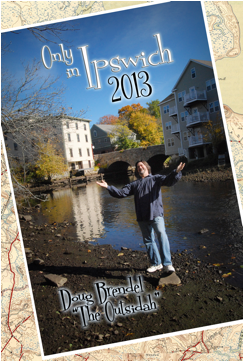
Society members got to see that tree just in time. Today, The Salem News reported that the tree was taken down—but not without a proper ceremony which included David (pictured) and Michael Updike.

But it wasn’t only a case of good timing.  Michael Updike knew the tree had died and called city officials to see if they could wait until after the society toured Ipswich before cutting it down.

Thanks to member Bob Batchelor for calling it to our attention.