
Updike house deconstruction moving right along

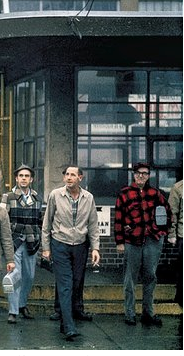
volunteersThe outside of The John Updike Childhood Home has been recently painted, and with a break in the weather volunteers from Habitat for Humanity of Berks County and Bellman’s Church got together to strip wallpaper from the living room and downstairs hallways and to remove newer floor tiles that had been added when the house was converted to a business.

Habitat’s Russell Poper, Director of Construction for the Updike project, had much good news to report:  they removed half of the tiles downstairs without causing damage to the original flooring, and they were able to locate a clean “footprint” on the floor showing the shape and exact placement of the original room divider. The Society will try to rebuild the house as it was when Updike lived there, and that means putting back the living room divider, re-establishing the wall and door in Updike’s bedroom that led to a “black rifleroom,” and eventually reconstructing a grape arbor that dominated the side of the house.
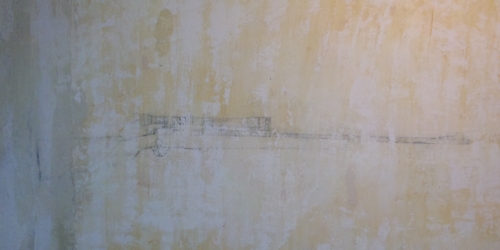
Poper also said the group discovered a drawing of a rifle on the foyer wall when they stripped off the wallpaper. It could be Updike’s, since we know he was allowed to draw on the upstairs hallway walls, or it could be something the Hunters (who bought the house later) tried and abandoned. Needless to say, we’ll be investigating! Anyone with information about the drawing should contact curator Maria Mogford: mmogford@alb.edu. Pictured above are the volunteers working this past weekend in the living room, and the rifle they uncovered in the foyer.

The John Updike Society is grateful to the volunteers who’ve been helping to turn the house into a community showpiece.

BBC’s Great Lives series focuses on John Updike

Screen Shot 2014-01-09 at 8.29.25 AMSeveral days ago the BBC ran a program that the website is listing as “David Baddiel on John Updike.” Click on the pop-up option and you’ll be able to hear the 30-minute broadcast.

“There can be few successful novelists who so divide critical opinion,” Matthew Parris begins. “John Updike was one of the 20th century’s most read of serious American writers” whose style charmed most critics, but, he adds, most famously not Harold Bloom, who called him a minor novelist with a major style.

Parris talks to guest David Baddiel, who builds a case for John Updike, as well as Justin Cartwright, a novelist himself.

“I think it’s a huge mistake to think that the ‘mundane’ is easier to write,” Cartwright says, comparing Updike to George Eliot and Jane Austen.

Begley buzz: a “most anticipated” book

Screen Shot 2014-01-07 at 5.23.42 PMIt’s not just Updike scholars who seem excited to see what Adam Begley has to say in his unauthorized biography Updike, which is due in bookstores on April 8. The book was also included by a contributing editor of The Millions in a feature on “Most Anticipated: The Great 2014 Book Preview.” 

“What’s left to say about John Updike that Updike didn’t already say exhaustively, and say better than anyone else could have?” Garth Risk Hallberg asks, sounding eerily like Updike himself.

“Yet Adam Begley has apparently found enough fresh material, or a fresh enough angle on the well-trod, to fill 576 pages. For a primer on Updike, there’s no way this book can surpass Nicholson Baker’s U & I, but it’s always a good sign when a literary biographer is a novelist himself.”

Begley’s Updike biography is also one of the books singled out in USA Today‘s “Winter Books preview: From Nancy Horan to Robin Roberts.”


Vermont Public Radio’s Bill Mares reacts to Just Looking

Screen Shot 2014-01-07 at 4.36.48 PMToday, Vermont Public Radio’s Bill Mares posted “Mares: Just Looking,” in which he tells about reading Updike’s book, Just Looking, over the holidays and responds in his own thoughtful way—more reaction than review, really, but interesting nonetheless.

There’s also a “listen” button to click on if your eyes are tired of reading things on the computer, and you’ll hear Mares read the on-air version.

“My favorite essay in the book is called ‘Writers and Artists,'” he says, offering Updike’s own description as proof: “He describes his own excitement, at the ‘glistening quick precision, the possibility of smudging, the tremor and swoop that impart life to the lines'” of the drawings he attempted as a child.

“My only quibble is that Updike doesn’t include any reference to Chinese calligraphy, arguably one of the greatest intellectual endeavors which combines artistic expression and verbal meaning,” Mares says.


Milwaukee blogger adds another Updike story commentary

recreadingMilwaukee Journal Sentinel blogger Jim Higgins writes, “I’m reading and commenting on a story from the Library of America’s recently published John Updike: The Collected Stories each Wednesday until I finish the collection or give up.”

On January 1, 2014, he posted “Reading the John Updike stories: ‘Intercession,'” but if you scroll down you’ll find links to other Updike story commentaries. On January 8 he promises “a discussion of Updike’s story ‘The Alligators” and gives two stars to a story that “would go in my hypothetical Best of John Updike collection.” So far “His Finest Hour” and “Tomorrow and Tomorrow and So Forth” have made the grade, but not the frequently anthologized “Snowing in Greenwich Village” or “Friends from Philadelphia.”

Boston area adult extension course on Updike stories announced

Screen Shot 2014-01-03 at 11.56.07 AMJudith Wynn, who reviewed several of Updike’s books for The Boston Herald, will teach a six-week course, “The Short Fiction of John Updike,” at the Cambridge Center for Adult Education in Harvard Square.

The classes will run from 6-7:30 p.m. on Mondays, beginning January 13. The main texts will be John Updike: The Early Stories, 1953-1975, selections from the later stories, and Self-Consciousness.

For further information or to enroll, go to CCAE.org or phone (617) 547-6789.

Guardian review of a book critic’s essays mentions Updike prominently

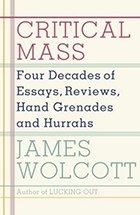
More-Dynamite-Essays-1990-20And we start the new year with an interesting post:  a book critic (Leo Robson, The Guardian) reviewing a book critic (Craig Raine, and also James Walcott) who’s reviewing Updike’s book and art criticism, among other things.

In “More Dynamite: Essays 1990-2012 by Craig Raine—review,” posted on The Guardian online on Friday, December 27, 2013, Robson notes of both the main title reviewed and Critical Mass: Four Decades of Essays, Reviews, Hand Grenades and Hurrahs that “the only writer given extensive treatment in both these books is Updike.

“Wolcott praises the ‘deft, polite scalpeling’ Updike performs on Saul Bellow (he peels away the ‘rugged prettiness’ to locate an ‘agitated sluggishness’), and his capacity to ‘dig beneath the hype and confetti of a book’s reception’ (in this case, Kundera’s The Book of Laughter and Forgetting). But he also notes a ‘lack of heat and force,’ exactly the Critical massqualities Wolcott himself aims for and attains, and calls for more ‘plainspokenness, even a whiff of woodsmoke from the old slash-and-burn,’ just as Raine, writing about Updike’s essay on Andrew Wyeth, complains that at a certain point he ‘caves in,’ and dismisses as ‘ludicrously indulgent’ Updike’s comparison of Fairfield Porter to Matisse and Piero della Francesca.

“Updike stands as an object of worship to both Raine and Wolcott, a model of what can be done, except on those occasions when magnanimity limits honesty—cardinal virtue of any critic.”


Newly published Iranian five-story collection features Updike

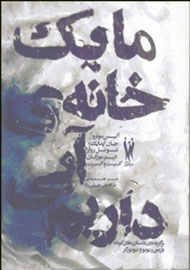
n00189765-bFrom the Iran Book News Agency comes the announcement that “‘Blue House’ House to Stories of Noted Writers” was recently published in Persian, a five-story collection featuring authors Alice Munro, John Updike, Alistair Morgan, and Kate Walbert.

Titles of the stories included in the 164-page collection are not mentioned.

Those with bibliographical information on this item, please contact Jack De Bellis, who is working on a supplement to the 2008 bibliography: bjd1@lehigh.edu.

Lost and found: Sam Tanenhaus essay on Updike’s politics surfaces

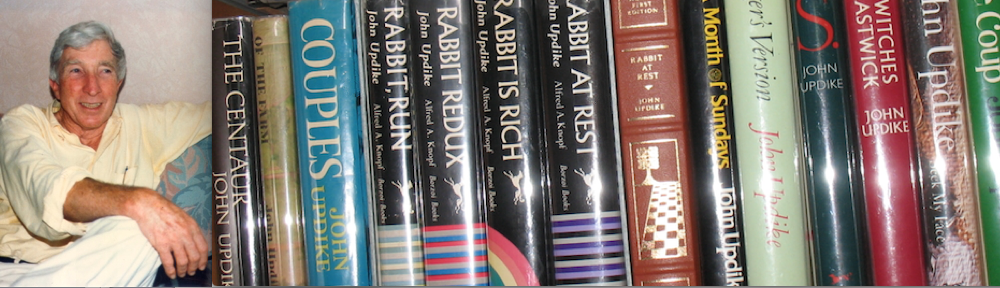
Screen Shot 2013-12-28 at 8.40.23 AMIn a November 8, 2012 essay on “John Updike’s ‘Rabbit Redux’ and White Working-Class Angst” published under the shortened name “Man in the Middle”—an essay that many may have missed—New York Times Book Review Editor Sam Tanenhaus reports,

“John Updike visited The New York Times a week before Election Day in 2008. Whom, I asked him, would Rabbit Angstrom most likely vote for? ‘I’m so for Obama,’ Updike replied, that I can’t imagine creating a character who wouldn’t vote for him.’

“And yet in ‘Rabbit at Rest’—the last novel in the cycle, which concludes with the hero’s death—we discover he cast his final vote for George H.W. Bush.

“When I reminded Updike of this, he looked startled. But he was right about 2008. Obama carried Reading that year, and he did it again on November 6 [2012].”