Updike golf photo used to illustrate a grouchy column

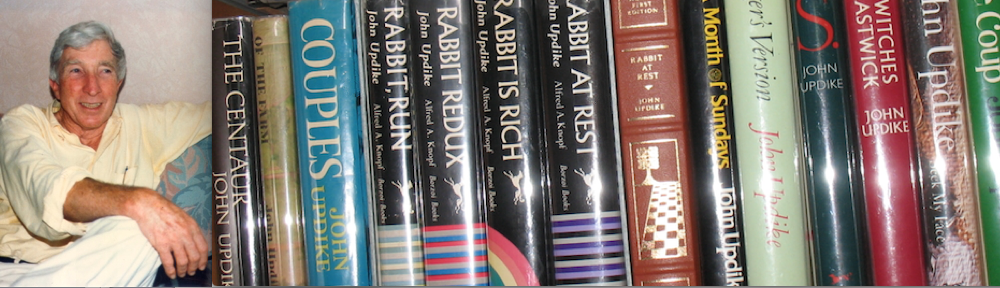
The Guardian posted a rather grouchy column by Colin Robinson, “Writers should take a year off, and give us all a break,” illustrated by a photo of an older John Updike in backswing, looking at the flight of his drive.

“What if everyone stopped scribbling for a year? Will Self could pull on his hiking boots, Martin Amis could sharpen his tennis serve, and we could catch up on our reading,” Robinson writes. Apparently the glut of established writers is made even more pressing by a statistic he quotes:  that according the The New York Times, 81 percent of Americans feel they have a book in them.


Alec Baldwin signs on for Symphony Space Updike reading

Screen Shot 2013-08-06 at 10.15.59 AMAlec Baldwin (30 Rock) has just been announced as a reader for the Symphony Space/Selected Shorts “Stories of John Updike” event. Tickets are now available for the October 16 event at Peter Jay Sharp Theatre in New York City.

The event will be broadcast on over 130 stations to about 300,000 listeners, but this is your chance to be part of the live audience for a special event featuring Baldwin, Sally Field, and other guest readers yet to be announced. Tony Kushner and other artists will introduce favorite Updike stories in celebration of The Library of America’s two volume set, John Updike: The collected Stories.

“Endpoint” reviewed

Screen Shot 2013-08-05 at 9.47.37 PMMarch 31, 2009 was the publication date for Endpoint, Updike’s final collection of poems. These are the reviews of which we’re aware.

“Endpoint and Other Poems.” Publishers Weekly. March 30, 2009. “Many delights but few real surprises await Updike’s admirers in this last book of poems from the prolific essayist and novelist, completed only weeks before his death.”

“The New Yorker: ‘Endpoint’—Poems by John Updike.” Cliff Garstang. Perpetual Folly. March 18, 2009. “The speed with which this book is being produced no doubt makes good business sense, but seems grisly to me, particularly if the excerpt in TNY is an indication of the overall subject matter.”

“‘Endpoint and Other Poems’ by John Updike.” Carmela Ciuraru. March 31, 2009. “These last poems are tender, nostalgic but never sentimental.”

“Endpoint and Other Poems.” Ray Olson. Booklist Online. April 1, 2009. Olson writes that “these are personal but not egotistic poems. It seems as though Updike were aiming to record the end of the life of a successful enough American middle-class male, and in his novelist’s voice.”

“Updike’s ENDPOINT: Light at Sunset.” W. Scott Smoot. The Word Sanctuary. April 11, 2009. “In his writing, Updike never shied from the darkest and foulest parts (however often I wished he had), but he always highlighted ‘whatever is good, whatever is true, whatever is just’ in the subject at hand,” Smoot writes. “Nine years after AMERICANA, he turns that same light on his own aging and death in ENDPOINT AND OTHER POEMS.”

“’Endpoint: And Other Poems,’ by John Updike.” Nicholas Delbanco. San Francisco Chronicle. April 12, 2009. “. . . it’s doubly a shock and revelation when the palate darkens and the poetry goes deep. The titular series, ‘Endpoint,’ seems to this reader an act of sustained self-examination, and very brave.”

Continue reading

Updike and Carver essay appears in Critical Insights: Raymond Carver

Screen Shot 2013-08-01 at 8.24.14 PMMatthew Shipe’s essay, “Middle-Age Crazy: Men Behaving Badly in the Fiction of Raymond Carver and John Updike,” appears in the recently published Critical Insights: Raymond Carver, edited by James Plath. Shipe compares the fiction of two writers whose creative and personal lives couldn’t be more different. Yet, Carver and Updike, whose New Yorker background and stories reflect a life that’s more privileged, find a point of intersection in that their male characters tend to behave badly—especially in relation to the women in their lives and in matters of responsibility. Characters often give in to their impulses, putting themselves first no matter how much they seem to care about the others in their lives.

The book is available from Amazon.com.


Book reviewer invokes Updike, Roth and Irving

GilbertIn his review of David Gilbert’s novel & Sons for the Minneapolis Star Tribune, Mark Athitakis called it “a big, fat novel that’s a commentary on big, fat novels.

“It has a great man at its center: A.N. Dyer, an aging author whose style mashes up John Updike, Philip Roth and John Irving,” Athitakis wrote.

“The novel also celebrates the power of words—Gilbert invents swaths of Dyer’s prose, which is stylistically distinct from his own. But Gilbert also exposes the shallowness of those words,” he adds, and “it often feels like a postmodern novel in realist drag.”

Coincidentally, Gilbert’s first novel, The Normals: A Novel (2004), focused on a Harvard-educated protagonist. Photo: David Gilbert.

Updike’s birth city is now America’s poorest

Screen Shot 2013-07-21 at 7.18.23 AMAccording to an NPR series on “Poverty in America: The Struggle to Get Ahead,” Reading, Pa. edged out Flint, Mich. as the nation’s poorest city.

Updike was born in the Reading hospital and wrote about the city in his Rabbit tetralogy, calling it Brewer.

The Society returns to Reading in October 2014 for the Third Biennial John Updike Society Conference at Alvernia University.

Here’s the link to the full article. Thanks to member Brian Duffy for calling it to our attention.

Sally Field headlines Collected Stories tie-in event

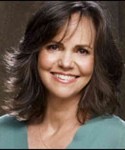
thumb“Enormous Updike fan” Sally Field, the Oscar-winning actress, headlines a group of readers announced for an event intended to coincide with publication of John Updike: The Collected Stories.

“The Stories of John Updike” will be presented at 7:30 p.m. on October 16, 2013 at the Peter Jay Sharp Theatre, Symphony Space. Tony Kushner and others will introduce or read their favorite Updike stories. Phone 212-864-5400 for details.

It’s a part of Selected Shorts, a weekly public radio show broadcast on over 130 stations to about 300,000 listeners. It is produced by Symphony Space and WNYC Radio and distributed by Public Radio International. The show is recorded live at the popular New York City stage show, which began in 1985 and still enjoys sell-out audiences. The Selected Shorts podcast also ranks as one of the most popular podcasts on iTunes.

Discounted early copies of Collected Stories now available from LOA

1598532502If you’re in the middle of research or just can’t wait to see a copy of John Updike, The Collected Stories, you no longer have to wait until September 12—the date the book will appear in retail stores and be shipped by Amazon.

The boxed set and individual volumes (John Updike, Collected Early Stories and John Updike, Collected Later Stories) are now available exclusively and at a considerable discount through the Library of America’s own secure Web store. And the shipping is free within the U.S.

The two-volume set is $60 (20 percent off the list price of $75), while the individual volumes are $31.50 each (15 percent off the list price of $37.50).

Here are the links:

John Updike, The Collected Stories (Box Set)

John Updike, Collected Early Stories

John Updike, Collected Later Stories

Lampoon history may interest Updike fans

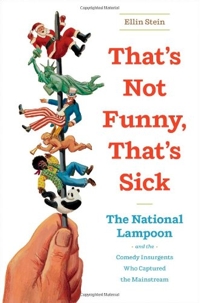
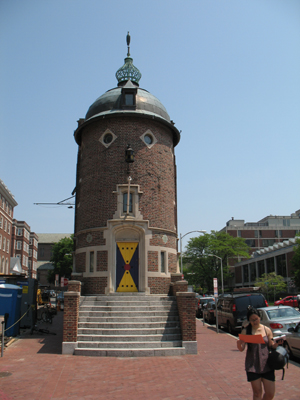
ThatsnotfunnycoverThe National Lampoon, which was published from 1970-1998, was a spinoff of the Harvard Lampoon, the irreverent humor publication based at Lampoon Castle in Cambridge, which John Updike Society members saw during the Second Biennial Conference in Boston.

Tours of the building where Updike once served as Lampoon president were not possible because of the organization’s commitment to secrecy. But a description of the interior appears in That’s Not Funny, That’s Sick: The National Lampoon and the Comedy Insurgents Who Captured the Mainstream—a recently published history:

“Much as the HL’s frivolity departs from Harvard’s overall serious-mindedness, so its home resembles an elaborate and charming joke, an unusually whimsical exception to the order and harmony of the university’s architectural vernacular. Although called the Castle, the building is only three stories. However, it does have a tower with a pointed roof, atop which perches the Ibis, the organization’s frequently stolen mascot. Vaguely medieval detailing such as emblazoned wooden doors and leaded glass windows add a certain baronial flair. Upstairs is the Great Hall, a big room that looks like a Hollywood version of something called “The Great Hall” down to its vaulted ceiling and magnificent sixteenth-century Elizabethan fireplace, suitable for smashing plates and glassware against (the building comes complete with a maintenance staff to clean it up). The walls along a winding staircase are covered with framed covers of HL projects dating back to the founding of the organization/publication by seven undergraduates in 1876.”

Chapter 1, “Lampy’s Castle,” also discusses some of the “quaint traditions” of the Lampoon. That’s Not Funny is available through Amazon.

Related story: “Editor’s Choice: ‘That’s Not Funny, That’s Sick'”

lampoon

Updike house makes literary pilgrims list

Screen Shot 2013-07-16 at 3.31.46 PMWe’re still considering bids for the exterior repairs and painting, and Habitat volunteers have only just begun tearing out non-period carpeting and such, but already The John Updike Childhood Home is on people’s radar.

On the Flavorwire website Jason Diamond posted a fun story with photos, “50 Places Every Literary Fan Should Visit,” which included the Updike house. It should inspire quite a few pilgrimages, both to Shillington and elsewhere. There’s lots of information here, too. I for one did not realize that Tennessee Williams lived in the campus windmill at SUNY-Stony Brook Southampton campus.

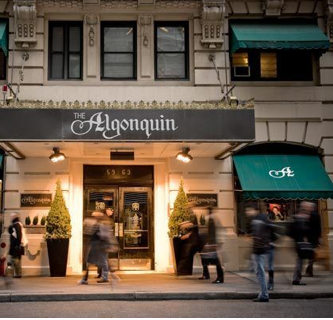
Pictured is The Algonquin Hotel, which Updike visited on a number of occasions, as evidenced by the previous post.