Writer offers Brief Survey of the Great American Novel(s)

You’ve heard the debate. Probably participated, as well. Is there a Great American Novel?

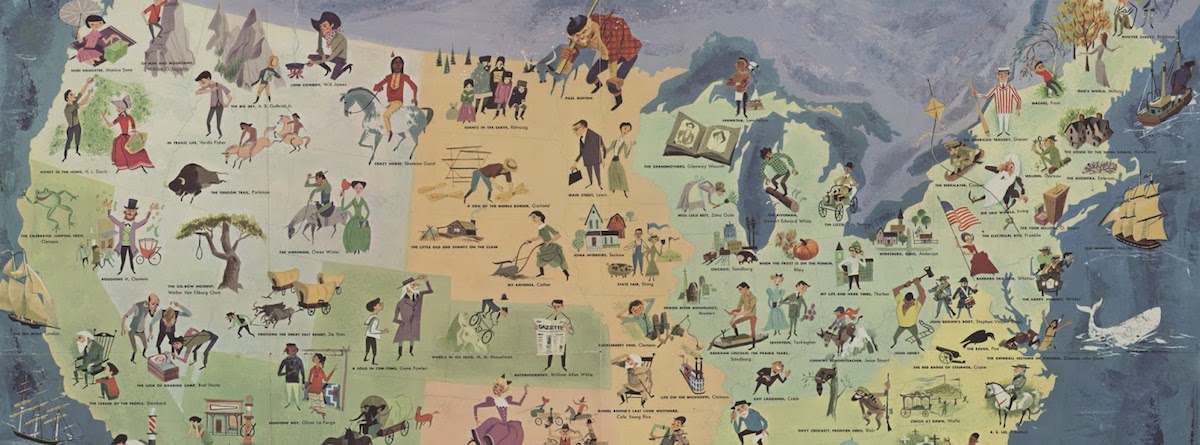
literary-map-of-us-america-reads-anthologyEmily Temple, writing for Lit Hub, takes readers back to 1868 when John William DeForest “coined the now inescapable term ‘the great American novel’ in the title of an essay in The Nation—a term he defined as representing “the picture of the ordinary emotions and manners of American existence.” DeForest thought that the Great American Novel hadn’t been written yet, but since his early speculation there’s been no shortage of “contenders.”

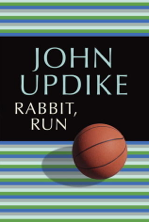
Temple assembles a list of the usual suspects plus a few unique ones, among them (of course) John Updike’s Rabbit, Run (or rather, the collective Rabbit tetralogy). She blurbs each entry with a learned quote. For Updike it’s one from Troy Patterson written for Slate in 2009: “To consider the 1,700-odd pages of his Harry Angstrom saga—the bounding tetralogy of Rabbit books and their limping postscript—is to find yourself considering a work with an excellent claim as the Great American Novel, but you’d be forgiven for preferring to spend time with four or five Very Good ones.”

Other contenders on Temple’s non-exhaustive list are:

The Great Gatsby, F. Scott Fitzgerald
Moby-Dick, Herman Melville
To Kill a Mockingbird, Harper Lee
The Adventures of Huckleberry Finn, Mark Twain
Mason & Dixon, Thomas Pynchon
American Psycho, Bret Easton Ellis
The Grapes of Wrath, John Steinbeck
Underworld, Don DeLillo
Lolita, Vladimir Nabokov
U.S.A., John Dos Passos
Invisible Man, Ralph Ellison
Blood Meridian, Cormac McCarthy
Light in August, William Faulkner
Absalom, Absalom!, William Faulkner
Infinite Jest, David Foster Wallace
The Adventures of Augie March, Saul Bellow
Gentlemen Prefer Blondes, Anita Loos
Beloved, Toni Morrison
The Amazing Adventures of Kavalier and Clay, Michael Chabon
Freedom, Jonathan Franzen
The Brief Wondrous Life of Oscar Wao, Junot Díaz
These Dreams of You, Steve Erickson
The Flame Throwers, Rachel Kushner

Updike turns up in NYT Year in Reading retrospective

screen-shot-2016-12-22-at-9-06-34-am“In this season of giving,” a Dec. 19, 2016 New York Times Book Review post began, “we asked some notably avid readers—who also happen to be poets, musicians, diplomats, filmmakers, novelists, actors and artists—to share the books that accompanied them through 2016.”

Not all the books in “The Year in Reading” were published in 2016, and Updike appeared on two lists:

—Carl Bernstein, of Woodward and Bernstein Watergate fame, includes John Updike: The Collected Stories on a list of “works most enjoyed or valued, in no particular order,” while

—Writer Maxine Hong Kingston lists books in the order in which she read them, including Updike’s In the Beauty of the Lilies.

What Updike books have you read in 2016, or do you plan to read in 2017?

Updike called “the voice of the middle class”

sub-updikeIn an essay on books written for Signature: Making Well-Read Sense of the World, Keith Rice contemplates “American Pastoral and 9 Novels of Suburban Desolation,” among them Updike’s Rabbit Angstrom, the four-novel collection:

“John Updike is arguably the voice of the middle class and suburban angst and his Rabbit series is his master-stroke. Over the course of four novels, Updike traces the life of Harry ‘Rabbit’ Angstrom, a onetime high school basketball star coming to terms with his adult life while trapped in loveless marriage and the confines of a boring sales job. Two of the four Rabbit novels (Rabbit Is Rich and Rabbit at Rest) were Pulitzer Prize winners.”

Other volumes that made the list (“novels” is a misnomer):

Revolutionary Road, by Richard Yates
The Corrections, by Jonathan Franzen
Ordinary People, by Judith Guest
The Dinner, by Herman Koch
The Age of Miracles, by Karen Thompson Walker
Little Children, by Tom Perrotta
The Lovely Bones, by Alice Sebold
The Stories of John Cheever, by John Cheever
American Pastoral, by Philip Roth

Great writers on writing list includes Updike

Screen Shot 2016-08-09 at 9.10.11 AMUpdike was as prolific as he was critically acclaimed and popularly successful. He also gave a lot of interviews, so it’s no surprise that his name turns up on a compilation of “Famous Advice on Writing: The Collected Wisdom of Great Writers,” posted on the brainpickings blog by Maria Popova.

Updike pops up twice:

63. John Updike: Writing and Death
“Each day, we wake slightly altered, and the person we were yesterday is dead. So why, one could say, be afraid of death, when death comes all the time?”

70. John Updike: Making Money, How to Have a Productive Daily Routine, and the Most Important Things for Aspiring Writers to Know
“In a country this large and a language even larger . . . there ought to be a living for somebody who cares and wants to entertain and instruct a reader.”

Harry Angstrom makes Bad Dad list

This past Father’s Day Electric Lit came out with a list of bad dads, and, no shocker, Harry “Rabbit” Angstrom made the top . . . or rather, bottom 10:

Screen Shot 2016-08-09 at 9.05.29 AM“Janet Angstrom made our list of Worst Mothers in Literature, but that doesn’t mean that Rabbit isn’t an equally terrible husband and father. He’s a washed up ex-high school basketball star who can’t deal with adulthood. He abandons his family, knowing full well that his wife is struggling as a recovering alcoholic, and has an affair. Selfish and immature, Rabbit contributes to the sad fate of his family just as much as his wife.”

Joining Harry on the list are Humbert Humbert (Lolita), Alexander Zalachenko (The Girl with the Dragon Tattoo series), James MacNamara (Down by the River), David Melrose (Never Mind), Jack Torrance (The Shining), Glen Waddell (Bastard out of Carolina), Eugene Achike (Purple Hibiscus), Culla (Outer Dark), and Old Nick (Room).

Writer offers literary proof that marriage is tough

Screen Shot 2016-08-07 at 9.31.18 AMIn “11 Pieces of Literary Proof Marriage Has Never Been Easy,” posted on the blog Signature: Making Well-Read Sense of the World, Lisa Rosman creates a list of 11 that probably could have gone well into the 30s. Updike, of course, makes her list, along with Ovid (Metamorphoses) and Virgil (The Georgics), William Shakespeare (Macbeth), Leo Tolstoy (Anna Karenina), Gustav Flaubert (Madame Bovary), Edith Wharton (The Age of Innocence), Virginia Woolf (Mrs. Dalloway), Edward Albee (Who’s Afraid of Virginia Woolf), Alice Walker (The Color Purple), Stephen King (The Shining), and Margaret Atwood (The Handmaid’s Tale).

Of the Updike selection, Too Far to Go, she writes,

“I’d be remiss if I omitted something by Updike, who captured the sensual disarray of mid-twentieth-century couples like nobody else. People tout his Rabbit chronicles but it’s in this tale of musical chairs-style couples that he best distills the sweet, slow longings of middle-class married life.”

NY Magazine calls Witches of Eastwick a Best Beach Read

Screen Shot 2016-07-25 at 7.57.56 AMLists have no season but beach lists only come around once a year. This year, New York Magazine is recommending John Updike’s The Witches of Eastwick as one of “The 100 Best Beach Reads.” 

What makes a “beach read”? NY Magazine thinks “the formula is pretty straightforward. Whether mass-market candy or high literature, a beach read needs narrative momentum, a transporting sense of place, and, ideally, a touch of the sordid.”

The best 100 books for sandy serendipity aren’t ranked, but rather listed in chronological order, starting with Daniel Defoe’s Robinson Crusoe (1719) and ending with Catherine Banner’s The House at the Edge of Night (2016).

Of The Witches of Eastwick, NY Magazine writes, “Updike was clearly having a ball in his story of suburban witches shacking up with a warlock.” Don’t we know it.

Mother Jones founder picks Updike as a favorite

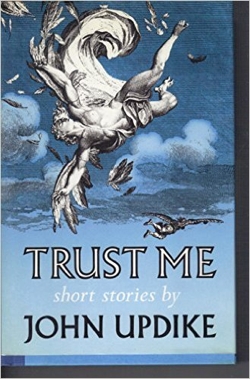
TrustMeMother Jones co-founder Adam Hochschild told The Week that his six favorite books are:

  • The Raj Quartet, by Paul Scott
  • A Time of Gifts, by Patrick Leigh
  • Billy Lynn’s Long Halftime Walk, by Ben Fountain
  • Homage to Catalonia, by George Orwell
  • Trust Me, by John Updike
  • The Gypsies, by Jan Yoors

Of Trust Me he writes, “I could pick almost any book of Updike’s short stories, but I chose this one because it has my favorite, ‘Leaf Season,’ about a family’s excursion to Vermont.

“I reread it almost every year. It’s like a perfect piece of music you can listen to again and again.”

“Adam Hochschild’s 6 favorite books”

Author picks favorite books on illness and dying

Screen Shot 2016-03-20 at 5.53.59 PMKatie Roiphe has been all over the media as of late, promoting her book The Violet Hour: Great Writers at the End, in which she recounts the last days of Susan Sontag, Sigmund Freud, John Updike, Dylan Thomas, Maurice Sendak, and James Salter.

The latest article is “Katie Roiphe’s 6 favorite books that deal with illness and dining,” and surprising it’s not the same six. Making the cut are:

  • The Death of Ivan Ilyich, by Leo Tolstoy
  • On Being Ill, by Virginia Woolf
  • Mortality, by Christopher Hitchens
  • Illness as Metaphor, by Susan Sontag
  • This Wild Darkness, by Harold Brodkey
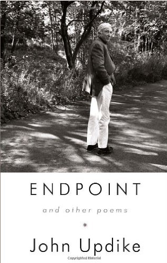
  • Endpoint, by John Updike

Of the latter she writes, “These poems, which Updike wrote during his last couple of years, are startling, visceral responses to his lung cancer. They have his trademark elegance and sensual beauty, but they also have the urgency of news flashes. He writes his way through the harrowing experience — analyzing, raging, consoling, creating — and in the end produces an astonishing coda to an unusually and gloriously productive life.”

Widows of Eastwick makes Amazing Sequels list

Screen Shot 2016-02-08 at 5.56.33 PMRomper.com today posted a list article by Lindsay Mack, “11 Books With Amazing Sequels, So You Can Keep On Reading,” and one of the 11 she selected was John Updike’s The Witches of Eastwick and The Widows of Eastwick. In fact, they’re the first books on her list.

“John Updike’s The Witches of Eastwick follows the adventures of three women who find themselves beset with amazing powers, as well as the interest of an intriguing newcomer to the town. And this bitingly humorous story continues with The Widows of Eastwick, in which the trio reconvenes 30 years later to come to terms with their pasts.”

And, one might add, aging . . . a frequent theme of Updike’s.

Also making her list: Ursula K. Le Guin’s A Wizard of Earthsea and The Tombs of Atuan; The Other Boleyn Girl and The Boleyn Inheritance by Philippa Gregory; Mary Doria Russell’s The Sparrow and Children of God; Chinua Achebe’s Things Fall Apart and No Longer at Ease; The Shining and Dr. Sleep by Stephen King; Amitav Gosh’s Sea of Poppies and River of Smoke; Jojo Moyes’ Me Before You and After You; Gregory Maguire’s Wicked and Son of a Witch; War Horse and Farm Boy by Michael Morpurgo; and Kent Haruf’s Plainsong and Eventide.