 If your pet peeves include people who speak the language with little regard for or knowledge of correctness, you might be interested in a Jan. 10 Quillette article by Bruce Gilley on “Guarding the Gates of Our Language; One hundred years after the publication of Fowler’s ‘Dictionary of Modern English Usage,’ it is more important than ever to uphold standards of correct English.”
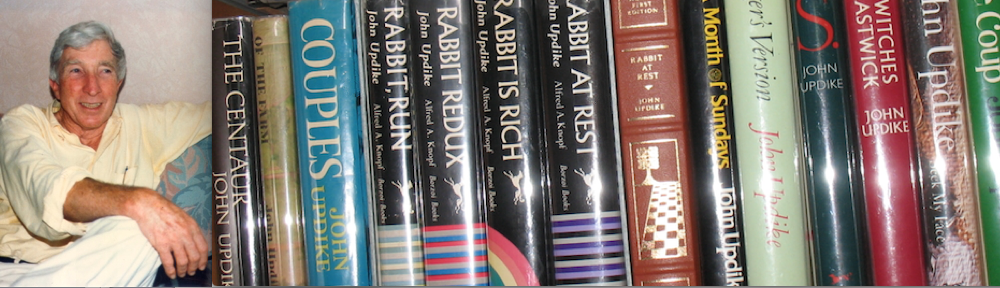
Of course, “America’s Man of Letters,” as William Pritchard dubbed him, was cited. John Updike, the master stylist and a precise practitioner of the language, was apparently involved in a kerfuffle involving his beloved New Yorker:
“Most surprising, perhaps, is the enduring allegiance to Fowler at The New Yorker, citadel of oppressed writers, and writers on oppression, in modern American letters. In a curtain-raiser in September 2025 for the Fowler centenary, the University of Delaware academic Ben Yagoda traced the inextricable links between the magazine, launched in 1925, and Fowler, almost as if the magazine was founded as a sort of Society for the Propagation of the Fowler in the United States. In one telling anecdote culled from the magazine’s archives, Yagoda found that the young John Updike, while studying at Oxford in 1954, had submitted a poem to the magazine that was caught up in a minor storm of editorial debate on punctuation according to Fowler. Updike bowed before the strictures, and his corrected poem was published later that year. Thereafter, he seems to have become Keeper of the Fowler at The New Yorker. His scathing review of Burchfield’s 1996 desecration is a monument to fine English sensibilities in the New World. ‘It has the charm, in this age of cultural diversity and politically correct sensitivity, of assuring all users of English that no intelligible usage is absolutely wrong,’ Updike writes. ‘But it proposes no ideal of clarity in language or, beyond that, of grace, which might serve as an instrument of discrimination.’ That word again.
“As Updike foresaw, the globalisation of English and the radicalisation of the academy mean that the need for Fowler has become greater not less. ‘The language is a mess, except as scoured and rinsed and hung out to dry by Fowler.’”