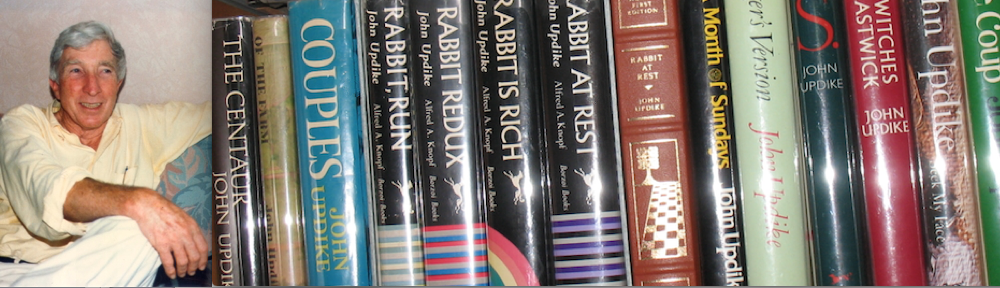
When you see an article on “19 Novels That Captured the Rise of the American Suburb” in the Travel and Guides section of a website, you know you can gas up the car and head to either Shillington, Pennsylvania or Ipswich, Massachusetts, because one of Updike’s domestic novels likely will be included.
This time it’s Pennsylvania.
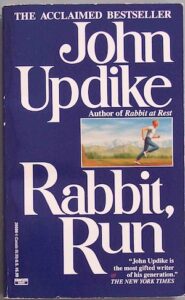 “John Updike’s 1960 novel introduced readers to Harry ‘Rabbit’ Angstrom, perhaps the most iconic character in suburban literature. Harry ‘Rabbit’ Angstrom is a middle-class man who feels there is something missing from his life. The novel follows Rabbit as he flees his suburban responsibilities—his pregnant wife, his job, his entire life—in a desperate attempt to recapture the vitality of his youth. Frank Wheeler, Piet Hanema, Frank Bascombe – these are a handful of the suburban men in the fiction of Richard Yates, John Updike, and Richard Ford. These writers all display certain characteristics of the suburban novel in the post-WWII era: the male experience placed at the forefront of narration, the importance of competition both socially and economically, contrasting feelings of desire and loathing for predictability, and the impact of an increasingly developed landscape upon the American psyche and the individual’s mind. Updike’s genius was in making Rabbit both sympathetic and infuriating—a man whose suburban malaise drives him to make increasingly destructive choices. The novel launched a series that would span four decades, chronicling the evolution of suburban America through one man’s journey.