May 29, 2006
David and I are about to embark on the long journey home–36 hours to Beijing, then 15 or so hours in the air, a four hour bus ride to Bloomington–then a campout this coming weekend.
We have been trying to figure out what is special about this trip.
Here are some thoughts about Henan, China’s most populous province (with 100 m people!).
1) Unlike our trips with students, this was not prepackaged to visit with other tour groups at restaurants, or even to visit factories (followed by a factory outlet store to give you the opportunity–in case you missed it–to purchase the tchotchkes that everyone purchases their first time in China). Indeed, our guide has picked restaurants for us where we have gone in as the only ones from out of town–and had little children point to us and describe us to their parents as foreigners (they may be from out of town, too). We have not been to a factory–perhaps because Zhengzhou’s largest factory sells busses, and they are difficult to get back home.
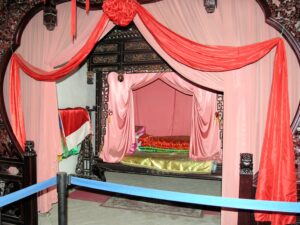 1a) To be rich is indeed glorious, no matter which country. We stopped here at an estate where Cu Xi fled in 1900 when the 8 nations occupied Beijing. It had some really neat furniture, including a bedroom fit for royalty.
2) There are not large crowds in this area of China–not of tourists, anyway. We had dinner with our guide’s boss, the number one English- speaking guide in China, and he told us that he has been to SE Asia to promote Henan 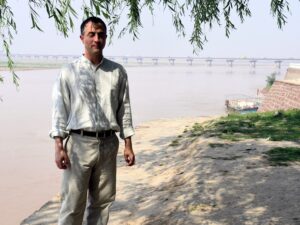 tourism to overseas Chinese. “Why would people come here,” I asked. His reply, “it’s the birthplace of Chinese history.” Here, near the Yellow River, were located five of the ancient dynasties, and 12 of the 27 modern ones (aren’t you glad you have to memorize only 40 presidents!).
 He’s right–we’ve seen lots of history, beginning here in Zhengzhou with the remains of the Shang dynasty town wall–about 1700 BC. We’ve been in the museum here and in Luoyang, and I think I’d be afraid to dig anywhere around the province because we’d probably dig up some priceless tomb with priceless artifacts.
 On the way here from Luoyang, we visited the Shaolin monastery, home of the Kung Fu monks. In the Sung dynasty, they saved the emperor, and thus the monastery—on one of the sacred hills in China–has the rank of number one monastery. We saw a wonderful exhibition of kung fu by some of the 16,000 students enrolled there. Unfortunately, the monks could
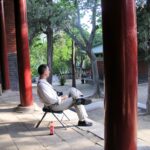 not save the monastery in 1928, when one of the warlords, suspecting his enemies were hiding in it, burned it down. There is one original building, and a whole lot of others that have been rebuilt to specifications and pictures, so you would never know they were replacements.
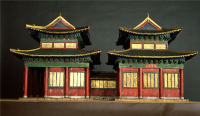
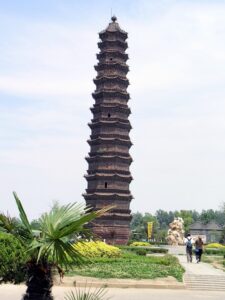 Kaifeng used to be the big city of the province. It was the capital of the Northern Sung, around 900 years ago. War and revolution–and the love-hate relationship the Chinese have with the Yellow River (in the 1930s, to block the advance of the Japanese, Chiang Kai-shek opened the dikes near here and flooded much of the countryside, killing almost a million Chinese) leveled the city over the centuries. There’s one pagoda left from ancient days, and
 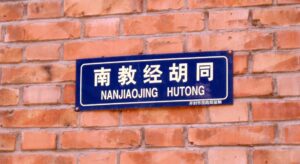 an interesting section of the city called “Torah reading street,” a testimony to the trade that brought Jews from Persia to China. Our guide of the area was a descendant of the Jewish
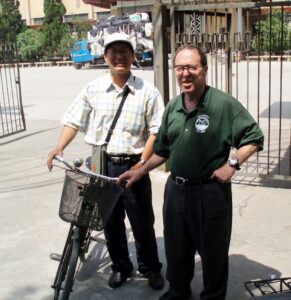 converts, who showed us a picture of the synagogue (long since destroyed) that for all the world looks like the mosque in Xian. Which looks for all the world like a Chinese pagoda!
3) We went to a Cultural Revolution themed restaurant the other night, where my 1960s Maoisms came in handy. I think it is a measure of how far China 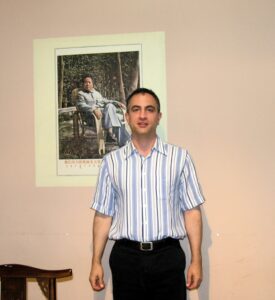 has come that they can poke fun at a terrible time in their history. Last night, to bring closure, on a walk through a Shang dynasty remains park a block from the Holiday Inn where we’re staying, we had an ex-English
teacher talk with us and wound up at a jam session with an accordion, singing Chinese and American folk songs. Neat evening.
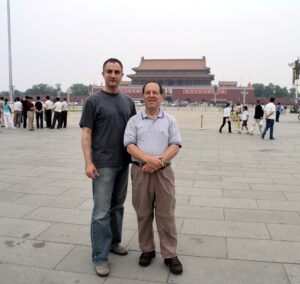 guide who was quite agreeable. She took us to Tiananmen Square (largest public place in the world–no one was watching us, Kevin Eack, except some of your CIA types!), and to my great surprise few people
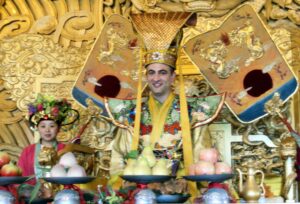 Luoyang is a “small city” of 2 million, with around 6 million total in the suburbs. It’s a grey city, but like most Chinese cities, has increased splashes of color recently. It was prominent in the past, one of 8 cities (can you name the others) that served as capital of China. It accommodated 12 dynasties, most recently the northern Sung in the 10th century, which was way before my time.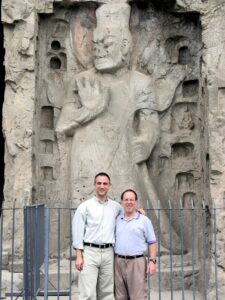
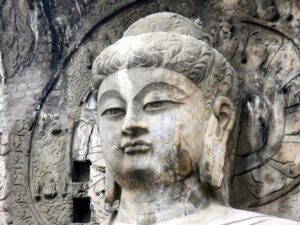
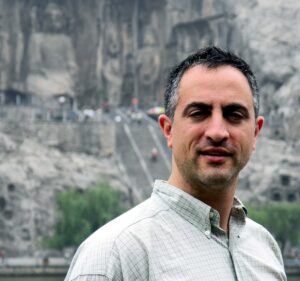
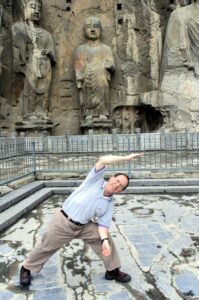 of the Yi River. I shot about 50 digital shots, and probably will keep 49. The Tang statues are plump, the Northern Wei slender, so I will be able to tell them apart. Maybe.
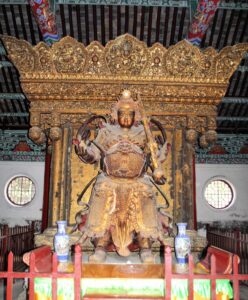 his head is. He is the statue I collect since I think he is fiercer than Tommy Titan, and I’d like to use the GG as the IWU mascot. He was a general in the period of the Three Kingdoms, and he was slain. His head was sent to the emperor at Luoyang, who attached a wooden body (!) and buried him with honors. There is now a temple on the spot that dates (in its present form) from the Ming dynasty (1500s),
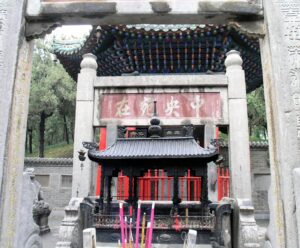 that is a quiet spot in a noisy world. The Guang Gong is a symbol of loyalty (a scout is loyal!). I’ll show you the statue I bought here.
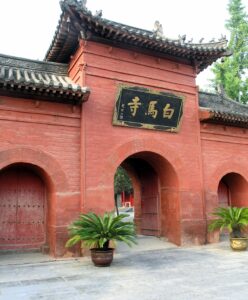 The other place dates from around 65 BC, when the first Indian monks brought Buddhism to China, to the White Horse Temple. After getting through the hawkers who wanted to sell us things we did not want, including pictures on a white horse that they told us (at least I think that was their Chinese) had brought the sutras back from India to Luoyang, the temple was one of the best preserved I’ve seen in China.