SHANGHAIED ON THE YANGTZE

May 18, 2006
I’ve been Shanghaied

That’s better than I was earlier, when we were on the Yangtze.
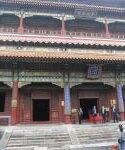
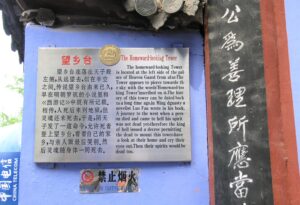
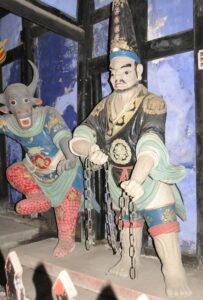
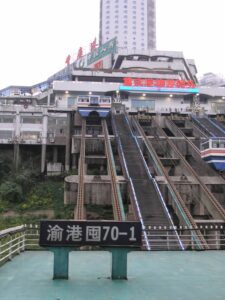
There, I went to hell. Many have told me that’s where I should go, but the boat stopped at Fengdu, which has a “ghost city,” that includes hell. There were all sorts of Taoist spirits–including one that deals with wine–I pictured some of the fraternity boys there! I stopped there 8 years ago, when I took my first Yangtze trip, and there was still a city there. Since then, the river has risen due to the impoundment created by the Three Gorges Dam, and the 150,000 people have been relocated to the south bank, the old city destroyed and removed.

That is kind of a metaphor for what has happened with the three gorges project, a massive 22 billion dollar project that will flood about 300 miles of river valley and make it possible for ocean transports to reach from Shanghai to Chongqing. One thing it has already done is cause the city of Ichang (where we disgorged, so to speak) to increase tenfold—from 400,000 to a “small” Chinese city of 4 million.

The Chinese sometimes remind me of teen-aged boys. If you tell them no, or you cannot do it, they will. That is certainly the case with the dam and the massive resettlement it has caused. About a third of the population of China lives along the Yangtze, most of them downriver from the dam. The dam will provide electricity (5-10 percent of China’s needs), flood control (a major problem in the past), a transportation artery into the interior, and–this was new to me–a potential source of water for the parched north (including Beijing, which has major shortfalls in water supply). The world said, it is environmentally unsound to build the dam, and you lack the technology, etc. 12 years later, the dam is in place, and it will be fully functional in two years.

XIAN-CHONGQING

May 13, 2006

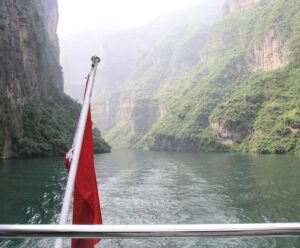
I am on a slow boat down the Yangtze, with even slower email.

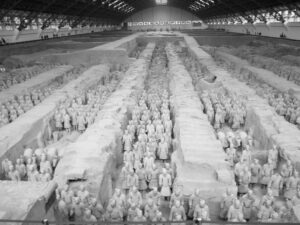
Xian was, as it always is, wonderful. It has a past, as I mentioned, a long and glorious one. I am in awe of the first emperor, who died in 209 BC, after ensuring his immorality with the 7000 man army. They have opened three of the tombs, which the emperor started even before he became the emperor, and which employed over 350,000 people.

Here’s some interesting things we did:

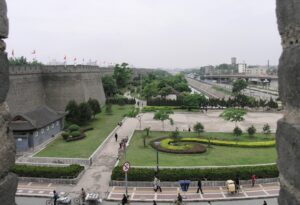
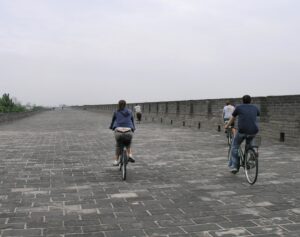
1) Xi’an is a walled city, with the existing wall first built in the late 14th century. The Communists finally completed rebuilding it, which led to a 14k bike ride one cool morning. The wall was not finished last time I was there.

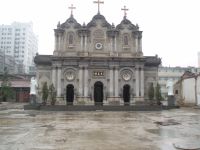
2) We went (a few students and I) to a church service. I was curious about the church, which was built in the 1920s by one of the missionaries for a (then) famous warlord, who baptized his troops with a fire hose and marched his troops to “Onward Christian soldiers.”  I had never found that building before.

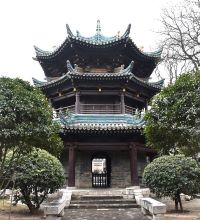
3) One of my favorite places (not usually on the itinerary for Westerners) is the Great Mosque. As the capital of China and the beginning/end of the Silk Road, Xi’an attracted many foreigners. The Muslims came and stayed. There are about 10.000 in the city today (out of 7 million), most in the quarter around the mosque. We went first thing in the morning (17 of the 27 came voluntarily). Built first in 742, the mosque looks like a typical Chinese building, the minaret looks like a pagoda. Amazingly serene.

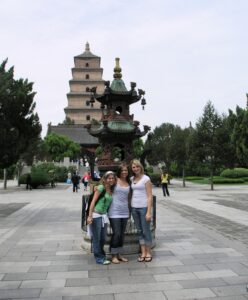
4) We visited two Buddhist pagodas, including one where Xuan Zang brought the original books from the Buddha in the 8th century.

5) Dumplings are one of the specialties of Xi’an, so of course when we had a free mealtime, we went there for the 18 varieties…quite a meal.

6) And the underground army.

From Xi’an, we flew an hour south to the largest city in the world (partly because of the size of its “territory”) Chongqing. A sleepy city until the Second World War, it grew enormously when the Nationalist government fled there in 1937. There are now 30 million people in the municipality, but about 70% are in the surrounding counties.

There is not much to see in the city itself, which has been rebuilt considerably since the first time I came to it about a decade ago. One highlight is the only museum in China to honor an American, General Stillwell, who commanded American and Chinese troops in World War II, but clashed with Chiang Kai-shek and eventually was fired.
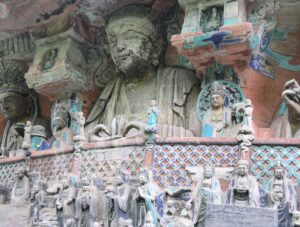
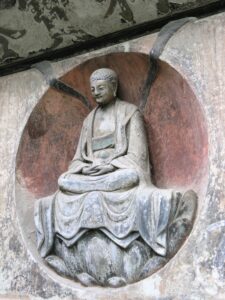
We spent the day traveling to a Buddhist grotto where a serious monk had carved statues in in the late Sung dynasty period–our guide gave a great explanation of how Buddhism embraced both existing Chinese religions–Confucianism and Taoism.

Sichuan is also one of the main cuisines of China, so we went to a local restaurant for a hot pot. I bought some spices and if they make it home, we will try one on a campout. You chop everything and put it in boiling soup with spices, and take it out a few minutes later.

We got on the boat last night and sailed down the Yangtze. They gave all the women flowers for Mother’s’ Day, so let me close by saying happy Mothers’ Day to you all.

BEIJING-XIAN: TWO CAPITALS

May 10,2006

I am in Xian, which was the capital of China a thousand years ago–and had been the capital for a thousand years.

We have had a very busy routine, but I’m delighted that I have some students who are as interested as I am in wandering around in the mornings and in those few hours that we have free time. As I mentioned, we flew over the North Pole, the new direct route from Chicago that reduces the flight to “only” 13 1/3 hours. That was about 2 hours sleep, three meals, four
movies, and one interesting book on Wal-Mart for me.

It was fun, as it always is for me, to come back to Beijing. The city is, like most capitals, imperious and imperial. The old is impressive, the new, impressive if you have my perspective, which goes back to 1990.   There has been a controversy about the Starbucks (gasp) in the Forbidden City.  I suspect it will be gone eventually, along with the mayor who approved it.  Ironically, it is an internet citizen crusade that has been spearheading the demand for its demise.
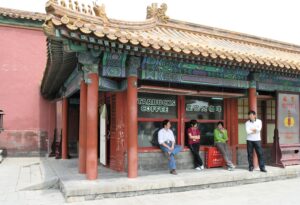
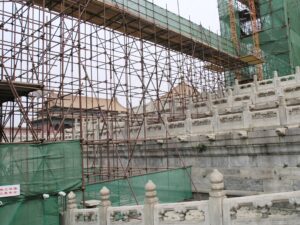
The city is preparing for the Olympics, and refurbishing its sights, which means there were several places (including the Forbidden City) which were “forbidden” because they were closed or parts were closed. One morning, I took some students to my favorite park (Jing Shan) which overlooks the Forbidden City. It’s where the last Ming emperor hanged himself (in 1644).

We climbed the hill overlooking the Forbidden City–only to find the pavilion was being reworked, so we had only glimpses of grandeur.

My fellow teacher, Ruth Ann Friedberg, with whom I traveled last time, and I have somewhat different interests, so we can offer students different options when we have free time. For example, our last day in Beijing, we had a visit to the Chestnut operation in Beijing, and then had the afternoon to wander. About half the students elected to take a tour of the (refurbished) hutongs, the traditional houses of Beijing, which involved a rickshaw ride. I offered an alternative, which was to see the real hutongs and to visit one of the temples. Ruth Ann needed to shop, but wanted also to see one of the temples, so we escorted about half the students to the Lama Temple, which was the location of the Tibetan monks in Beijing. It’s one of my favorite places anyway–with the half-man, half-animal versions of the Buddha followers. Having been to Tibet gave me a new perspective.
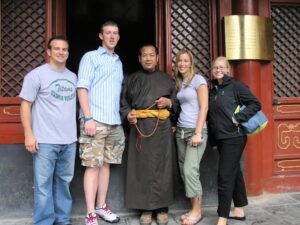
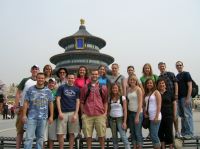
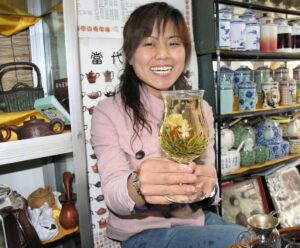
We parted. I took the Fred followers to Liulichang, an older area with real hutongs (without indoor plumbing and without air conditioning, and some without water), and traditional shopping. That was neat, since there’s a tea shop that JR and I discovered two years ago, revisited last year, and he was there in March. We spent about an hour with the owner, sampling teas (I do like the lichi red and 8 treasures, which are not available in the US) and departed with tea and memories. We took the subway around and felt like real Beijingers.
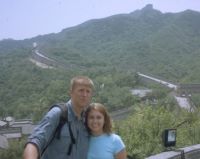
As many times as I visit Beijing, I’m still in awe. I can only imagine what it might have been like for foreigners, who came from lesser civilizations (as I sometimes think we do–we have little that’s a thousand years old) to walk the Sacred Way (to the tombs of the Ming emperors), or to walk through the Forbidden City for the coveted audience with the emperor or to walk the Great Wall and realize that it was built almost 2000 years ago. Pretty overwhelming
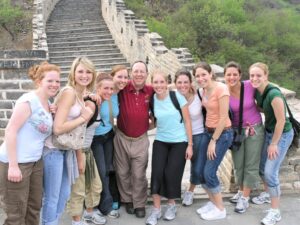
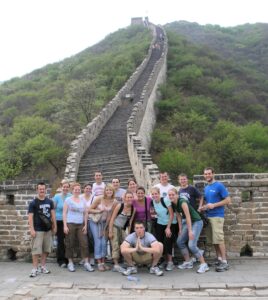
The train to Xian was fun, too. 12 hours, but overnight, so we got on and were on for most of the evening. We arrived in Xian in time to visit several Buddhist pagodas from 600 ad, to have dumpling dinner, and to wander through the Muslim area.
Today, the underground army.

Gotta run for breakfast. JR used to say it’s like scout camp, and it is–except I have never had fresh waffles with chocolate sauce at Scout camp.
Stockholm: End of the Cruise

Reminiscences 2025

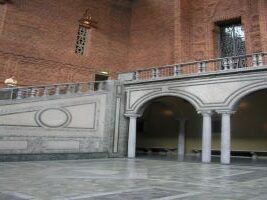
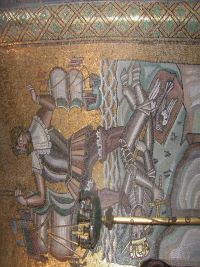
The trip ended in Stockholm, but I have few recollections of what we saw.  One was the City Hall, where Nobel Prize winners received their recognition. There are some interesting murals on the walls.

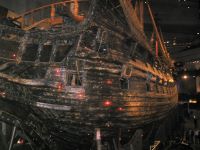
Another was the museum housing the 17th Century Vasa, a ship sunk in the 1628 and resurrected in the 1960s.  It’s a reminder that Sweden, which has pled neutrality in the 20th century, was one of the great powers in the past. Ask Peter the Great about the Great Northern War, which brought Swedish troops deep into what is now Ukraine.  And brought Peter to consider resettling the capital from Moscow to a new city on the Baltic. In any case, it’s the only intact vessel from the 17th century.

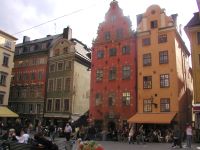
And finally, I do have pictures of the Old Town.  We probably got the standard tour of the city.

By this point, we were ready to come home–but also to go on further cruises; no packing and unpacking was nice, but the lack of free time would bedevil me.

Here’s what I had to say at the time in summarizing the trip:

Great trip, full of medieaval and majestic–St. Petersburg is full of the
lavish wealth of Russia, all squandered by the Tsars on themselves, while
most of the other cities spent time between Sweden and Denmark in the
early period, then the Knights, then Sweden/Poland, and finally
Germany/Russia.  Saw a wonderful performance in St Pete by Cossacks, the
same wonderful folks who helped me be an American.

Helsinki was a treat, but these northern Scandinavian countries are
wealthy!

How could I have missed St. Petersburg? and Helsinki?

Reminiscences 2025

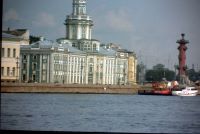
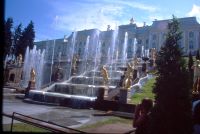
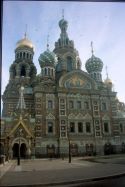
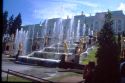
From the Baltic countries we sailed to St. Petersburg.  Where memory serves twenty years later, the blur is of palaces and museums that I would see again.  But never enough.  St. Petersburg is full of the old (but not the oldest) and some of the richest sites in Russia.  The sumptuous palaces which serve as reminders of wealth beyond dreams; the Summer Palaces which now houses the Hermitage Museum.  That world-class edifice with world-class holdings, initially the private collection of the Romanovs, added to by confiscation from wealthy Russians.  Two days was enough to skim the surface–this was, after all–one of those pompous pretentious capitals (17 something to 1920s?), though much was destroyed during the seige in World War II (and rebuilt).  We saw, from my pictures, the standards.  We did make it out to the Peterhof, happily.

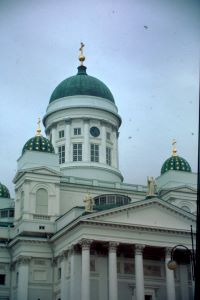
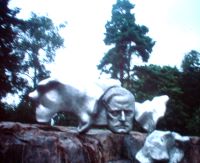
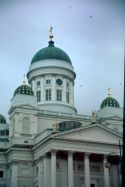
Helsinki I remember as cool and raining.   Appropriately, we heard Sibelius Finlandia, composed while Finland was part of Russia.  The brief visit downtown showcased Scandinavian design and some wonderful shops. And the magnificent Evangelical Lutheran Helsinki Cathedral.

Love the Baltics

August 8 2005

We’re nearing Stockholm, on what Carolyn described as our “soldiers in the army” approach.

Art Deco in Riga

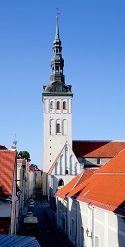
After the wondrous medieval city of Tallinn (joke–named after the soviet leader from the 40s), which included the tallest building in the world–circa 1600, naturally a church–we came to the imperial city of the Russian Czars.

Though I’ve been to St. Petersburg before, I’m still in awe of the wealth the Czars had. So much that even though I had been here before, we saw only one place I’d been to! One of the palaces was built by Peter I because it was halfway between the city and the naval base. I would love to be able to say, “build me a castle here, spend anything you wanted, and outdo the French.” The architect succeeded in all counts. The Hermitage is similar—built as a palace, then as a house for the extensive artwork purchased or pilfered by the Czars and later the Soviets, it’s an awesome place, full of paintings and people. When we had our free time (if it’s 2:00, we must be in the Rembrandt room!), I wandered into the Asian art, which I had to myself. There were murals ripped from the walls of caves Dave and I had visited in central Asia, and Indian sculptures that “were in the Berlin museum until 1945”)! Wondrous stuff indeed, but so ostentatious one wonders why the Russian peasants tolerated it until 1917!  St. Petersburg seems much busier and seemingly more prosperous than I remembered, but we have had little contact with locals other than guides, and guides represent the chamber of commerce!

We went to a folklore dance in one of the former grand duke palaces, which featured Cossacks, I (along with several of the other Jews aboard—the record of antisemitism in the Baltics isn’t confined to the Nazis–whispered to Carolyn, “These are the folks who convinced my Dad’s family to flee to the US”).

Helsinki

Yesterday, we stopped in Helsinki, and I have to admit we had little to prepare us for it. Almost, “Oh, are we going there?” Again, a wonderful surprise–neither medieval nor majestic, but full of neat architecture, and–for the first time on the trip, an opportunity to wander aimlessly (the downside of the tour trips!). I had reindeer for lunch, and I hope Rudolph will not hold it against me for Christmas. Cause I’ve been behaving–hard as it might be! The Scandinavian countries (north side of the Baltic plus Denmark) are among the richest countries in the world, though the populations are really small–under 5 million.

Great trip, full of mediaeval and majestic–St. Petersburg is full of the lavish wealth of Russia, all squandered by the Tsars on themselves, while most of the other cities spent time between Sweden and Denmark in the early period, then the Knights, then Sweden/Poland, and finally Germany/Russia. Saw a wonderful performance in St Pete by Cossacks, the same wonderful folks who helped me be an American.

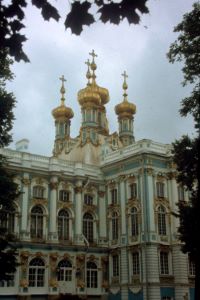
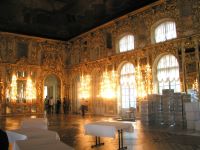
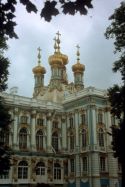
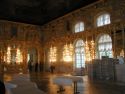
One revelation occurred at the Amber Room of the Catherine Palace in Tsarskoye Selo.  The panels for the room were gifted to Catherine by Frederick of Prussia, and vanished during Nazi occupation.  Ironically, the room, symbol of Russia, was one of the first items Stalin rebuilt–Stalin being the exemplar of world-wide communism!

Helsinki was a treat, but these northern Scandinavian countries are wealthy!

One thing they never warned us about: the Baltic is a shallow sea, so when it gets stormy, it rocks.  I remember reading, “The World is Flat,” in a storm, and was ready to challenge Thomas Friedman’s title as the ship tilted and drawers opened and closed.

Carolyn has described our shore time as “soldiers,” but it’s been a great pace on shore, and kind of fun aboard–especially doing yoga on the foredeck! Not enough time for me to wander aimlessly, though!

The Baltic Republics

Reminiscences 2025

Somewhere, I missed a few days on this trip, which included a stop in what are now the Baltic Republics–Lithuania, Latvia, and Estonia.  I’ve documented elsewhere going back on this tour later, with students.

I remember that we got off at Klapeida (which was Memel between the wars) and bussed to the capitals of the small republics.  At this distance in time, I don’t recollect specific details, but here’s what I think I remember.
The small populations startled me.  The 3 countries have probably no more than 10-12 million people, total.  Their languages (and religions) and histories were different.  Lithuania, for example, was at one time part of a Kingdom of Lithuania and Poland, or Grand Duchy of Poland and Lithuania, that stretched over much of Eastern Europe.  Crusaders made Estonia Lutheran.  Vilnius at one time was the next Jerusalem because of its large Jewish population.

They had in common a respect and sometimes fear (rightly) of their large next door neighbor.   They shook off Russian rule in the interwar period, though Vilnius was part of Poland, the rest of Lithuania was not, and the other two were independent countries. Before the Great Patriotic War began in 1941, all three countries were sucked back into the Russian orbit. When the Soviet Union imploded, they became independent again.
One of the shipmates was a retired Dole marketing executive.  When I asked him about how to market to such small populations, his reply was concise: “frugally.”

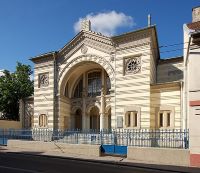
The trip through Lithuania reminded me of Wisconsin–farms, emphasizing the importance of agriculture, albeit in a short growing season.  Vilnius, where we stayed, is a city of about 600,000, with beautiful Baroque churches marking its identity as a predominantly Catholic country. There was information, as well, about the collaboration of Lithuanians with the Nazis.   A small synagogue remains, a testimony to the once flourishing Jewish community. Over 300,000 Jews and large numbers of other Lithuanians were erased during the Nazi years.

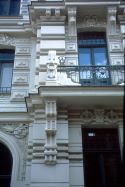
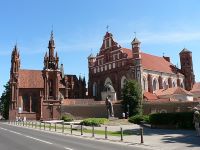
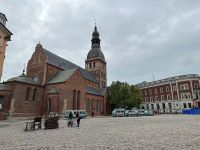
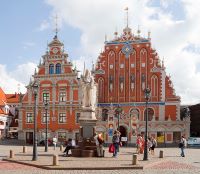
From Vilnius, we drove to Riga, a different country with a different history.  Riga, like much of the Baltic Region, was settled by Germans, who brought Christianity to the pagans in the area.  By the 18th century, it was in the Russian orbit, where it remained until World War I.  Independent between the wars, it was ceded to Russia by the Ribbentrop-Molotov treaty that divided Eastern Europe between the Russians and Germans. In 1941, the Nazis invaded, and Latvia was restored to Russian rule after World War II.  In 1990, it became independent again.  Thanks to the wars, it has a square near the main church that is surrounded by bistros, and made a pleasant evening of people watching.  Riga is known for its Art Deco buildings, and some older sites that have made it a UNESCO world heritage city.  We had a good tour of the city, but as I recall, we had 15 minutes of “free time” to  “explore on your own.”  That’s when I decided I’d have to come back and wander.

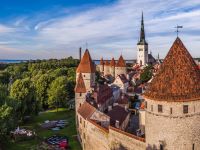
We reboarded the boat and resumed our cruise till we came to Tallinn, known in its earlier days as Reval, the capital of Estonia.  The tourist sites come in two parts–the  city was once two hostile cities–the lower old town and the upper fortress.  Speaking a language akin to Finnish (not a Romance language), the country has its own history (similar to the other Baltic republics), fighting the Teutonic Knights, the Swedes, the Russians, each other.  The upper walled fortress has 36 towers.  The lower has a square with a Town Hall and the oldest pharmacy in Europe, dating to 1422. It still dispenses.

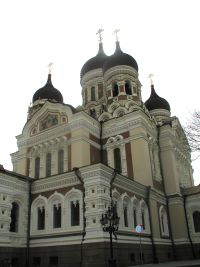
It’s compact enough to walk around in, with great views from the upper city.  An early 20th Century Orthodox Church was part of an effort to Russify Estonia. It did not work, but it left the Alexander Nevsky Church for posterity.

On to mother Russ!

Cs on the High Seas

August 5, 2005

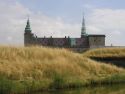
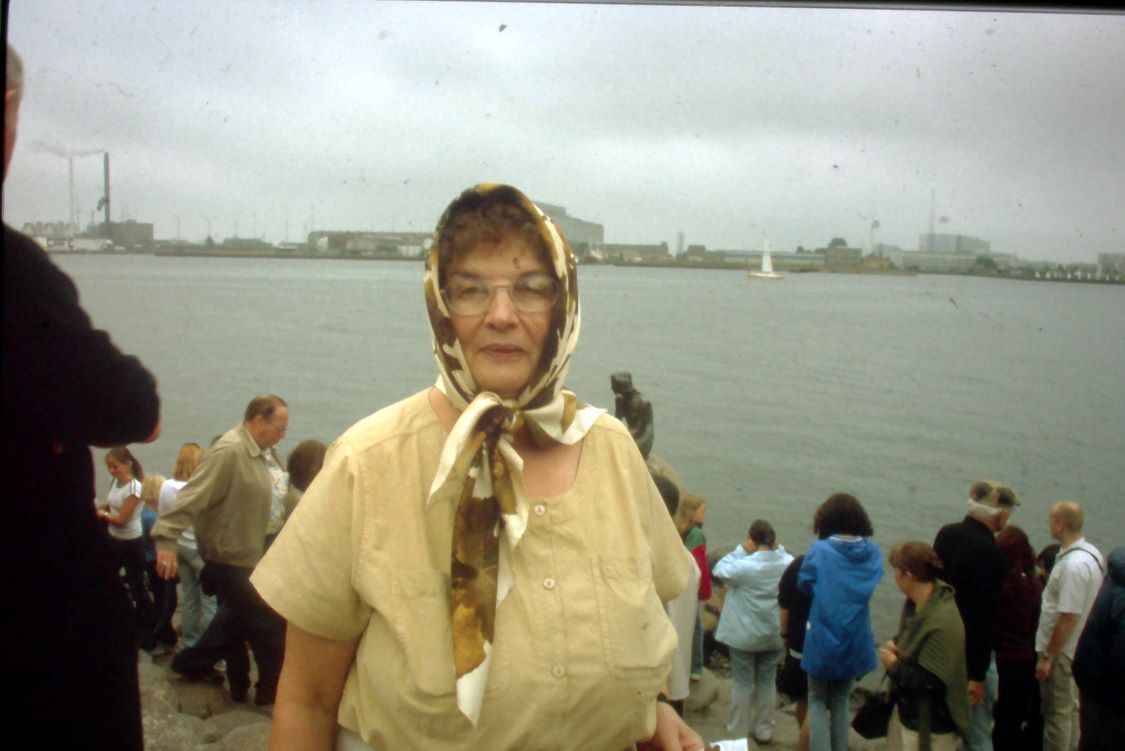
On the seas–first C was for castles. We rented a car and driver in Copenhagen and went where Carolyn wanted–to the castle at Elsinore, setting for Hamlet, a wonderfully dismal setting for a wonderfully dismal play; thence to two other castles. Copenhagen is full of castles and we saw lots of them.  Carolyn (left) is hiding the Little Princess,  another of Denmark’s landmarks.

Then we joined the cruise, another C, where we lowered the average age by 20 years (key question–what did you do before you retired?).

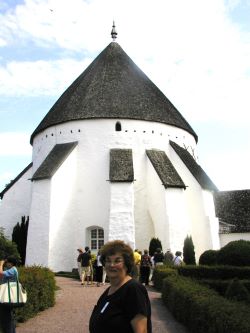
The next C was cod, on an island which is the biggest supplier of cod for the McD chain!  An  extra plus was a medieval round church (which was also a castle–protection for the local folks).

Today we were in Gdansk, which was 70 percent destroyed during World War 2, but has been restored (under the communists). Delightful city, with castles and churches. Highlight was seeing Lech Walesa museum and meeting him in person. He said he hopes he is the last revolutionary (led Solidarity, which unraveled the Iron Curtain), because then no one would have to tear down his statues. Neat day.

May have better access tomorrow. We’ll be on land at a hotel in Vilnius. Been doing yoga on deck–it’s great.

The Rooftop of the World

Rooftop of the World
Potala Palace

June 3, 2005

Two days ago, I was in Tibet with JR. I am really glad he suggested that we go, because it was a nice addition to our coastal visits to “modern Asia.” Indeed, when we landed in Chicago, it almost reminded us of every other city we visited in Asia–except for Lhasa.

As I mentioned, we went early Tibet (early ta rise, early ta bet), but it’s a long way from Beijing–at least 50 years and several thousand miles. It left me breathless, both literally and figuratively.

Literally, Tibet resembles Wyoming. Lhasa (400,000 population) bills itself as the world’s highest city. It is on the Tibetan plateau, which is only 11,800 feet–I say only, because it’s surrounded by mountains that must be over 15000-18,000 feet. It was hard breathing because we were consuming less than 60 percent of the oxygen at sea level, and when we got there, we had an acclimation day. We spent the day driving from the airport (on what I understand is the best paved road–I don’t know how the Chinese managed to “liberate” the city since Tibet is still almost impenetrable), walking around the old city (our hotel was in the center of the old city, near the main monastery), and collapsing around 7 pm, a product of a late night in Beijing the night before and the altitude. Those of you who know my habits, realize that I don’t sleep that much ever–woke up at 7 the next morning! Scenery is high desert–and the cowboy hat seems to have replaced the local scarf. It also took breath away because instead of incense, the Tibetans burn yak butter, which is pungent (they also have yak tea, which the guidebooks say is an “acquired taste”–needs more than one day to acquire the taste, apparently).

it took our breath away figuratively because it’s much different than the rest of China. That it is part of China is a tribute to the idea of the Middle Kingdom, which is China’s name for China–between heaven and earth. Whatever has been Chinese (ever), is and must be Chinese today (As I mentioned, European domination is recent–and over). There is amonument to the 16th century treaty by which the Ming emperor defined relations with the Dalai Lama as uncle/nephew. In the 1950s, China “liberated” Tibet, which is why there is a huge monument in Lhasa, and not always subtle reminders that China is the dominant power in the region. Our guide, who is of Tibetan nationality, told us he had to be careful in public because there were spies everywhere. Since riots in 1989, the government has been wary of Tibetan Buddhism, taking over festivals and controlling the monasteries.
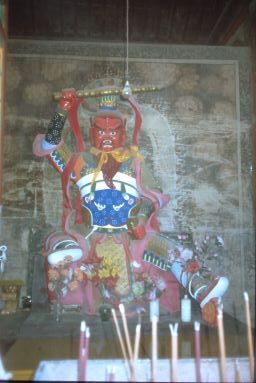
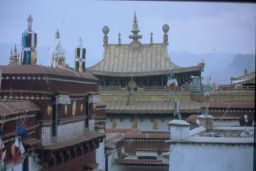
The Buddhist palaces and monasteries are breathtaking, too. The Buddha as I mentioned takes different forms in different countries, absorbing the previous deities, and thus in Tibet are wondrous bodhisattvas (people who could have achieved Nirvana, but have stayed on earth to help others achieve enlightenment), with horse heads, and bear heads, and are demonic–I’ve not seen them elsewhere.

We spent 2 days in Lhasa, literally stupafied (look that up) by 17th century monasteries and palaces.

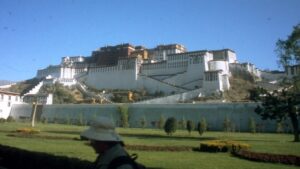
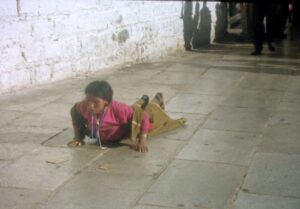
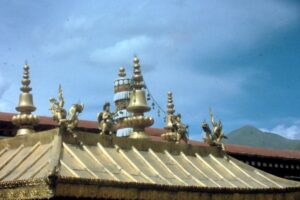
The Potala Palace is stunning, as you can see (it had one “outhouse” that was basically a seat over a 200 foot drop). The main square (crawling in front of it is standard) as I recall has a monument to the first treaty with China, in which Tibet said it was the little brother, China was the big brother. China never forgot and big brother returned in force in 1950. The Dalí Lama fled.

The long journey back to the Midwest started from Lhasa (LXA is the airport code) and took us back to a frantic night in Beijing with a wonderful driver who spoke no English, but who was really helpful and like most Chinese appreciated my Chinese, or efforts to make myself understood.

JR pointed out that the cab looked like a government car with tinted windows. Sure enough, I looked at it and realized it was a “hong qi” or red flag. I did not know they still made the car, which at one time was the official car. That was neat.

We left Beijing and 30 some hours later; we were back in the Midwest. Confucius once said (from the vantage point of Mt. Tai, one of the sacred mountains–I have been there!) the earth is small. Obviously, he never did international travel.

It’s good to be home, but it was fun to wander around Asia and realize once again the challenge of the 21st century!

Send them home from Beijing: on to Tibet

May 28, 2005

Today was our last day in Beijing, and the students have loaded their suitcases (many needed new ones to haul away their purchases!) for the long ride home. They leave at 7 from the hotel (am) and will get to Chicago at 10 pm the same day. I told them it is the longest day of their life. JR and I will be leaving at 5:30 am for the airport, and then to the 12,000-foot Tibetan plateau. I have never been there, so this part of the trip will be new for me.

I hope my adventures will whet your appetite for coming here. A wise person once told me the more you know, the more you can enjoy things; I would add that the more you travel and observe, the more things you can enjoy. I will be wearing my vest as we go to a colder climate, (Beijing’s actually been very pleasant–warm, but not too hot, with cool nights), and my motto’s on it: Bring on the Adventure.