Associate Professor of Business Administration Fred Hoyt was one of 24 business faculty from 18 universities selected to participate in the Vietnam Faculty Development in International Business (FDIB) program Jan. 3-15, hosted by the Centers for International Business Education and Research at the University of Wisconsin and the University of Hawaii. The 12-day program focuses on the unique aspects of doing business in Vietnam, comparing and contrasting the business environments of Ho Chi Minh City and Hanoi.
January 5
I hope whoever said, “Getting there is half the fun,” was wrong. It’s now 9 a.m. your time Monday morning, and I didn’t get to Vietnam until 4 p.m. this afternoon (it’s 10 p.m. here), having left Bloomington at 6:10 a.m. on Saturday. When we got to Chicago, the plane for Narita loaded, and we sat for two hours until AA decided there was a problem with the plane – so we decamped and waited for a replacement, which meant a 4 hour delay, which meant I missed my connection in Tokyo. Fortunately, AA asked if I wanted to change seats with someone on the 13 hour flight across the Pacific. I said sure and wound up traveling in business class. That’s the first time I’ve ever flown the Pacific in comfort – the seats are huge (my neighbor was 6’4′) and the seats reclined to horizontal – it was better than most backpacks.
January 7
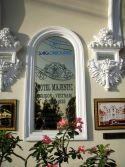
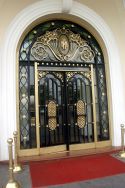 Good morning Vietnam. I’ve been here two days, and we’re staying in one of the old colonial hotels on the Saigon River, a hotel which is majestic in name and in decor. There’s lots of marble, hardwood floors, a wondrous rooftop garden, and 24 faculty from the U.S. for this workshop. Saigon retains some residues from its French occupation (about 150 years) – baguettes and pastries that are truly unusual for Asia; some people who can speak French, including the hostess here. Fleur is her name, which means flower, and the water faucets in this hotel, are labeled “chaud” etc.
Vietnam has a long coastline – around 1,400 miles, and we’re in the South. It’s close to the equator (my GPS says 10 degrees) and hot and humid. It’s 30 degrees here, too, but that’s Celsius, and quite humid. My colleague, Bill Walsh, who was here during the “American War” (they name their wars by their opponents) describes the climate as three changes of clothing a day. I think it’s more. And it’s January!
If you’re the right (or wrong) age, you have pictures in your mind of Vietnam, and there are places here that are snapshots from the coverage in the 60s – the Reunification Palace, for example, where the last president of South Vietnam surrendered to the North Vietnamese, who promptly renamed the city Ho Chi Minh City (HCMC), which only Northerners call it. Most of the locals call it Saigon, and have moved way beyond the wars (they kicked the Chinese in two weeks in ’79, which led a lot of Chinese here in Saigon to emigrate to China).
January 7
We’ve had some interesting lectures and site visits the last two days, and here are some of the things I’ve learned about this country of almost 90 million people:
“It’s not a ‘little’ China,” said one of our speakers. He pointed out that it’s not centrally and hierarchically organized, the way China is. His example was ports – the U.S. has two main West Coast ports; Hanoi is building 20, because the Central Party needs to placate the provinces and keep everyone on board (there are major North-South differences). The economy has grown about 7-8% a year for the past decade, which is why I see more cars than I remembered (Saigon has around 7 million people and 8 million motor scooters). The economy is controlled by seven or eight major corporations which apparently have little market sense, and the other major corporations are export driven. Given the “l shaped” economy (the decline in purchasing by European and U.S. customers), what’ s keeping most of these companies afloat is foreign direct investment.
What is happening, in other words, is roughly a “Ponzi” scam – credit inflation and growing unemployment. I read something in the paper about the big companies demanding a major government bailout, and private enterprise demanding more free reign. It will be interesting to see how the integration of the economy here into the World Trade Organization (approved in 2007) will change the interplay of this export-driven economy (one of the schools we visited had no marketing classes, but did have classes on how to deal with the downturn, negotiating with the U.S., etc.)
The appeal of Vietnam to business was driven home to us by a visit to a Cargill plant here. The GM, the only non-Vietnamese employee, came from Taiwan; he was GM there, and produced about what he is producing at the five plants in Vietnam. However, in Taiwan, he had about 250 employees, while here he has 500 permanent employees and 400 contract employees. He was astonished to find he had 41 drivers. When he tried to do away with the drivers, he said his salesmen and distributors who used the cars rebelled; a company car, they told him, gave them importance in the eyes of others, who knew they were important because they had a company car. He did cut the number to 8. He also told us that studies have indicated Vietnamese workers are hard working and well trained (his plant runs 24/6, but has run 24/7) and we saw no one on cell phones or anything but working.
It doesn’t sound like the success owes much to the school system. There are 322 colleges and universities with 1.8 million students (entry is by examination); the Ministry of Education wants one or two to become world class (and Vietnamese students are quite good – we have a few at IWU). Here’s the disconnect: The total budget from the government is $18 million dollars. I had to ask, in disbelief, three times. Same answer.
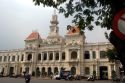
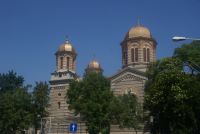
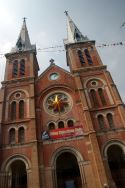 One other quick observation: I had three hours free time yesterday, so I walked for a while to visit places I’d been. Saigon was really destroyed in the “American War,” so there’s not a lot of “old historic sites.” The city is fairly new, for Asia – three hundred years – and was the capital only during the South Vietnam period (1954-1975), but there’s a lovely old cathedral and a post office which looks like a train station.
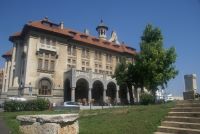
I realized I wasn’t going to see what I wanted if I walked, so I hired a motor scooter to go to two museums – the museum of history and the fine arts museum, both of which had artifacts that proved there’s more to Vietnam than the “American War.” After all, this is the country that defeated the Mongol horde! The French liked museums, and built several in this country. I realized I’d been to the history museum before, but did so before I had been to Angor Wat. There were some really nice statues in the museum here that had once been in Angkor, but that’s also true of the Guimet museum in Paris.
Time to close. Best wishes for the new year. They’re gearing up here for the New Year, and the churches (this is the second largest Christian country in Asia, after the Philippines) are decorated for both Christmas and the Lunar New Year. Vietnam is not a “little China” economically, but I’ll probably get to write some about its borrowings from China later.


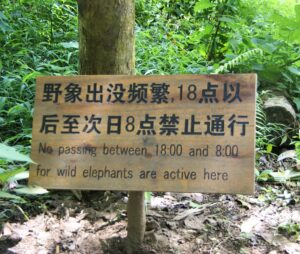 hiking one of the trails (with a sign that said, “Be off the trails from 6 p.m. until 8 a.m. because that’s when the elephants use them) when armed guards blocked us from going further because there was a herd of elephants on the prowl. Because they have poor eyesight and can become enraged, the park wants to keep people away from them. The best way to see the herd is from a funicular, which was not running. As I told the guide, if you want to be sure of seeing elephants, go to the zoo. He’s been to the park 100 times and seen them twice from the gondola.
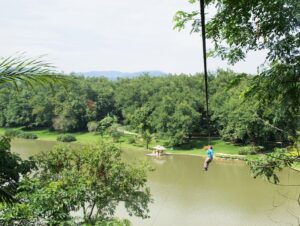 As a bonus, the lake in the park had a zip line, which, for a fee, enabled me to get across quickly; there was a cameraman at the other end, who, for a fee, provided me with a souvenir (for about $1.20, I have a 5×7 laminated picture with a Chinese inscription telling the where and the date. I told you the tourist infrastructure was quite well developed!). They have the picture-taking services everywhere; at the bird exhibit in the Wild Elephant Valley, a trained parrot swoops to you if you hold your hand out, and you can have a picture of that, too!
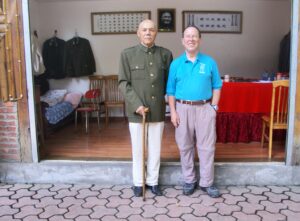 most interesting business opportunities came from a man who in a 1995 movie played Chiang Kai-shek. For 30 renminbi you could take a picture with him. I pondered it and decided that having a picture with him in front of the sign that touted the merits of the picture might be nice for my marketing class. I bargained one picture on my camera for ten renminbi. He agreed, put on his military uniform (he did look like the generalissimo), and my guide took a picture. The man then assumed another position when I handed him the bill, and suggested another picture (one with me bribing him?), for which he then demanded another 10 RMB. I think maybe he had studied the part too well.
 The map says I’m in China, but this corner of the kingdom as much resembles its southern neighbors as much as it does the far-off Beijing.
 well. When I was in Burma a few years ago, I had our driver stop to see what was available in a store–all Chinese goods. The road to Mandalay was clogged with trucks making the trek from Kunming, and hotels jammed with Chinese drivers.
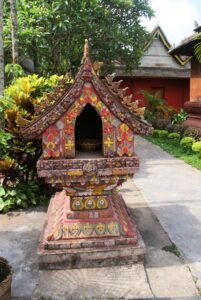 While those ties are increasingly supplemented with infrastructure (new roads and railroads) the ties are historical. The Dai minority here use a script that is Thai-like. The souvenir stores feature Thailand tee-shirts, and Burmese jewelry. Even closer (and unusual for China) is the Buddhism, which is of the colorful Southeast Asian variety, rather than the grey/brown earth tones of Japan/Korea and elsewhere in China.
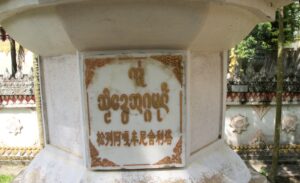
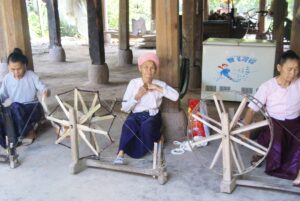 We went to a Dai village (increasingly rare, but preserved for historical and tourist purposes), to an old temple, where the guide said the Lord Buddha had come. The street names in town also have Chinese/English/Dai writing, in a frame that looks like it could have
 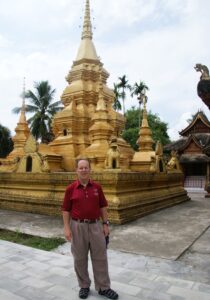 come from Thailand.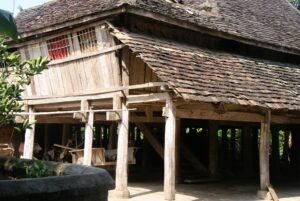
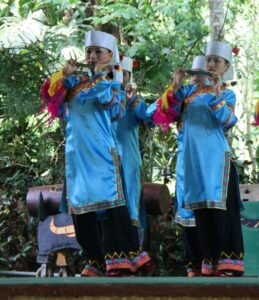 not for tourism, most of the world, I’m convinced, would look the same.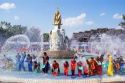
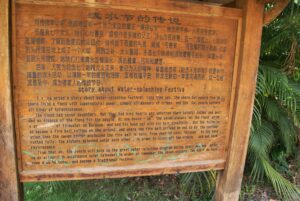 victory, they have a splashing party, which sounds like a good reason to party. Last night (having been to a village and a rainforest museum) I went to a spectacular show (the provincial government spent over $1 million U.S. on it) where I got splashed!
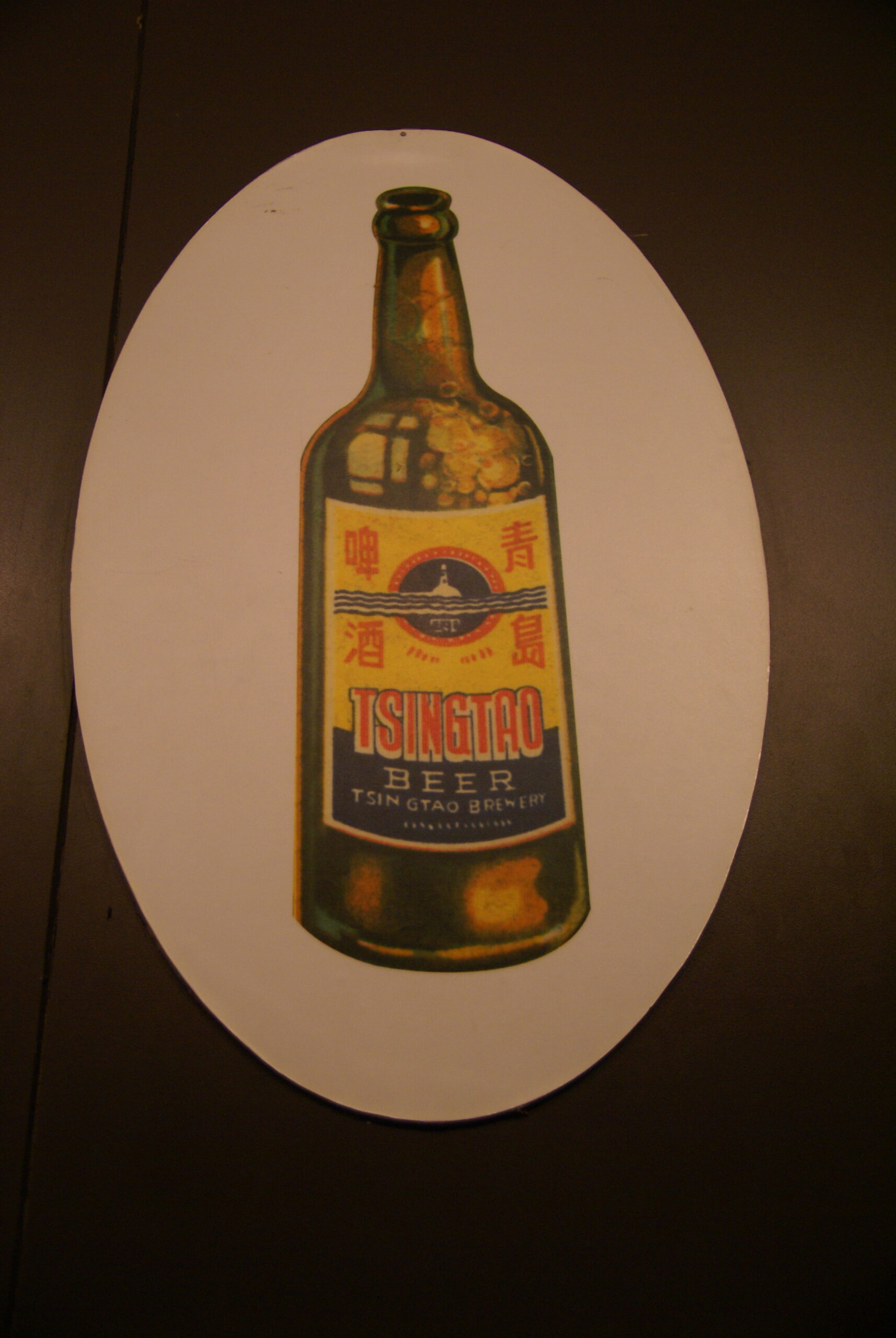
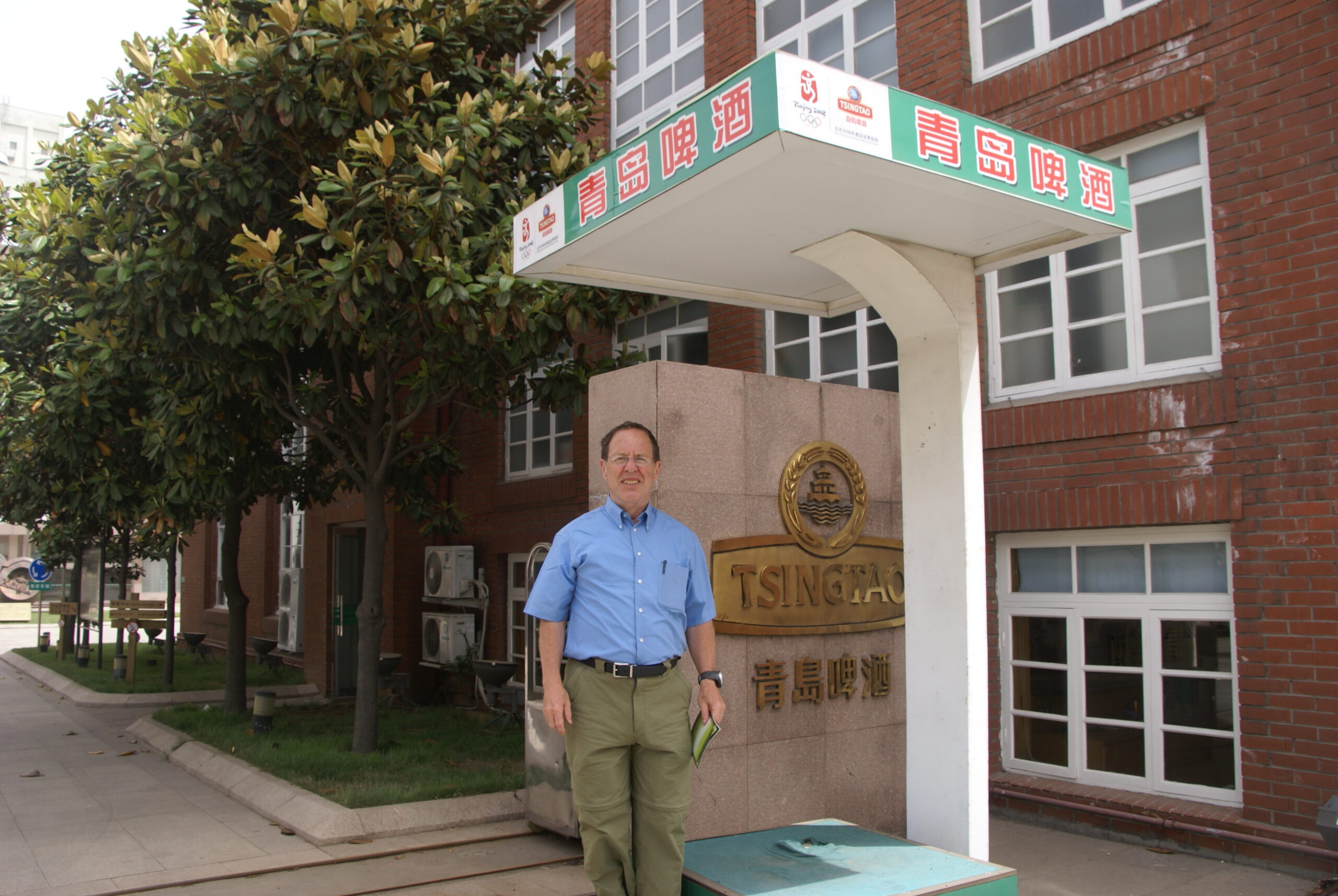
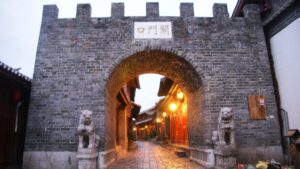 If Qingdao (or as I prefer, Tsingtao) was fun to wander aimlessly because it was a German Colony, my next city, Lijiang, was fun to wander around aimlessly because it was back in China–or rather, because it wasn’t “Chinese.”
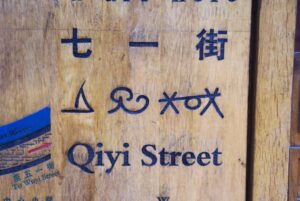 have a pictograph language that they still use, and a unique architectural style that has made Lijiang the mecca for trekkers and tourists that it once was when it was a trading post on the “old horse road.” The Naxi nationality (that’s how the Chinese refer to their minorities) number around 300,000, and seem to peacefully coexist with the Chinese. As my guide (a Naxi but also a member of the Communist Party put it), “we embraced many of the Han things and became civilized.”
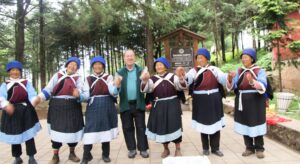 One of the sights I insisted on seeing was a “red hat” monastery. Not just the Naxi nationality got driven out of central China, but apparently the Tibetan “losers” got driven out as well. The “yellow hats” predominate in Lhasa–but there are a number of “red hat” monasteries in Lijiang area. Hence, many of the buildings have a Tibetan influence, a Naxi influence, and a Han influence.
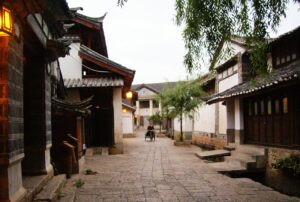 I stayed in a new building (old style) in the old city, which has a confusing maze of cobblestone streets (no cars, which is a blessing in China!), and got up early (the sun is at least an hour later here than in Beijing, but China is ALL one time zone), and wandered around taking pictures with no tourists in them. The hotel (and this may indicate the time warp) had a magazine touting its well-known visitors, including “Comrade Hu Jin-tao,” the first time in years I’ve heard anyone refer to anyone in China as comrade!
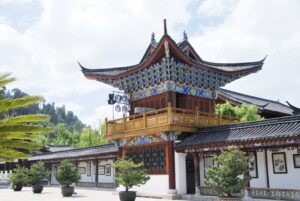 The centerpiece of the city is the home of the “local king,” the Mu family, which looks for all the world like a small version of the Forbidden C ity. Which means, I think, that it’s always glorious to be rich.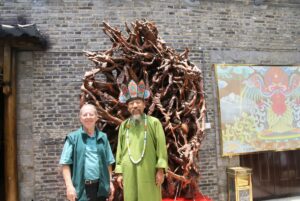
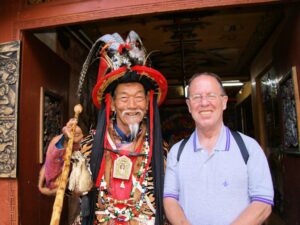 religion, the Dongba, which is based on wisdom and age (I could be a Dongba). There are 9 Dongba shamans, who are the most wonderfully photogenic people I’ve met in China.
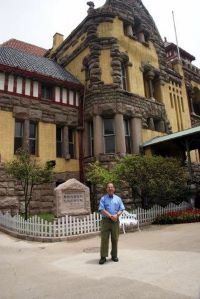
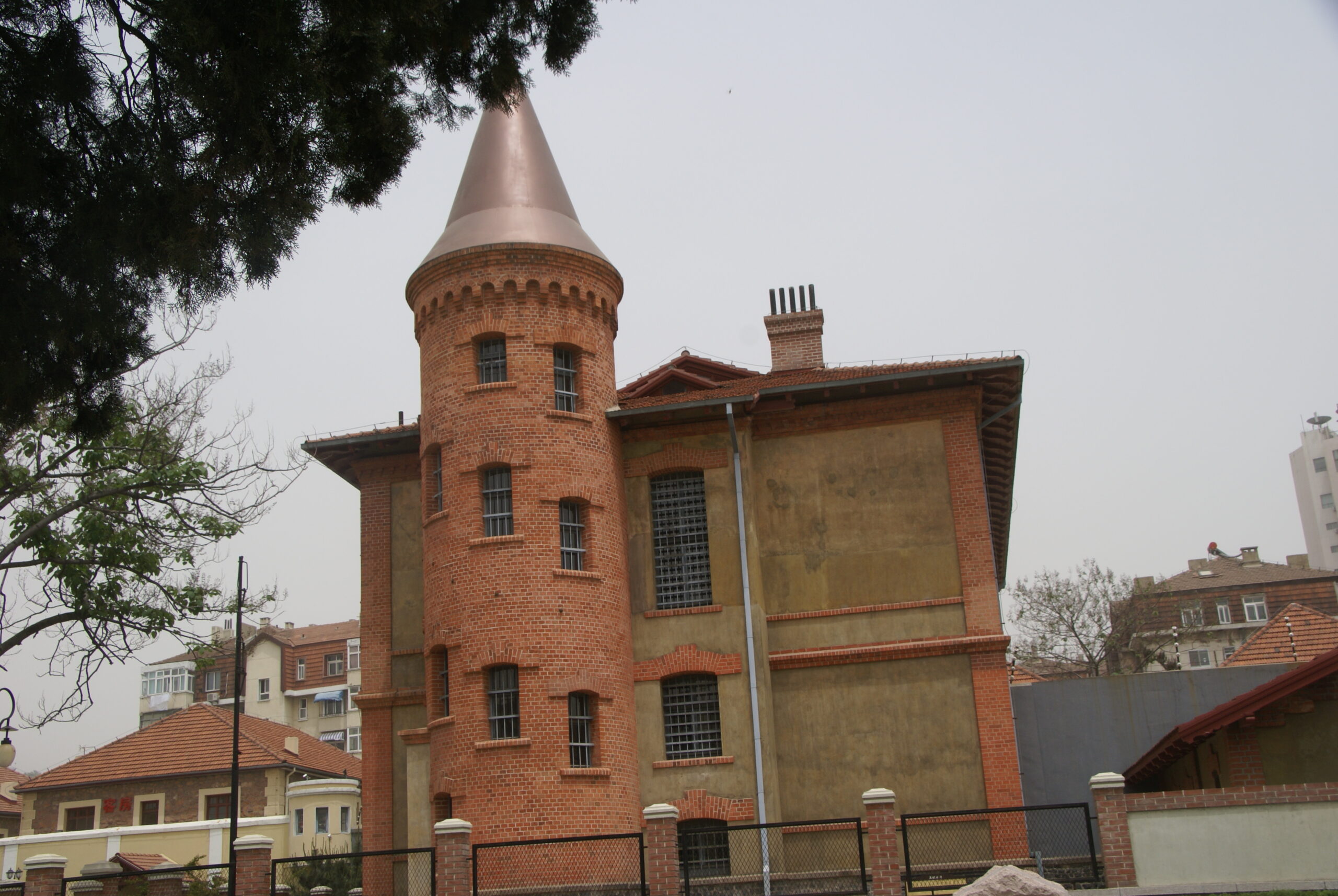
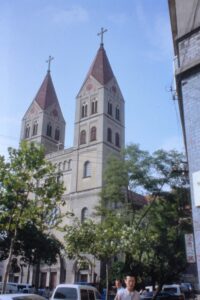 While Japan surrendered Qingdao to the Chinese in 1922, the city still has a German feel to it; the architecture remains as silent testimony to the German patrimony here, especially in the reasonably compact old city (which is why I like wandering around). Since I was here last (probably about ten years ago), in fact, new museums have opened to highlight the German background (and the Japanese conquest in 1914 and again as part of World War II).