Dec 28, 2025
Home from New Orleans
Tourism is New Orleans second biggest industry, and I would almost bet the Christmas New Year period is the largest “occupation” of the city. It certainly seemed that way on our one day visiting. I was glad we had been there several times in the French Quarter (the Spanish claim it should be the Spanish quarter, reflecting who owned the land when it was rebuilt after serious fires in the 1790s; the French Quarter is about the only part of the city above the flood plain, and is one of the most distinctive of all American cities). We’ve been to conventions there, so it was useful that we got to see other areas of the city this time.
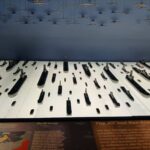 I think the National World War II Museum might not have been there when we were last in NOLA. That was high on my agenda (as a museum freak and World War II follower). It grew out of a cocktail hour with Steven Ambrose, a UNO historian, and Andrew Higgins, whose company built most of the LSTs that made D-Day possible. Originally conceived to celebrate D-Day, it now encompasses displays ranging from the 30s through the end of the War, with a strength on that “Second Front.” The movie, “Beyond the Borders,” features explosions that rumble the auditorium, highlighting battles, logistics, atom bombs, and the home front. Two hours barely scratched the surface.
The afternoon featured a bus tour of the city that skirted the all-too-crowded French Quarter (Jackson Square was shoulder to shoulder), but went to some other areas of the city. Loved the ironwork, which replaced wooden railings that were subject to spreading fires. One in 1788 did for New Orleans what 1871 did to Peshtigo (or Chicago the same day)
We made two stops. One was at one of the Catholic cemeteries, (Louisiana is 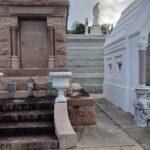 44% Catholic) which had mausoleums that we were told hosted only two coffins, holding the remains of the most recently-deceased member of the family. When a new death occurred, the old body was placed in a bag and returned to the tomb. All were above ground, since, our guide said, the water table is high and space is at a premium. (She noted the famous streetcars cannot turn around, but have two “fronts.” The driver goes to the other end at the end of the line. One track saves space).
Our second stop was at the New Orleans Museum of Art, built by a local to house his mother’s collection. Our guide pointed out mom’s art has slowly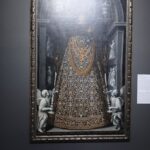 been replaced by Monet, Manet, and other prominent artists. Of course, I had to visit the small Asian collection, and discovered some wonderful conquistador art, Our Lady of Loretto, a Peruvian nod to the Virgin Mary.
The guide kept referring to pre- and post- Katrina features of the city, but as we toured, it was obvious that parts other than the Quarter were worth seeing. Rich planters and slave traders and others built wonderful mansions in the Garden District, too.
Our trip home was, happily, uneventful. Carolyn got bumped to First Class on the Dallas to Peoria flight. I knew she was “first class.” Now for the unpacking and recovery from sensory and culinary overload!

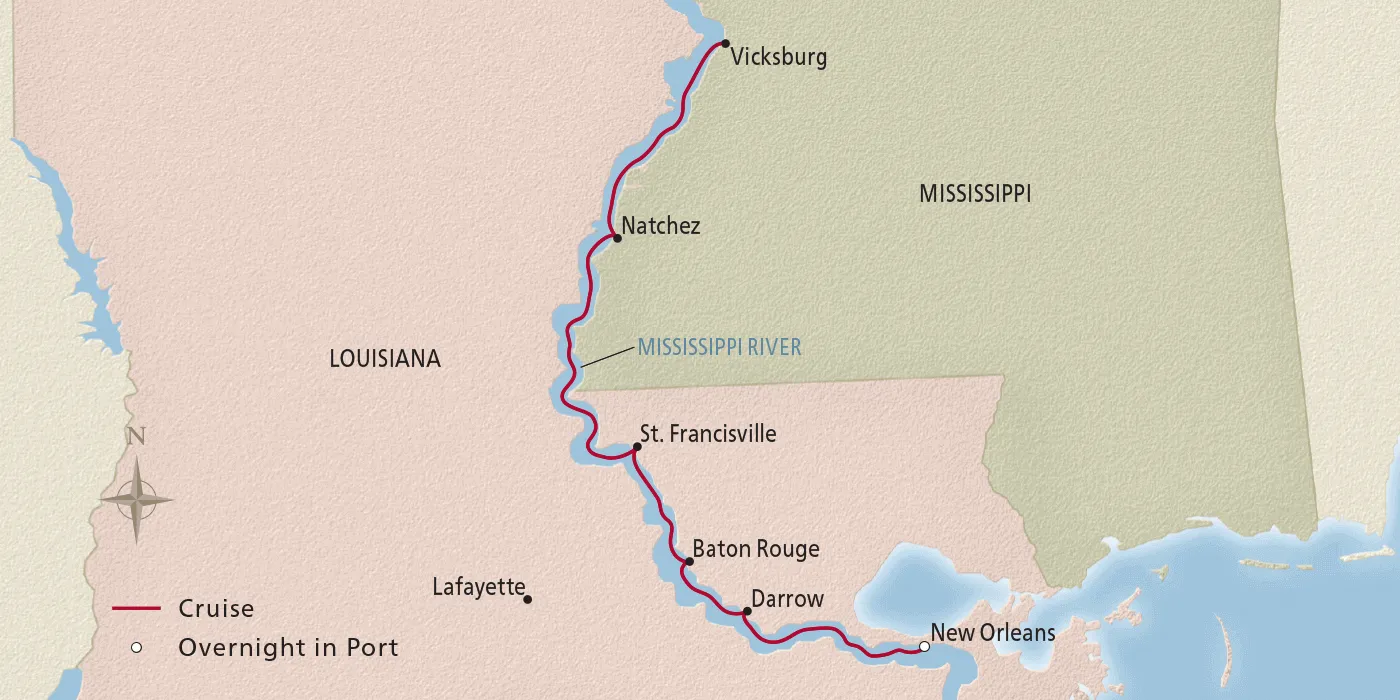
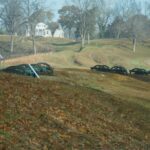 For me, one bucket list item was the battlefield. The park has a 14-mile drive that we took with a ranger. The road traverses Union and Confederate lines, recreating the 47-day siege that resulted in a Confederate surrender on July 4,1863 that, coinciding with Gettysburg put the key in our pocket said Lincoln and opened the Mississippi to Union tra
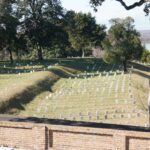 de. The site encompasses tunnels, trenches, and features tightening the noose to the point of starving the rebs. The loess soil is easy to dig in and soldiers were said to be armed with a rifle and shovel.
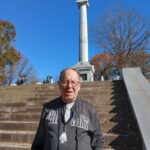 repair, but had 47 steps, one for each day, and the names of each soldier. Missouri’s had 42 steps, 25 for the
 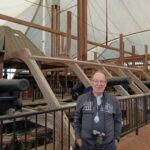 Missourians who fought for the Union, 17 for its Confederate regiments. Another highlight was a recovered armored gunship, part of the brown water navy. It was torpedoed in the Yazoo River and well preserved.
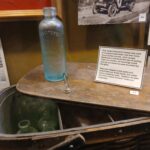 I took a shuttle into town and was glad I did. One small museum was in a converted pharmacy whose owner worked with coca cola as the first bottler. Until then the drink was sold on premise. The cap went pop when pulled off, hence soda pop (called pop in Chicago, soda downstate). The civil war museum is the brainchild of an Afro American with a focus on blacks in the w
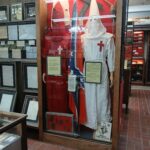 ar, which had great displays and conversations with the owner. The red cloak was for the grand master of the Klu Klux Klan.
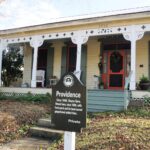
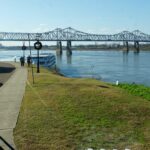 fascinating river town. For one thing, it is slightly older than New Orleans. And with 15,000 residents, it has over 1000 homes on the national register. At one time it was the center of the cotton trade, which attracted Yankees and slave traders. It had the
 second most millionaires after New York and the second biggest slave market after New Orleans. The wealthy residents (who exercised conspicuous consumption in their lavish buildings on bluffs overlooking the river), voted against secession and surrendered the town without a fight, sparing many buildings. While post-civil war left buildings intact, the town was never again as prosperous. It says a lot about the racial composition of the city which numbered 6000 in 1860, and after the war, and the emancipation of the slaves, 16,000.
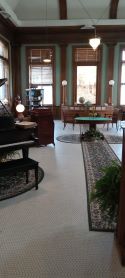
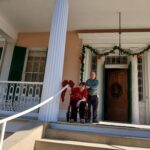 Our visits gave some insight on supporting the mansions today. Both buildings visited were still owned by the original families. One boasted fifth generation. She hosted a typical meal, feeding 12 of us with original family recipes. Part of what used to be a
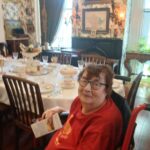 plantation house is a bed and breakfast, and the hostess also does meals for groups. And of course, you can rent it for celebrations.
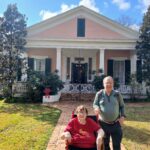 college or took jobs elsewhere. The current descendant was a trained musician turned computer whiz who now invites groups like ours for a keyboard concert which included a composition by Louis Moreau Gottschalk , It also operates a bed and breakfast.
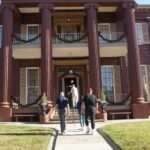 A third home is maintained by a garden club and one yesterday was a state park. The garden club provides docents and delicacies.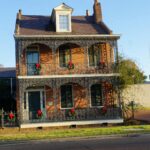
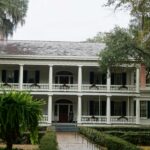 , which as a consequence has 140 houses on the national register. Carolyn and I went to one, Rosedown (restored in 1950), an antebellum mansion that an heiress fell in love with. She spent $10 m on it and around 90% is original furnishings. Once 3000 acres of cotton or sugar cane, with over 400 enslaved people, the original family lived there until the 1950s. After the war, the plantation devolved to share cropping, but the house was badly in need of repair ($10 million in 1950s dollars!)
 With its high ceilings and narrow staircases, I wondered how the elderly fared. The guide said they turned first floor parlors into bedrooms or built smaller homes nearby.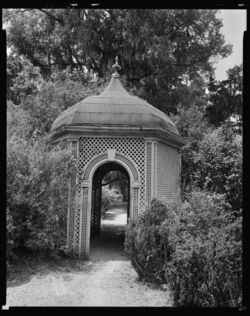
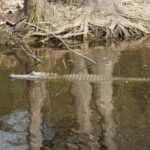 We woke up here in a thick fog, which lasted till we drove to Cajun Pride, operator of a swamp boat operation. We boarded a pontoon looking for wildlife. Alligators lurked looking for Captain Hook. Wild razorbacks rooted, scarfing corn thrown by our
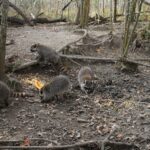 captain, from racoon families. Surprisingly, no mosquitoes sought our Yankee blood, despite 78-degree weather.
 home with a 38-acre garden decked out for Papa Noel, a Cajun version of St. Nick. Papa Noel arrives in a pirogue, drawn by alligators. Seems appropriate.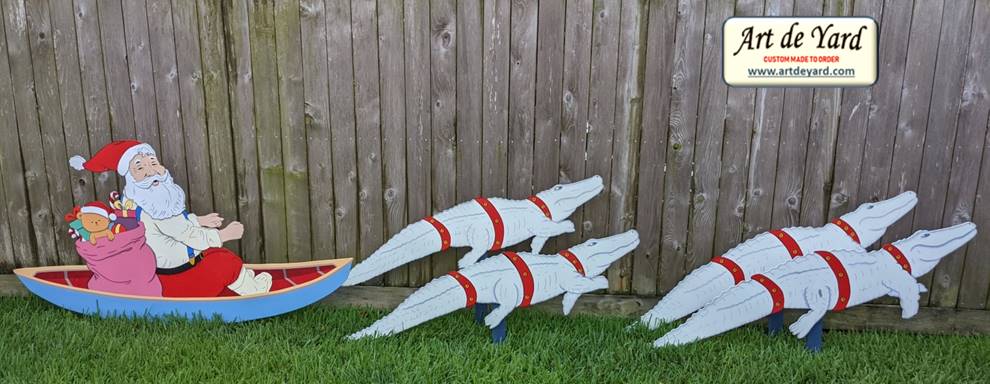
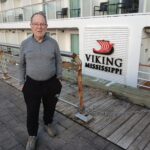 purchase Louisiana. Americans prepared to purchase the port of New Orleans for $10 million wound up being offered the whole of Louisiana for $15 million. Time to get on board and explore the Mississippi River to Vicksburg on the Viking Mississippi.