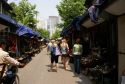
I’m a happy camper today, because I’m in one of my favorite cities (Qingdao), doing one of my favorite things (wandering aimlessly), because Qingdao is made for wandering, as I’ll explain in a minute.
Qingdao is a laid-back city with wide streets, a relatively small population (3 million), a salubrious seashore (I’m a block from Seaside Beach Number 1), and mountains that come down to the sea just outside the town; one of them, Laoshan, is famous as one of the sacred spots in Daoism.
I love wandering because of the city’s history and my location. Though I recall when I was here once before I went to the museum and saw evidence that there was settlement under the Wei Dynasty (long before MY time), Qingdao’s modern history begins in the 1890s, with efforts of the Qing dynasty to establish bases here in a futile effort to block the foreign (especially Japanese) attempts to partition China.
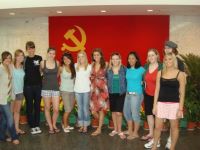
In 1897, in retaliation for the murder of a German missionary, Germany landed troops and wrested a concession in Kiautschou Bay that included Qingdao and an area around the city. The Germans settled, recreating Bavaria, until 1914, when Japan declared war on German and successfully besieged Qingdao, which then became a Japanese possession. Japan’s efforts to keep it, in turn, were very important in Chinese history because, when Chinese patriots learned that the West had caved in and acquiesced in the transfer of land from Germany to Japan, they protested, beginning the May 4th movement that led to the formation of the communist party in China.
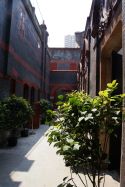
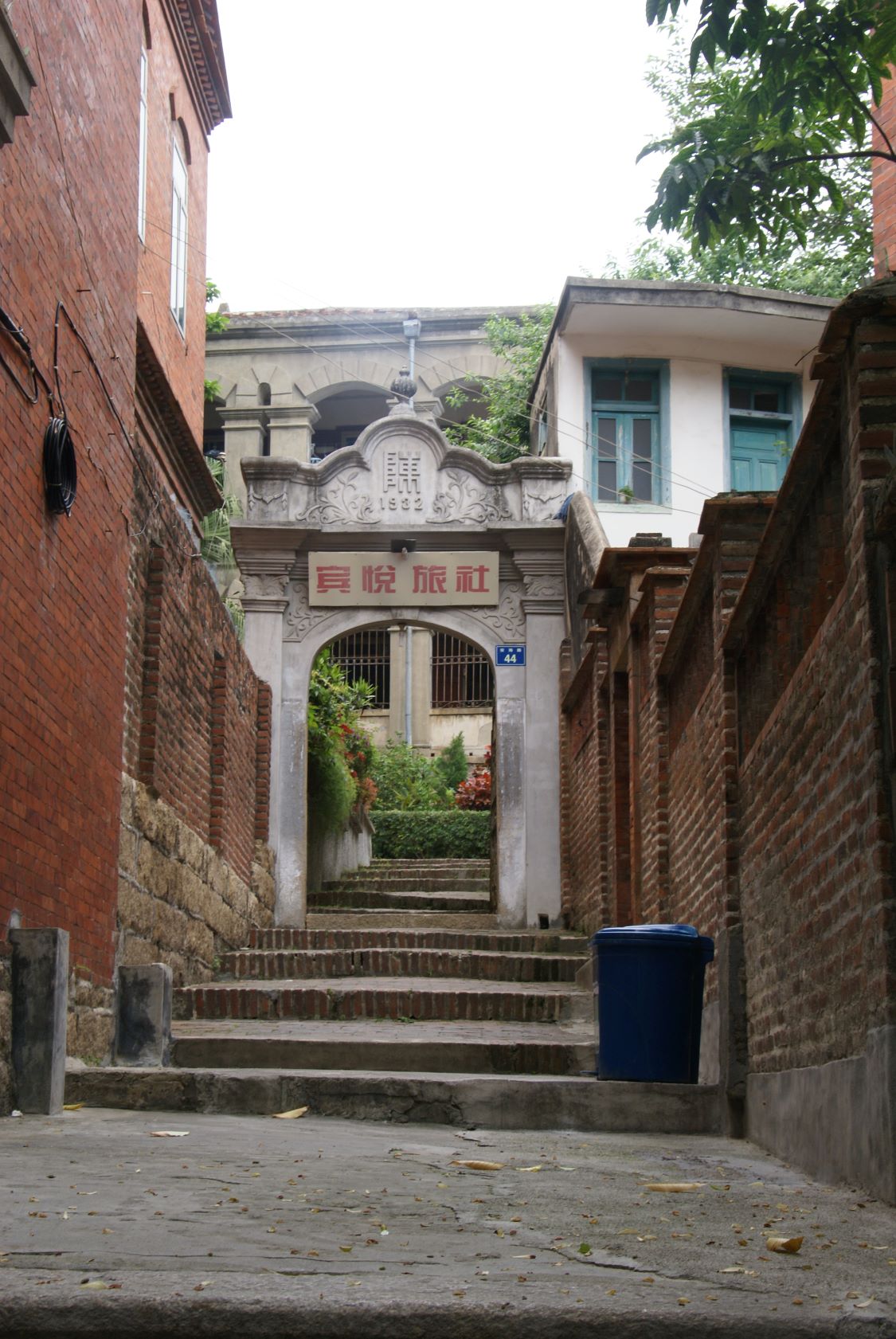
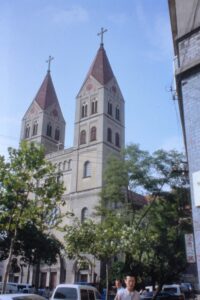 While Japan surrendered Qingdao to the Chinese in 1922, the city still has a German feel to it; the architecture remains as silent testimony to the German patrimony here, especially in the reasonably compact old city (which is why I like wandering around). Since I was here last (probably about ten years ago), in fact, new museums have opened to highlight the German background (and the Japanese conquest in 1914 and again as part of World War II).
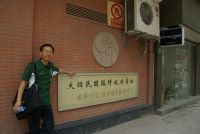
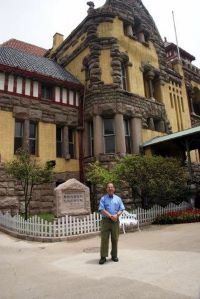 I was able to visit (part of my day has been planned programs) some old sites. My favorite is the so-called guest house, which is where Mike Seeborg and I stayed on my first visit to Qingdao. It’s the former residence of the German Governor General, and for all the world looked like something from Bavaria. When we were there originally, we learned that Chairman Mao had stayed there for three months in 1957; a plaque marked his bedroom, and nothing had changed since his departure. I had to return to what is now a museum to see whether there was an additional plaque that Mike and Fred had stayed there, too. Unfortunately, there was none, but one new touch had been added–the bathroom had been rated a two star (I’ve got my own private rating system for toilets in China, and the one in the guest house rates higher in my book!)
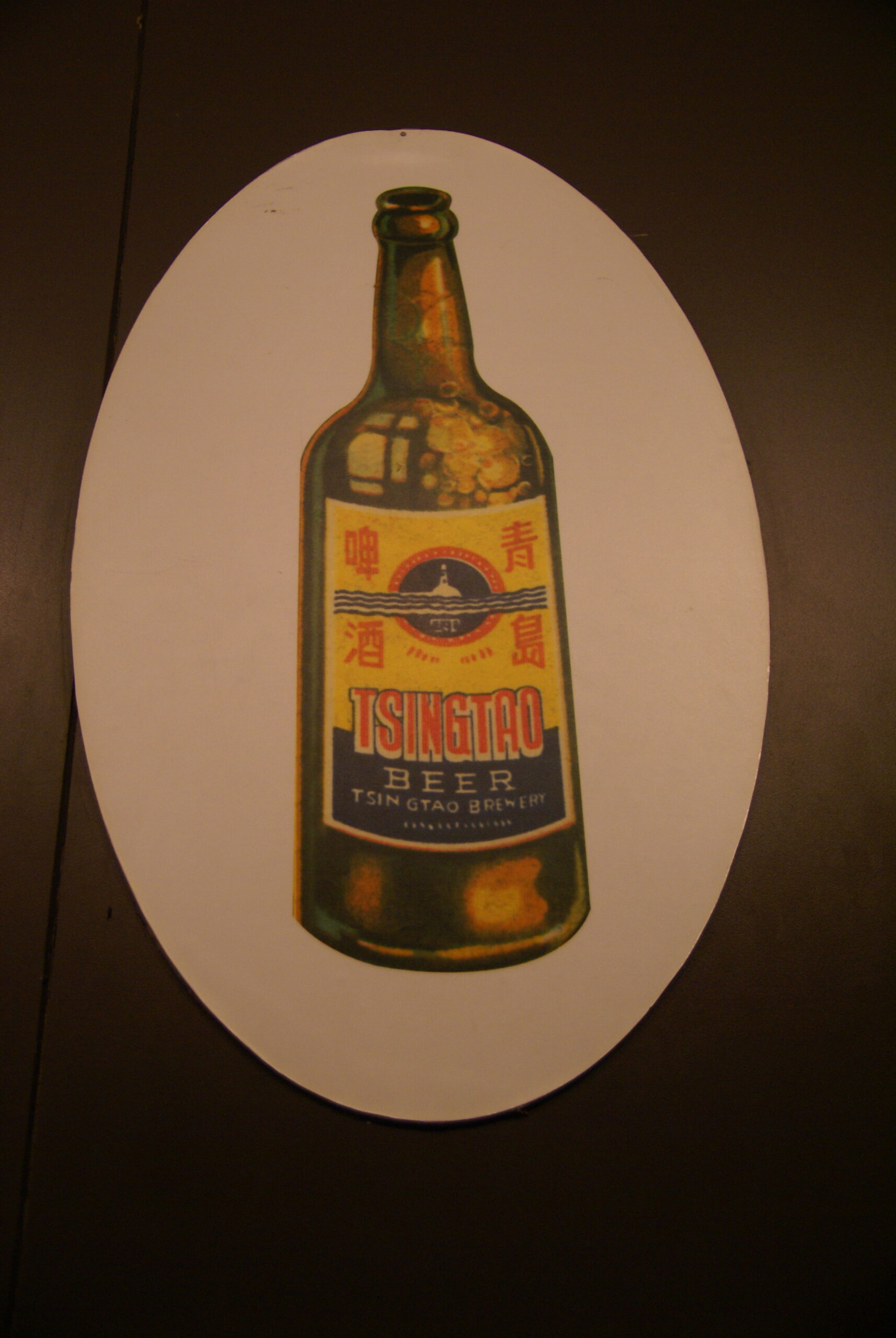
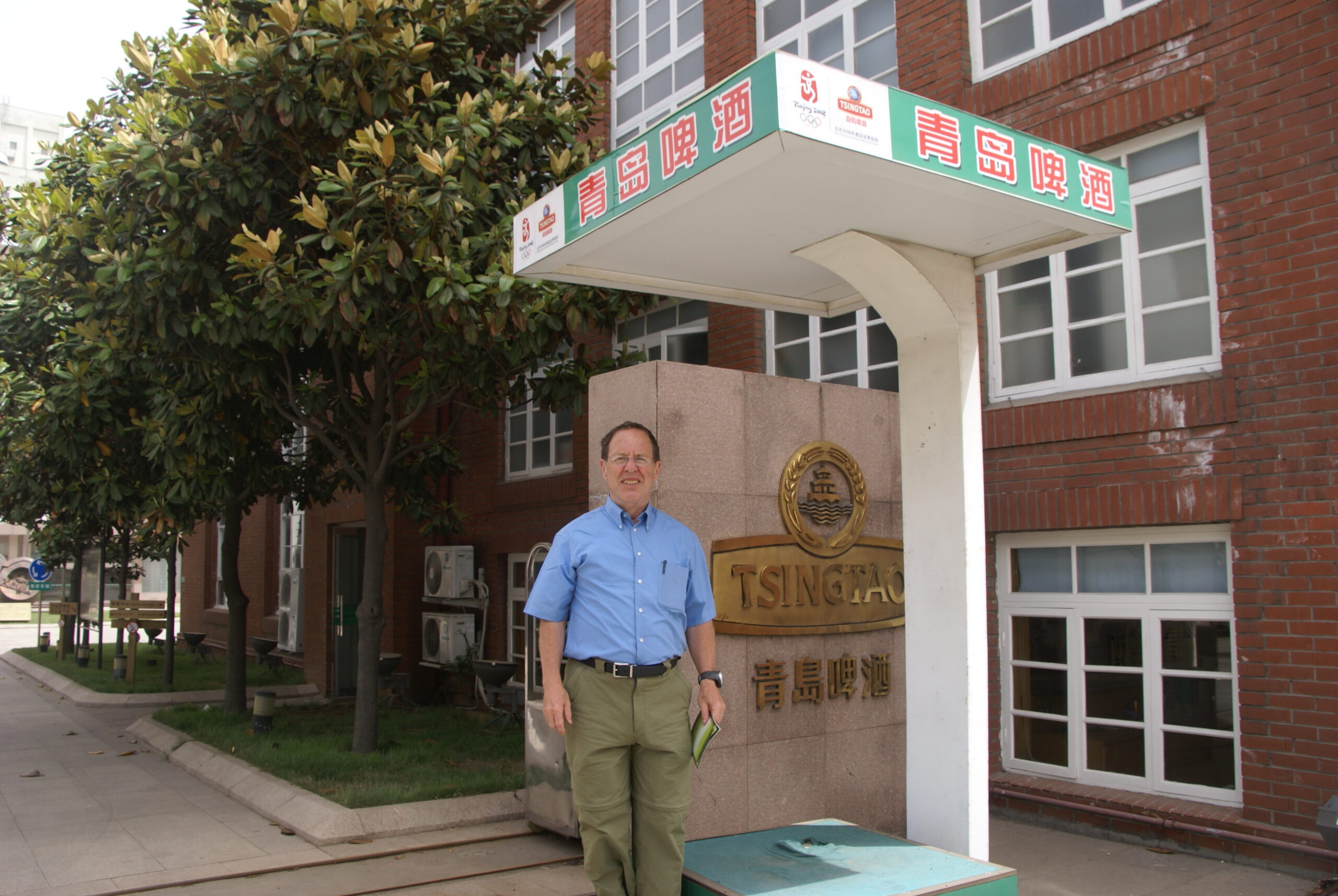 Another new museum is housed in Qingdao’s most famous brand’s historical building (and my main reason for including Qingdao) and that’s the Tsingtao Brewery. Started in 1903 as a joint venture between Germans and Brits, it was the first beer-producing company in China (beer is an acquired taste for Chinese, and their increasing consumption makes it one of the great hopes for world brewers, including Budweiser, which has a stake in the Qingdao brand). Our guide solemnly told me that German soldiers could not fight without their beer, which is why the company got started.
For whatever reason, it’s become Chinese best-known brand. The museum features many of the commercials, which is what I came to see; after all, here is a brand which was German until 1914, then captured and bought by the Japanese in 1914, and they owned it until 1945 (learning to brew Sapporo and Kirin beers themselves), when it became a Nationalist possession; then in 1949, with the liberation (i.e., the communist conquest), it became a state-owned enterprise, primarily for export (even to Taiwan!). The company’s international reputation has grown to the point where it stages an Augustfest, ala Bavaria, making the comparisons with Munich even more striking.
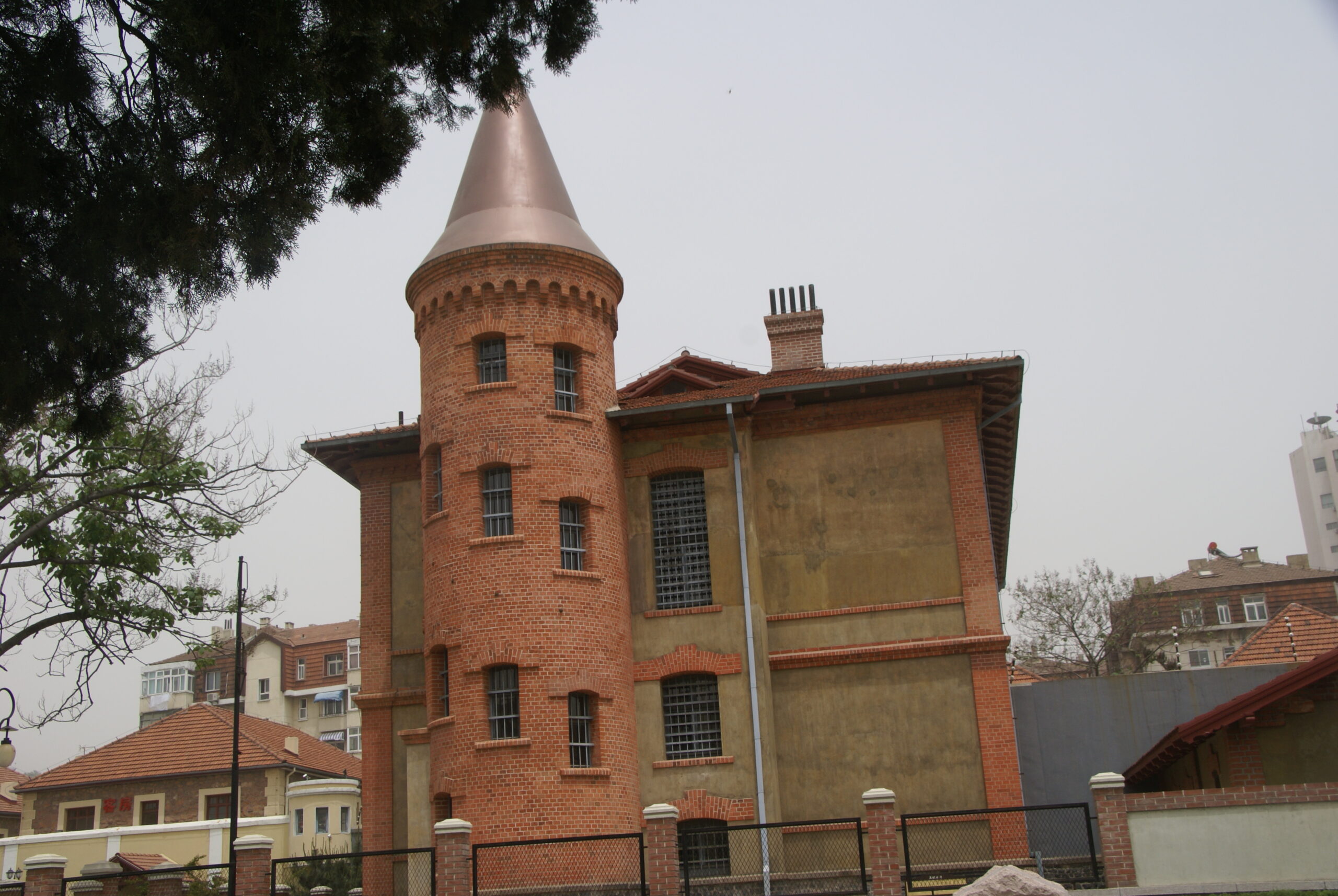
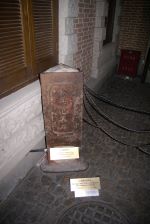
I also visited the German prison museum, which housed non-Chinese prisoners during the German days (not many of them said the signage; the Germans were prosperous and relatively well behaved), but in addition political prisoners during the Koumintang and Japanese periods, including one torture room that my guide excused herself from seeing.
Yesterday evening, I had another treat in more ways than one. I’d been in touch with a stamp collector who specializes in Kiautschou, and published a book here on his collection that I have been trying unsuccessfully to find in the States. He met me and took me to Book City, a huge bookstore that brought to mind how different China is today from what it was in 1990 when I first came here. Clinton and Obama books are best sellers, as are business books. Anyway, the man, Mr. Lu, took me out for dinner (Qingdao has excellent seafood, especially clams), and invited some other collectors to join us. He also took me to his house (he has three–one in L.A., one in Vancouver, and the one in Qingdao, which he said, at $400,000 is more expensive than his other two!).
His house was a bookstore of stamp literature–room after room of catalogues and monographs–and he says he has as many in L.A. One of his friends, a teacher of German, brought some of his collection of 1,300 postcards (and I thought I had a large collection of Kiautschou cards and stamps!), with picture albums from German families and other assorted associated items I’d never considered. Not bad for a teacher who told me he teaches 6 hours and makes about $200 a month, but makes more money ($100 a day) translating for German businessmen.
The evening ended with their insisting I go with them to a club for Karaoke. Pricey evening.
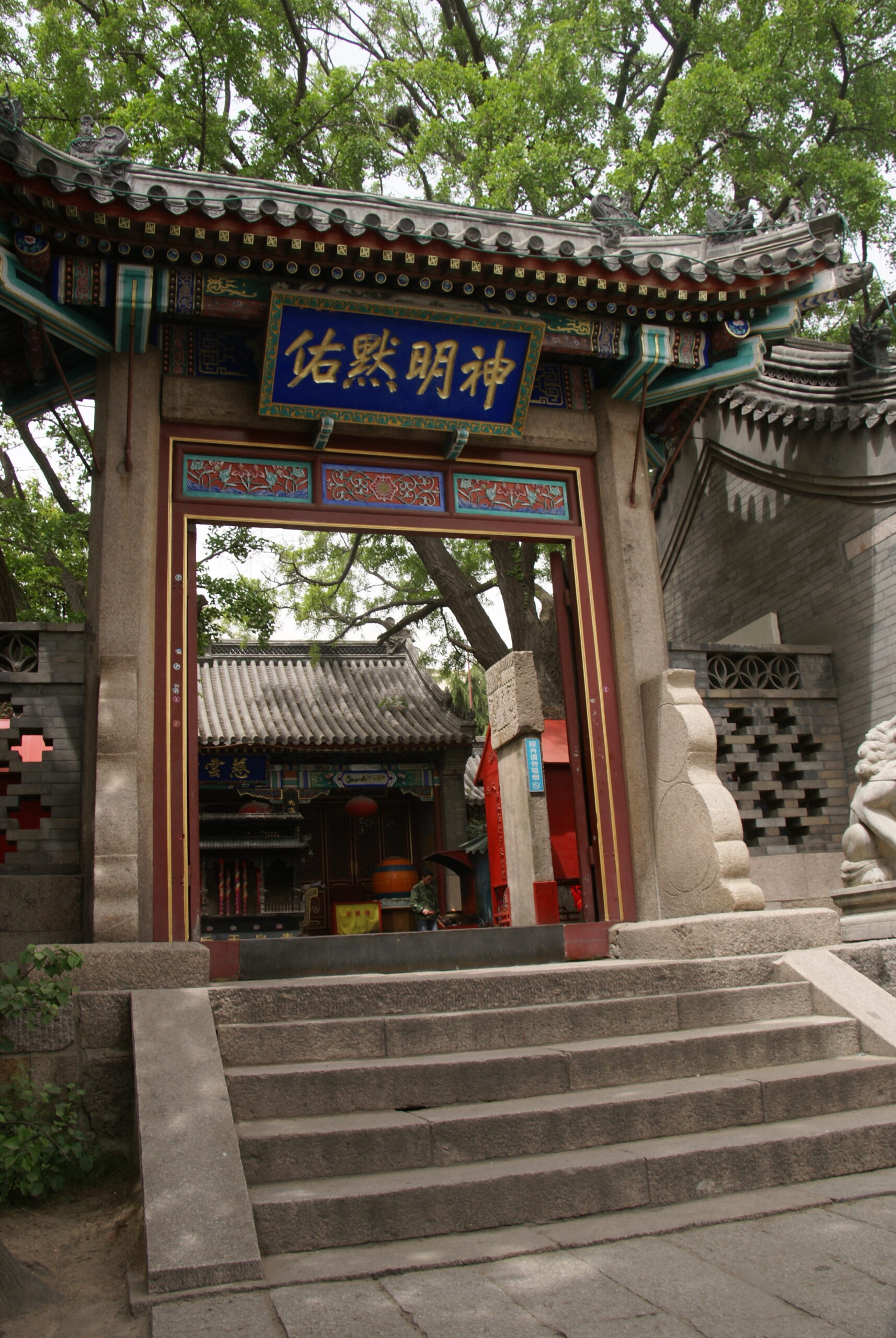
When I got up this morning (and later this afternoon), I wandered around the city. In the morning, I ran and did yoga along the beach, then discovered a number of former German buildings; the local government seems to have discovered them around 2000 , and marked a number of buildings with historical data (perhaps mindful of the importance of history in tourism).
When my guide picked me up at 9, we went to Laoshan, which I mentioned was one of the spots that spawned Daoism, which is a uniquely Chinese religion that deals with the relationship between man and nature. The 8 immortals are supplemented by various historical figures from China’s past including the god of loyalty and wealth, the Guang Gong (my favorite), and the King with a Crystal Belly, who ate everything and told the Chinese what’s safe to eat (I thought it was if it has four legs and isn’t a table, flies and isn’t an airplane).
When we got back, it was an ideal time of day to wander some more, to the home of the Chinese reformer Kang You-wei, which is behind my hotel, and a wonderful look at a German-Chinese bourgeois home of the turn of the century; then by bus (l yuan or roughly 15 cents) to the old shopping street looking for the Catholic Church and the post office and the Michigan Avenue brand shops that are everywhere in China.
Qingdao will host the sailing events for the Olympics and has one of the countdown clocks (70 days three hours 6 minutes, etc.) that we’ve seen elsewhere. It’s also built an Olympic village that will become Qingdao’s first 6-star hotel, which will fit nicely in what I think of as a 6-star city.
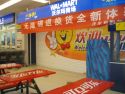
One more note on the Olympics/earthquake reporting here. As I was walking the streets, I was seeing more and more “I love China” tee shirts. The opposition to the Olympics and the pro-Tibet rallies in the West really brought out the never-far-from-the-surface Chinese nationalism–to the point where there was a massive switch from the French Carrefour to the American Wal-Mart (did I tell you Wal-Mart sells durian fruit?) . The editorial in the China Daily yesterday summed the results of the earthquake well (it’s the official paper): Instead of being negative and uninformed about China (by applauding the Tibet protesters), CNN had earned praise for its even-handed and even sympathetic coverage of the earthquake. Perhaps, said the paper, the West will learn about the real China. Chinoy, the reporter from CNN, said something similar: praising the coverage by the Chinese press and the TV (it’s not a political issue, though), he thought the Chinese had learned about Western-type journalism. Too bad a tragedy of this nature had to help bring humanity together.
I know you have exams coming up. Study and do well. The Koreans spend 4X as much as any other nation on after-school classes to bone up on exams. To quote Friedman again, Children in Asia are starving for your jobs.
Speaking of which, it’s time for dinner and my 5 a.m. wakeup call to get me to Yunnan. Zaijian. See you next weekend.
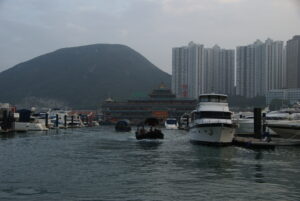
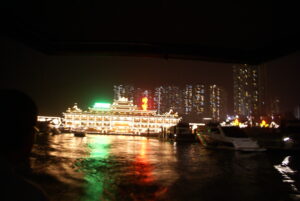 I spent the last night in Hong Kong walking the waterfront facing the island of Hong Kong with my friend until it was time to take the ferry (did I tell you that as a concessionaire–British for Old Guy–I get to ride the ferry for free and get half price on other transportation–and have a separate channel through customs!). Next time more time! Incidentally, Britain acquired Hong Kong in stages; the island ceded in perpetuity in 1842, the Kowloon peninsula surrendered in 1860s, and the New Territories, loaned for 99 years in 1898. The end of the lease for the New Territories was what triggered the return of Hong Kong.

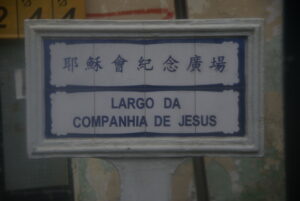
 revenue of Vegas. I like it because of the old, though–it was Portuguese, and we’re in the Mediterranean if you stick to the old areas–stucco and pastel, Catholic churches dating to the time when the Jesuits arrived here in the 16th century.
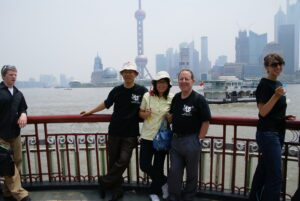
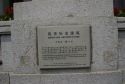
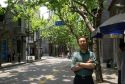
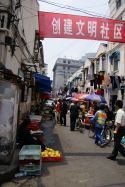
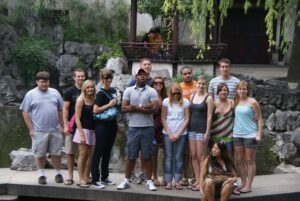 Chinese city at least for a hundred years (and I have the postcards in my collection to prove it). Now surrounded by the “City God Mall,” the Garden was an estate of a Ming dynasty official (built for his parents–recommended as a gift from the class to their teachers), who had both money and taste. It had its own opera house, rocks brought in with wondrous shapes from Tai Lake, mahogany furniture (that frankly looked uncomfortable, but we weren’t allowed to sit in it anyway), and the ponds and hills that combined make up the word for scenery in Chinese. Even with the crowds, and even surrounded by 15 million Shanghainese, it provides the serenity that the rich could afford.
 had not been given permission to go back inside. And it stayed that way for at least an hour. The news here has been filled with information about the damage, and China’s response. Contrast the government’s acceptance of aid, fast moving, sending of the army, etc. with the response of the junta in Myanmar, and I think you’ll understand how far China has come in becoming a responsible member of the world community. In 1976, an earthquake in Tangshan resulted in 100,000 deaths in five minutes, and China responded to efforts to help the way the Burmese generals did. It was an unsettling minute, and we had a lot of inquiries from worried parents and a worried University.